Cape Verde Gains Independence from Portugal
1975 · Praia, Cape Verde
Cape Verde gained independence from Portugal after a long struggle for decolonization.
July 12, 1979
The Gilbert Islands, a former British colony, became the independent nation of Kiribati.
Tarawa, Kiribati | Government of Kiribati
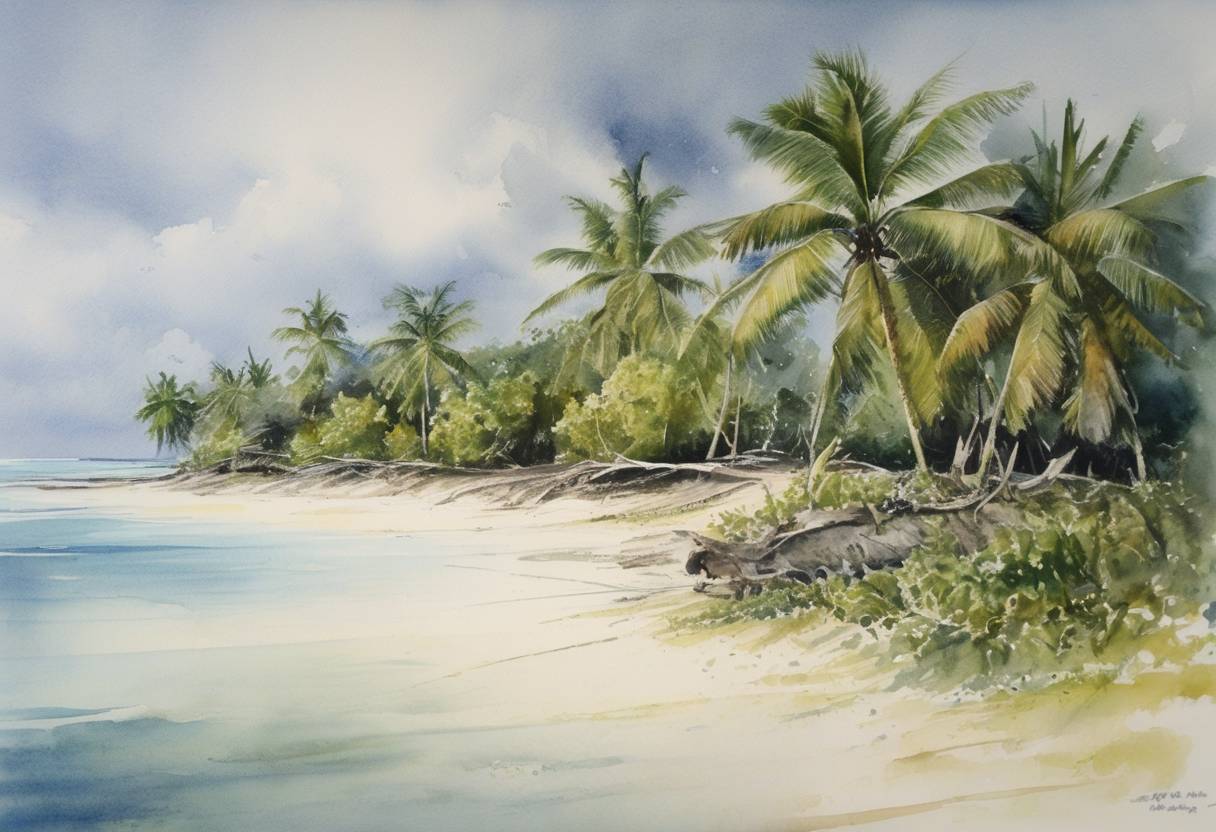
On July 12, 1979, the Gilbert Islands, a former British colony, achieved full independence and became the Sovereign Republic of Kiribati. This significant event marked the end of colonial rule and the beginning of a new era for the people of Kiribati.
The Gilbert Islands, part of the larger group of Pacific Ocean island groups now known as Kiribati, came under British control in the late 19th century. The islands were part of the British Western Pacific Territories, later reorganized into the Gilbert and Ellice Islands Colony in 1916. Over the years, the local population held an increasing desire for self-governance and autonomy.
The journey towards independence began in the 1970s amid a broader global trend of decolonization. In 1975, the Ellice Islands separated from the Gilbert Islands, eventually becoming the independent nation of Tuvalu in 1978. This separation allowed the Gilbert Islands to focus on its own path to sovereignty.
Following a constitutional conference in London and subsequent negotiations, a new constitution was drafted. Sir Ieremia Tabai became the first Chief Minister and, later, the first President of the independent Kiribati. The transition was peaceful, reflecting the diplomatic processes undertaken with the British government.
The official independence ceremony took place in the capital, Tarawa, featuring nationalistic fervor and formalities. During the event, the Union Jack was lowered, and the new Kiribati national flag was raised, symbolizing the birth of the nation. Sir Ieremia Tabai was sworn in as president, marking the leadership transition into local hands.
Following independence, Kiribati joined the Commonwealth of Nations, which helped solidify its international presence and secure a platform for further diplomatic and economic engagements. The newly formed government aimed to address economic challenges, including reliance on phosphate mining, while promoting sustainable development.
Kiribati’s independence was part of a global wave of decolonization that helped reshape international relations, emphasizing the principle of self-determination and the right of peoples to sovereignty. The nation’s strategic location in the Pacific and rich marine resources play critical roles in both regional geopolitics and global environmental discussions, especially regarding climate change and rising sea levels.
The transition to independence was peaceful and remains a point of national pride for Kiribati, illustrating the power of negotiation and cooperation in achieving sovereignty.
Source: en.wikipedia.org