NASA Launches Viking 1: The First Successful Mars Lander
1975 · Cape Canaveral, USA
NASA launches Viking 1, the first spacecraft to successfully land on Mars.
August 13, 2018
NASA's Parker Solar Probe is launched with the mission of studying the outer corona of the Sun. It will be the first spacecraft to fly into the low solar corona.
Cape Canaveral, USA | NASA
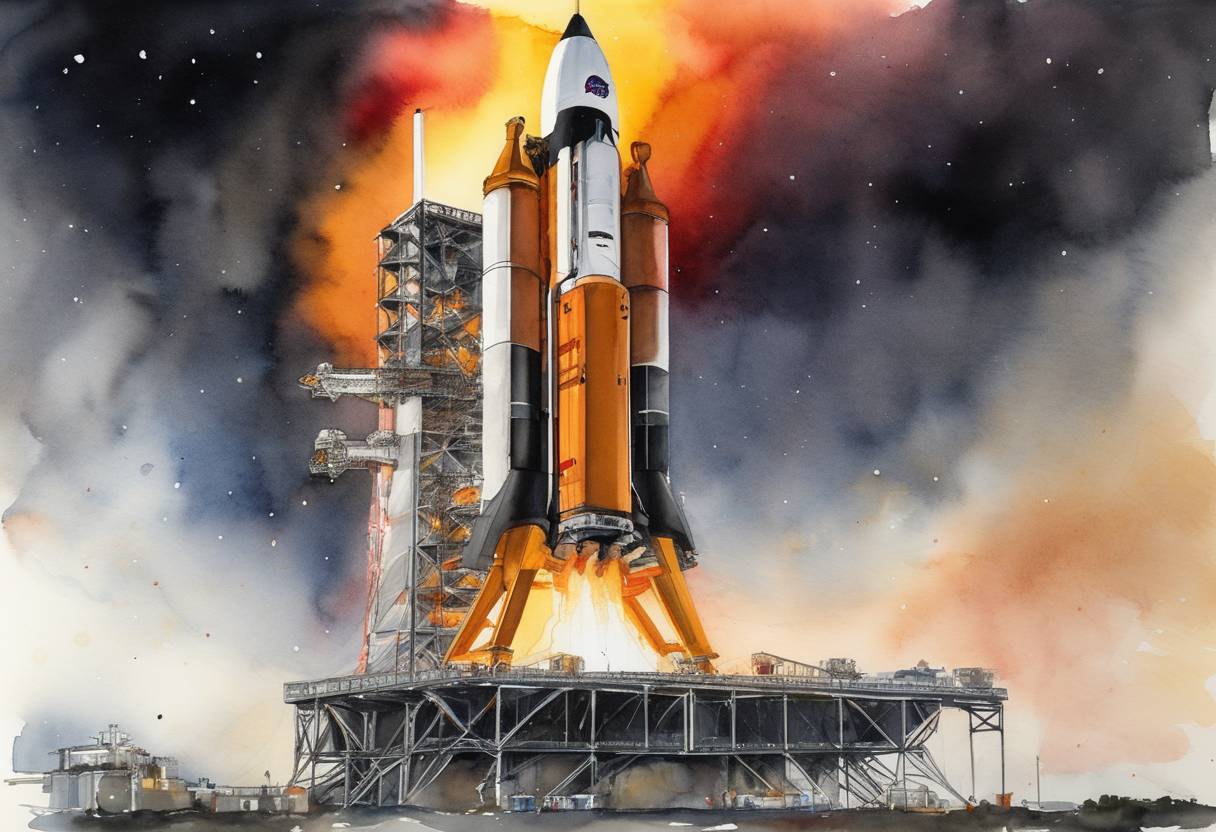
The Parker Solar Probe, a NASA spacecraft mission with the ambitious aim of studying the outer corona of the Sun, was successfully launched on August 12, 2018. It holds the distinction of being the first spacecraft designed to enter the low solar corona, promising unprecedented insights into the Sun’s outer atmosphere.
Background and Preparation
The Parker Solar Probe was named after Dr. Eugene Parker, a pioneering physicist who predicted the existence of the solar wind in 1958. This mission marked the first time a NASA spacecraft was named after a living person. The development of the probe was directed by the Johns Hopkins University Applied Physics Laboratory.
Mission Goals
The primary objective of the Parker Solar Probe is to trace the flow of energy and understand the heating of the solar corona, as well as to explore the dynamics of solar wind and solar energetic particles. The mission aims to answer long-standing questions about the corona’s unexpectedly high temperatures and the mechanics behind solar wind acceleration.
Launch Specifications
Trajectory and Approach
The Parker Solar Probe follows a highly elliptical orbit that will gradually bring it closer to the Sun over seven years, utilizing seven Venus flybys to reduce its orbital distance. These maneuvers will enable the probe to approach as close as 3.83 million miles (approximately 6.16 million kilometers) from the solar surface, significantly closer than any previous spacecraft.
Heat Shield Technology
To survive the intense heat and radiation near the Sun, the probe is equipped with a cutting-edge heat shield made from carbon-composite materials, known as the Thermal Protection System (TPS), capable of withstanding temperatures exceeding 2,500 degrees Fahrenheit (about 1,377 degrees Celsius).
The probe is equipped with four instrument suites designed to measure magnetic fields, plasma waves, energetic particles, and capture images of solar phenomena. These instruments are tasked with collecting data to increase our understanding of the corona’s role in the solar system and its impacts on Earth’s space weather.
Scientific Significance
Data from the Parker Solar Probe is critical for enhancing our understanding of fundamental astrophysical processes and contributes to the field of heliophysics. By providing a close-up view of the solar atmosphere, the mission aids scientists in forecasting solar storms that can disrupt satellites, communication networks, and power grids on Earth.
The successful launch of the Parker Solar Probe represents a remarkable milestone in solar exploration. Its journey into the solar corona promises to unlock mysteries about our Sun, helping to safeguard our technology-dependent society by advancing space weather forecasting techniques.
Source: www.nasa.gov