The Validation of Henry VIII and Anne Boleyn's Marriage
1533 · London, England
The Archbishop of Canterbury, Thomas Cranmer, declares the marriage between King Henry VIII and Anne Boleyn to be valid.
January 27, 1533
King Henry VIII of England surreptitiously marries Anne Boleyn, marking a pivotal event in the English Reformation as it eventually leads to England's break from the Roman Catholic Church.
London, England | Church of England
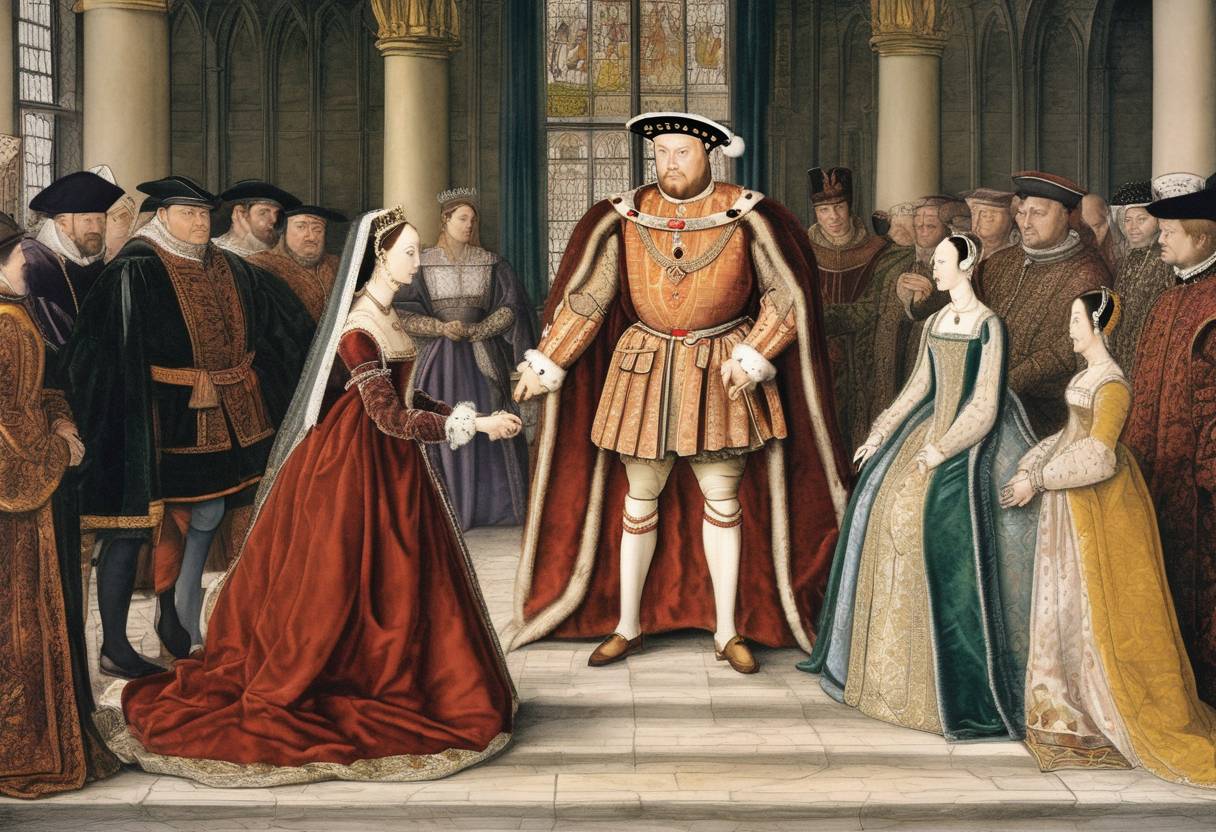
On January 25, 1533, King Henry VIII of England married Anne Boleyn in a secret ceremony. This event marked a significant turning point in the English Reformation and the eventual establishment of the Church of England.
Henry VIII had been married to Catherine of Aragon for nearly 24 years, but their marriage had failed to produce a male heir. His desire for a male successor fueled his pursuit of Anne Boleyn, a lady-in-waiting in Catherine’s court. As Henry’s affections grew, so did his determination to annul his marriage to Catherine. The Pope’s refusal to grant the annulment prompted Henry to seek an alternative route.
The clandestine marriage took place in a private chapel with a small group of witnesses. Anne Boleyn was already pregnant at the time of the marriage, which added urgency to the union and Henry’s desire to ensure the legitimacy of his offspring.
Break with the Roman Catholic Church: In the months following the marriage, Henry took decisive steps toward breaking away from the Papal authority. In 1534, the Act of Supremacy was passed, declaring Henry the Supreme Head of the Church of England.
Establishment of the Church of England: This separation led to the foundation of a separate English church, which retained many Catholic traditions but was free from the Pope’s control. Henry’s marriage to Anne Boleyn effectively catalyzed these religious and political transformations.
Cultural and Political Impact: The marriage and subsequent formation of the Church of England had enduring effects on English society, shaping religious practices, influencing art, and altering relationships across Europe.
Anne was crowned queen on June 1, 1533, but her influence was short-lived. She gave birth to Elizabeth Tudor in September 1533, failing to produce a male heir, which eventually led to her downfall. Henry’s pursuit of male offspring continued to influence his policies and personal life, further altering the course of English history.
Source: www.britannica.com