Siege of Nándorfehérvár (Belgrade) - August 23, 1521
1521 · Belgrade, Ottoman Empire (present-day Serbia)
The Ottoman Turks captured Nándorfehérvár (present-day Belgrade, Serbia), after a successful siege.
May 3, 1481
The Ottoman Sultan Mehmed II began the construction of Rumelihisarı, a fortress on the European side of the Bosporus, to prepare for the conquest of Constantinople.
Istanbul, Turkey | Ottoman Empire
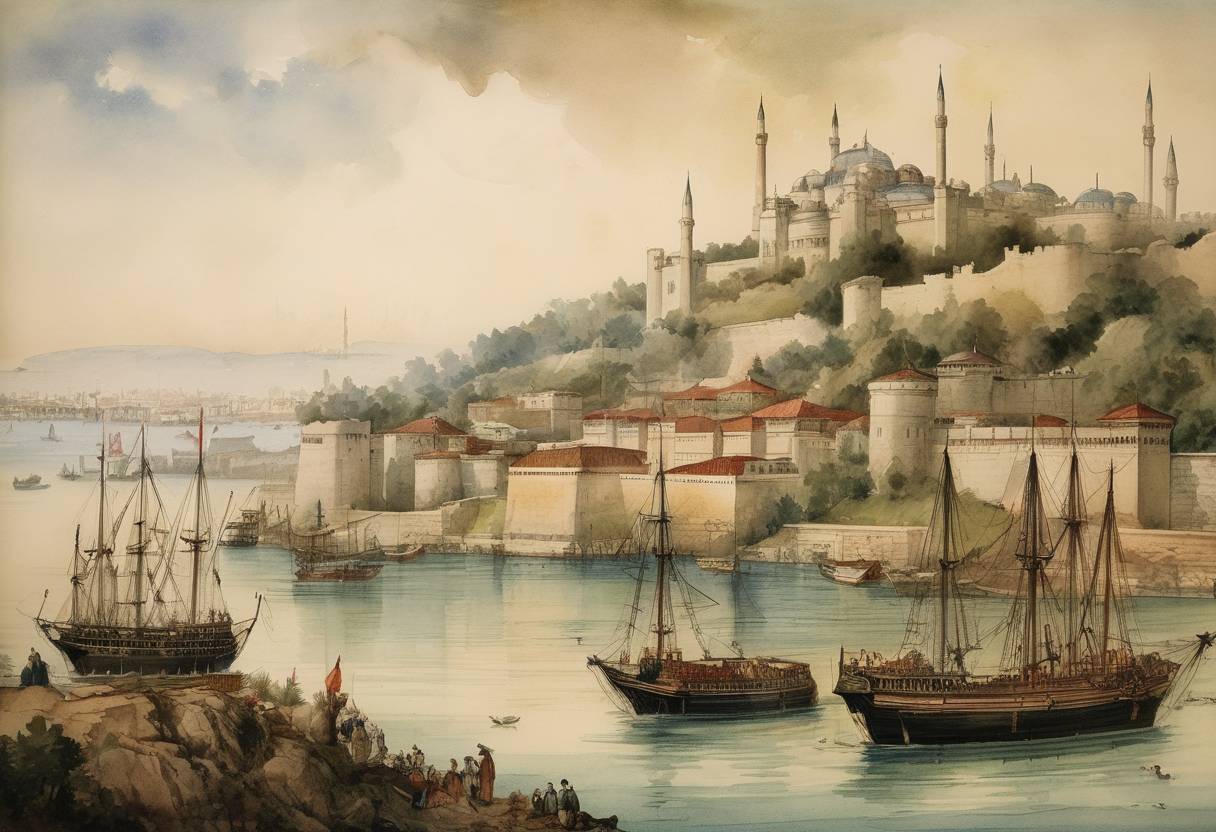
On March 5, 1481, Sultan Mehmed II, known as Mehmed the Conqueror, initiated the construction of Rumelihisarı, a strategic fortress on the European side of the Bosporus Strait. This construction project was a key preparatory step in his campaign to conquer Constantinople, the capital of the Byzantine Empire.
Location: Rumelihisarı was constructed at the narrowest point of the Bosporus, directly across from the earlier Anadoluhisarı on the Asian side. This strategic positioning allowed Mehmed II to effectively control naval traffic and isolate Constantinople by cutting off potential maritime support from the Black Sea.
Design and Construction: The fortress is noted for its speed of construction, reportedly completed in just over four months, and its unique design. The fortress’s formidable walls and towers were designed to deter and defend against any naval forces attempting to aid the besieged city.
Preceding Efforts: Mehmed II ascended to the throne in 1451 and envisioned capturing Constantinople, a goal his predecessors had long aspired to but never accomplished. The Byzantine capital was significantly weakened by this time and presented a lucrative target for the Ottomans.
Building Momentum: By constructing Rumelihisarı, Mehmed II demonstrated both his commitment and strategic acumen, magnifying the pressure on Constantinople. The fortress disrupted supplies and further isolated the city, preparing the stage for the decisive Siege of Constantinople.
Conquest of Constantinople: On May 29, 1453, after a meticulous 53-day siege, Mehmed II and his forces captured Constantinople. This event marked the end of the Byzantine Empire and the consolidation of Ottoman power, leading to Mehmed’s legacy as one of history’s most accomplished military strategists.
Legacy of Rumelihisarı: The fortress remains a significant historical site in Istanbul, symbolizing the Ottoman Empire’s rise to power and its enduring architectural and military prowess.
Rumelihisarı stands today as a testament to Mehmed II’s vision and the transformative period that ushered in the age of the Ottoman domination in the region, shaping the course of history in Southeastern Europe and the wider world.
Source: en.wikipedia.org