The Unveiling of the Sistine Chapel Ceiling
1512 · Vatican City, Vatican City
The ceiling of the Sistine Chapel, painted by Michelangelo, is exhibited to the public for the first time.
November 16, 1997
After nearly 18 years of restoration work, Michelangelo's frescoes in the Sistine Chapel were unveiled to the public.
Vatican City, Vatican City | Vatican Museums
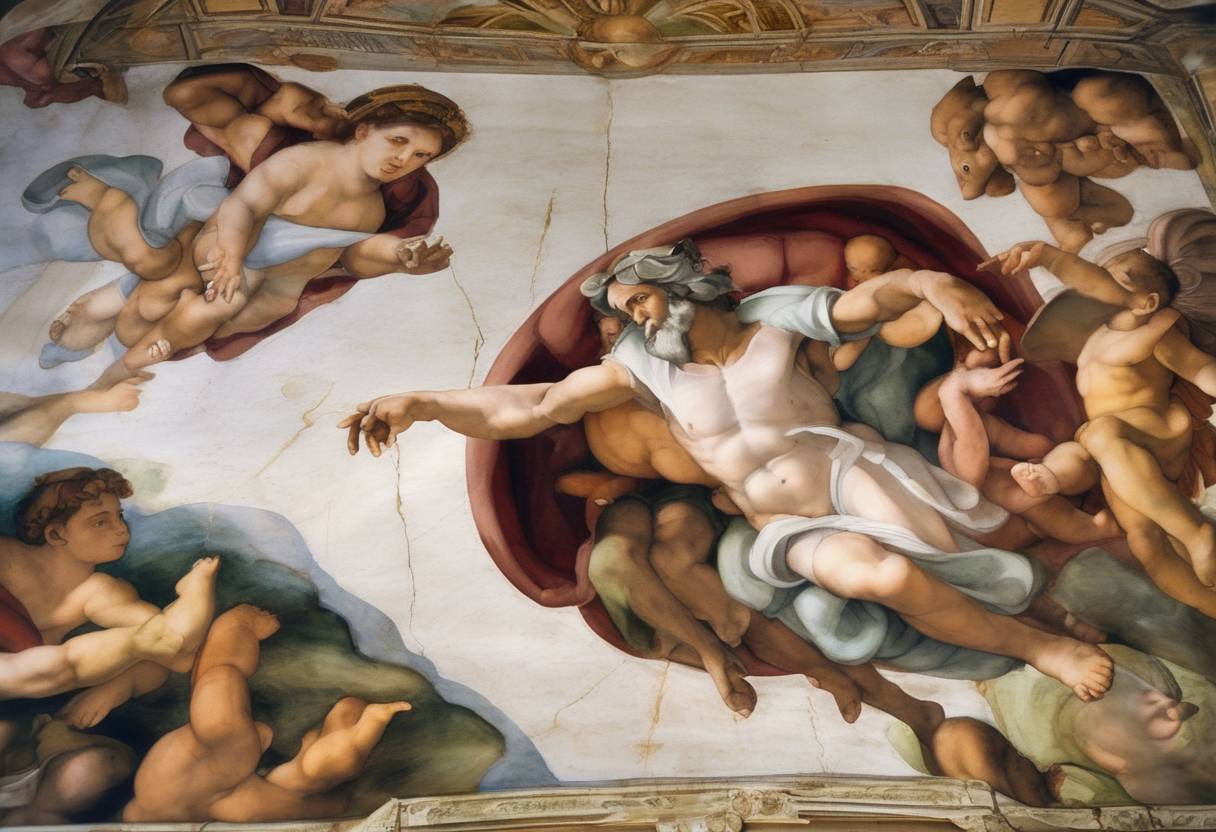
On November 16, 1997, the public witnessed the grand unveiling of the meticulously restored frescoes by Michelangelo in the Sistine Chapel, Vatican City. This event marked the culmination of an extensive restoration project that had begun in 1980 and spanned approximately 18 years.
Michelangelo’s work on the Sistine Chapel ceiling began in 1508 and was completed in 1512 under the patronage of Pope Julius II. The frescoes, which include iconic scenes such as “The Creation of Adam” and “The Last Judgment,” represent a pinnacle of High Renaissance art. Over the centuries, the paintings suffered from exposure to soot, candle smoke, and other environmental factors, which obscured their vivid colors and exquisite detail.
The restoration was led by Fabrizio Mancinelli and Gianluigi Colalucci, along with a team of art restorers who undertook the delicate task of cleaning and conserving Michelangelo’s masterpieces. They used advanced techniques to remove layers of grime and previous conservation attempts that had altered the frescoes’ appearance. This project was not without controversy, as some critics argued that the restoration altered Michelangelo’s original intent by brightening colors and removing the patina of age.
The restored frescoes were officially unveiled to the public and press in November 1997. The restoration revealed previously hidden details and vibrant colors, bringing a new appreciation for Michelangelo’s artistic brilliance. The unveiling was attended by dignitaries and art enthusiasts from around the world, drawing attention to the importance of preserving cultural heritage.
The restoration of the Sistine Chapel frescoes has provided scholars and the public with a clearer understanding of Michelangelo’s technique and vision. It sparked global discussions on the ethics and methodologies involved in art restoration. Furthermore, the project underscored the Vatican’s commitment to preserving its invaluable art treasures for future generations.
Following the unveiling, the restored frescoes continued to attract millions of visitors, enhancing both tourism and scholarly interest in Renaissance art. The project set new standards for conservation practices and informed future restoration efforts worldwide. The Sistine Chapel remains a cultural and spiritual landmark, embodying the convergence of art, religion, and history.
Source: www.britannica.com