Discovery Announcement of Java Man
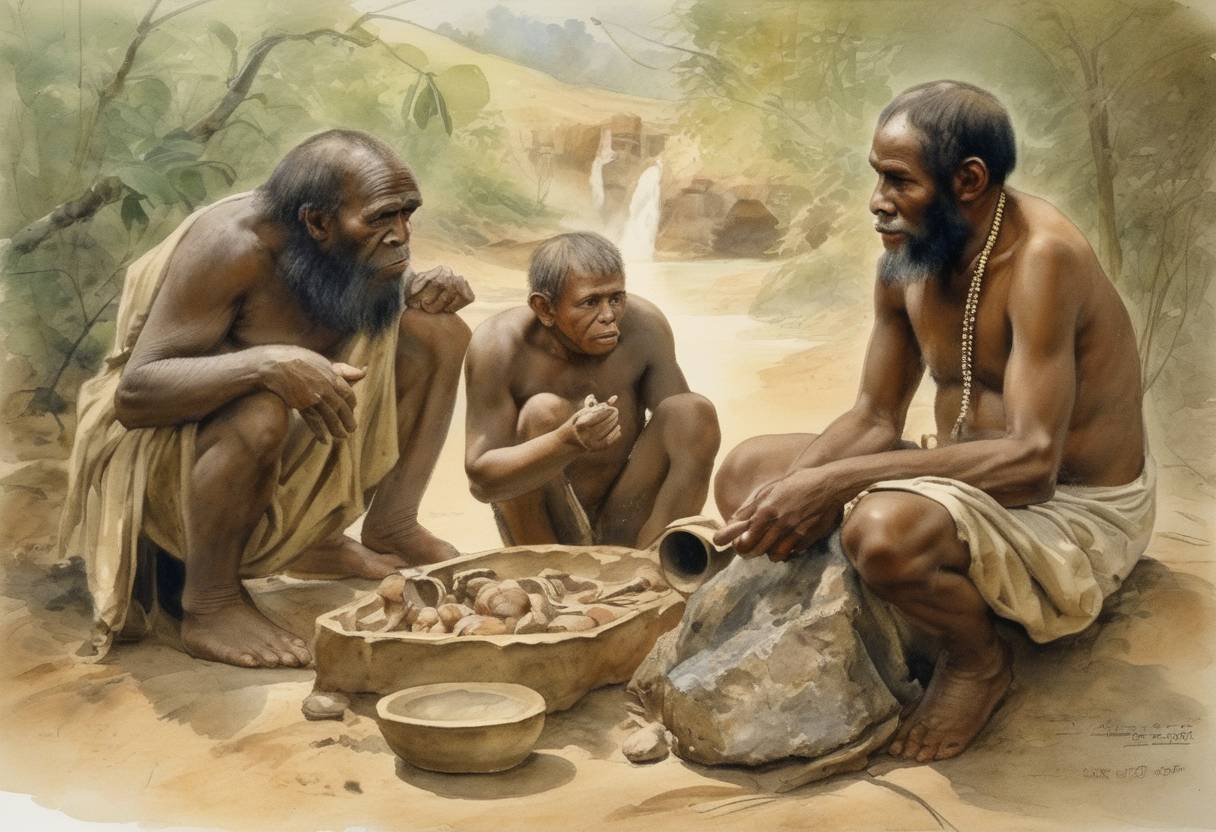
On February 19, 1897, the French scientist Eugène Dubois made a pivotal announcement about the discovery of fossils belonging to Pithecanthropus erectus, later known as Java Man. This landmark event took place during a meeting at the Royal Zoological Society of London, where Dubois presented his findings, significantly contributing to the study of human evolution.
Context and Background
Eugène Dubois was a physician and paleontologist who, inspired by the theories of evolution and human origins, embarked on a quest to find the “missing link” between apes and humans. In the late 19th century, he joined the Dutch East Indies Army, specifically to search for such fossils in Southeast Asia, based on the hypothesis that this region could hold important clues about early human ancestors.
Discovery of Java Man
The fossils Dubois presented were discovered between 1891 and 1892 along the banks of the Solo River in Trinil, Java (then part of the Dutch East Indies, now Indonesia). The significant finds included a skullcap, a femur, and a few teeth, representing what Dubois argued to be a transitional form between apes and modern humans.
Significance
Dubois named the fossil Pithecanthropus erectus, meaning “erect ape-man”. This discovery was crucial as it provided tangible evidence supporting the theory of human evolution, suggesting that early human ancestors were capable of bipedal locomotion. At the time, the scientific community was divided over Dubois’ interpretations, but the fossils laid a foundational stone for paleoanthropology.
Aftermath and Impact
Over the years, initial skepticism regarding Dubois’ interpretation faded as further discoveries corroborated his findings. Since then, Pithecanthropus erectus has been reclassified as Homo erectus, reflecting a closer evolutionary relationship with modern humans. Java Man remains one of the earliest known hominins, highlighting Southeast Asia’s critical role in human evolutionary history.
Dubois’ announcement was a turning point, influencing future research in anthropology and paleontology, fostering investigations that would uncover more about the ancestral paths leading to modern Homo sapiens.