Discovery of the Rosetta Stone
1799 · Rosetta, Egypt
The Rosetta Stone is discovered in the Egyptian village of Rosetta by French soldiers during Napoleon's campaign in Egypt, providing the key to deciphering Egyptian hieroglyphs.
July 19, 1799
The Rosetta Stone was rediscovered by a French soldier in Egypt, providing the key to deciphering Egyptian hieroglyphs.
Fort Julien, near the town of Rashid, Egypt | French Expedition in Egypt
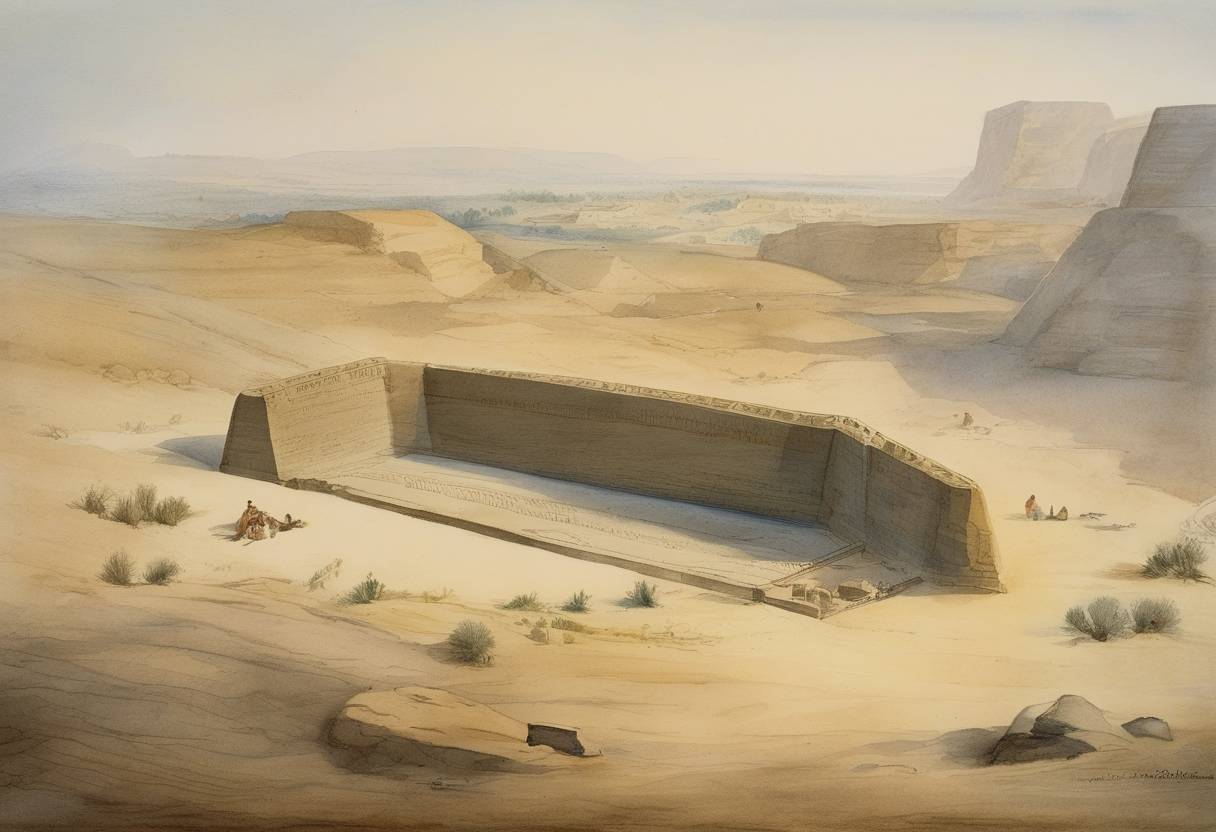
On July 19, 1799, a significant archaeological breakthrough occurred when a French soldier named Pierre-François Bouchard, serving in Napoleon Bonaparte’s army, discovered the Rosetta Stone in the Egyptian town of Rashid (Rosetta). The stone was uncovered during construction work on Fort Julien, near the city, amid the French military campaigns in Egypt.
The Rosetta Stone is an inscribed slab of granodiorite, notable for its trilingual inscriptions in Egyptian hieroglyphs, Demotic script, and Ancient Greek. This parallel inscription was critical in enabling scholars to make substantial progress in translating Egyptian hieroglyphs—a script that had been undeciphered for centuries.
Prior to its discovery, the understanding of ancient Egyptian language and scripts had been limited and largely speculative. The Rosetta Stone became instrumental because the Greek inscription, which scholars could read, provided a foundation for deciphering the other two previously enigmatic scripts.
Jean-François Champollion: Although the stone was discovered in 1799, it was the French scholar Jean-François Champollion who, in the 1820s, successfully deciphered the hieroglyphs. His work unlocked many secrets of ancient Egyptian civilization, thanks to the comparative translations provided by the stone’s inscriptions.
Thomas Young: British polymath Thomas Young also made significant contributions to the early phase of decoding the texts on the stone. He was one of the first to suggest that some of the hieroglyphic symbols on the Rosetta Stone represented sounds.
The decipherment of hieroglyphs revolutionized the field of Egyptology, allowing researchers to understand ancient Egyptian literature, administration, and culture with unprecedented depth. The Rosetta Stone remains a symbol of linguistic breakthrough and cross-cultural scholarship.
Today, the Rosetta Stone is housed in the British Museum in London, where it continues to be one of the museum’s most visited and studied artifacts, symbolizing the intersection of history, language, and archaeology.
Source: en.wikipedia.org