Thomas Edison Patents the Phonograph
1878 · Menlo Park, United States
Thomas Edison patented the phonograph, a device for the mechanical recording and reproduction of sound.
August 12, 1877
Thomas Edison completed the first model of the phonograph, a device that could both record and reproduce sound, marking a significant advancement in audio technology.
Menlo Park, United States | Edison Manufacturing Company
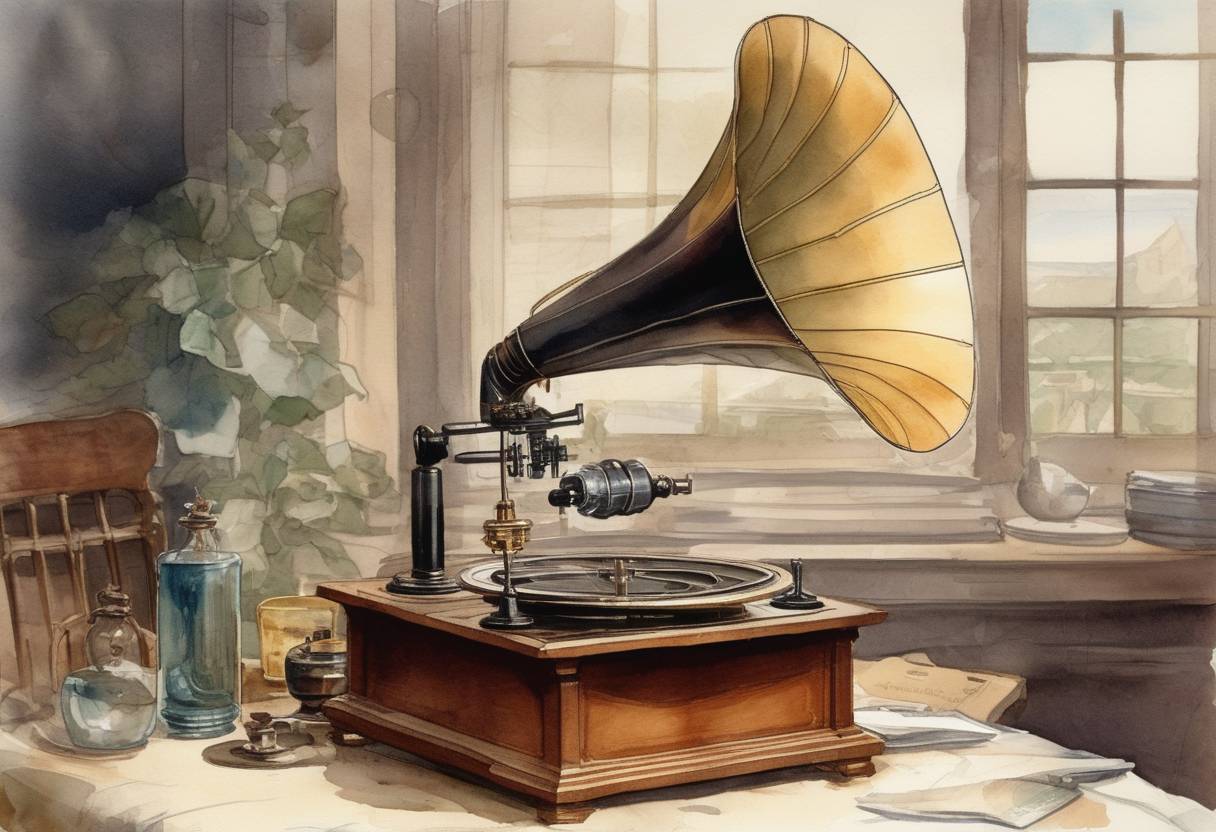
On December 8, 1877, Thomas Edison completed the first model of the phonograph, a groundbreaking invention that marked a significant advancement in audio technology. This device was the first to successfully record and reproduce sound, revolutionizing the way audio was captured and experienced.
Before the phonograph, there were no practical means to record sound. The concept of capturing audio was a novel idea, and Edison, already a prolific inventor, was driven by the challenge. His work on the phonograph began as an offshoot of his efforts to improve the telegraph and the telephone. Edison was experimenting with ways to transcribe telegraphic messages onto paper tape, which led him to consider the possibility of recording sound.
Edison’s phonograph was a mechanical device that used a tinfoil-covered cylinder to record sound. The process involved speaking into a mouthpiece, which caused a diaphragm to vibrate. These vibrations were then transferred to a stylus that etched the sound waves onto the rotating cylinder. To reproduce the sound, the process was reversed: the stylus traced the grooves on the cylinder, causing the diaphragm to vibrate and emit the recorded sound.
The phonograph was a revolutionary invention for several reasons:
Following the successful demonstration of the phonograph, Edison continued to refine the device. The initial tinfoil model was eventually replaced by more durable materials, and the technology evolved into the gramophone and later, the record player. Edison’s invention paved the way for the modern music industry and had a lasting impact on media and culture.
The phonograph’s introduction marked the beginning of a new era in audio technology, showcasing Edison’s ingenuity and solidifying his reputation as one of history’s greatest inventors.
Source: en.wikipedia.org