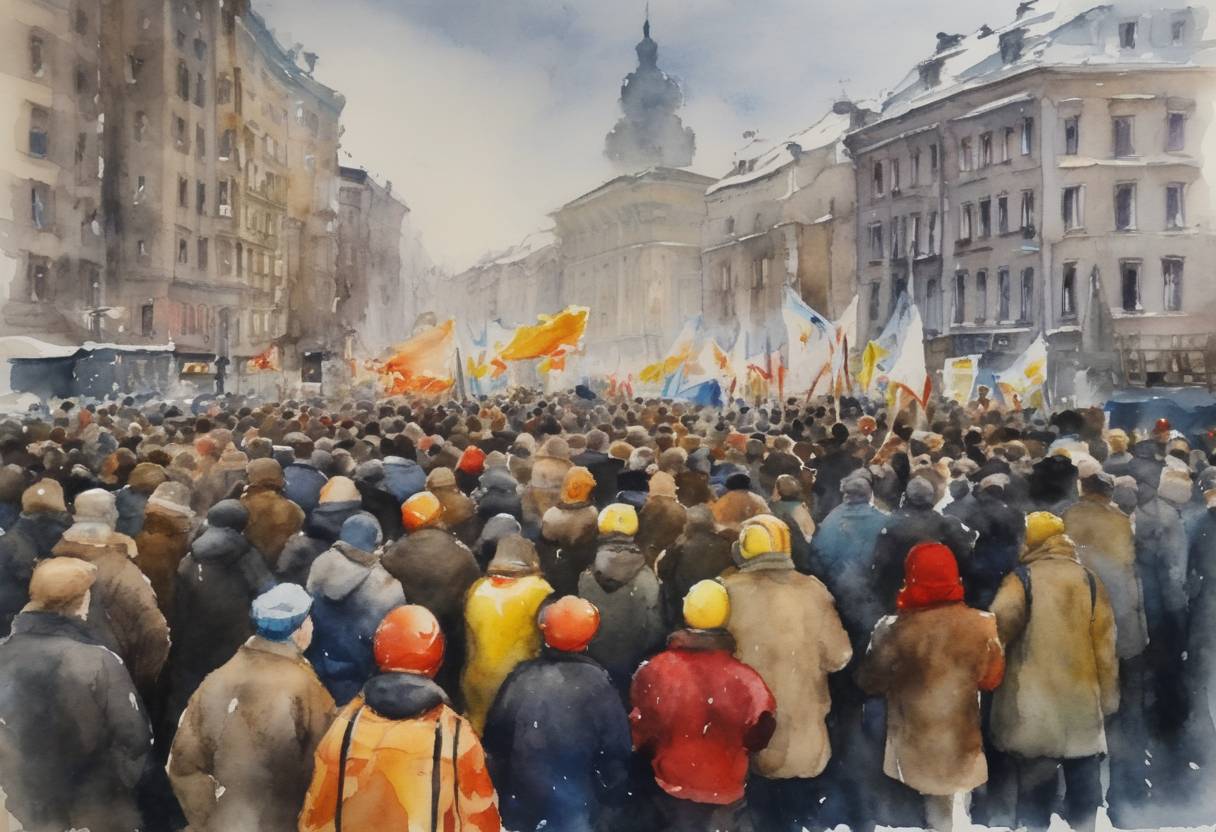
Escalation of the Euromaidan Protests on December 2, 2013
On December 2, 2013, the Euromaidan movement in Ukraine, which began as a peaceful demonstration, continued to gain momentum and intensity in Kyiv. This date marks a critical juncture in the protest movement against President Viktor Yanukovych’s government.
Context and Background
Euromaidan initially began on November 21, 2013, following President Yanukovych’s sudden decision to suspend preparations for the signing of an association agreement with the European Union, opting instead to seek closer economic ties with Russia. This decision fueled public discontent and led to mass protests in Ukraine, primarily centered in Kyiv’s Maidan Nezalezhnosti (Independence Square).
The demonstrations initially focused on expressing support for European integration, swiftly expanding to address broader concerns related to government corruption, abuse of power, and the lack of democratic reforms.
Events of December 2, 2013
By December 2, the protests had escalated significantly due to a series of developments:
Occupation of Government Buildings: Protesters began occupying and blockading government buildings in Kyiv. These included the Kyiv City State Administration and the House of Trade Unions, which were transformed into makeshift headquarters for the protestors.
Formation of Popular Movements: Opposition leaders, including figures from various political parties and civil society, continued to solidify the protest movement. This period saw the coordination of efforts and organization of volunteers, logistics, and resources to sustain prolonged demonstrations.
International Attention: The increasing tension and government’s response drew significant attention from the international community. The ongoing situation was closely monitored by foreign governments, international organizations, and media, which in turn increased pressure on the Ukrainian government.
Aftermath and Significance
The events of December 2 were pivotal in setting the stage for subsequent escalations and confrontations between protestors and government forces. The protests continued to expand in scope and participation, eventually leading to more significant civil unrest, as the government attempted to suppress the movement.
Long-term Impact: The Euromaidan protests ultimately culminated in February 2014, when violent clashes resulted in the overturning of Yanukovych’s administration, his departure from Ukraine, and the establishment of a new government.
Broader Significance: The protest movement underscored the profound public desire for political reform and realignment towards European integration, setting a precedent for civic engagement in Ukraine and amplifying discussions about democracy and sovereignty in the region.
This escalation was a testament to the determination of the Ukrainian populace to advocate for democratic governance and substantial policy changes, setting the country on a tumultuous path towards transformation and political upheaval.