Charles de Gaulle's Resignation on April 28, 1969
1969 · Paris, France
Charles de Gaulle resigned as President of France following the defeat of a referendum on regional reform and Senate reform.
December 21, 1958
Charles de Gaulle was elected as the first President of the French Fifth Republic, establishing the framework for executive power in modern France and marking a key moment in French political history.
Paris, France | French Fifth Republic
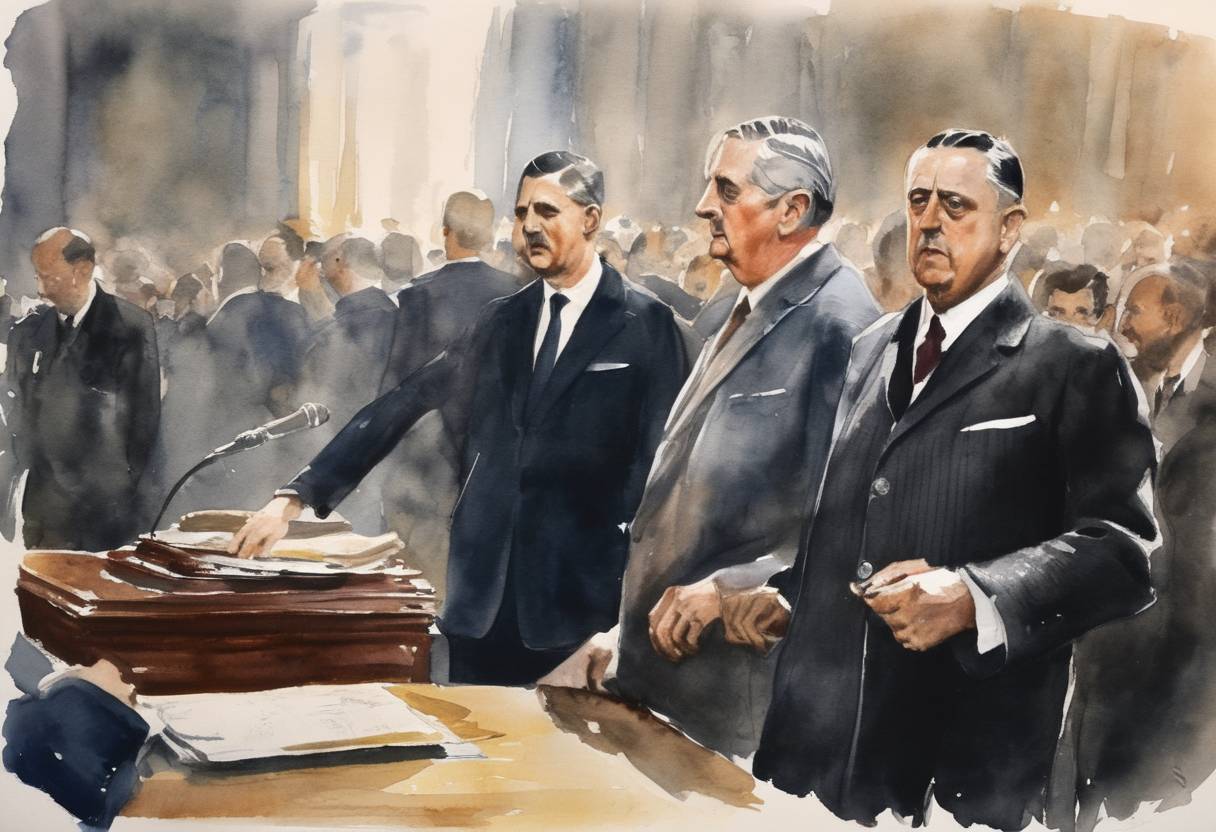
On December 21, 1958, Charles de Gaulle was elected as the first President of the French Fifth Republic, cementing a pivotal moment in the nation’s political landscape. This election marked the transition from the unstable Fourth Republic to the more durable Fifth Republic, characterized by a stronger executive branch.
The French Fourth Republic, established after World War II, was fraught with political instability, characterized by frequent changes in government and an inability to address pressing issues, notably the Algerian War of Independence. A perceived need for more decisive leadership paved the way for constitutional changes.
Charles de Gaulle, a prominent leader in the French Resistance during World War II and a military hero, had withdrawn from politics in 1946, discontented with the existing system. However, as France’s domestic and colonial crises worsened, he was called back to power in May 1958. De Gaulle assumed the position of Prime Minister and set about restructuring the constitution.
The new constitution, largely influenced by de Gaulle, was approved by a referendum in September 1958. It included provisions for a strong executive head, reducing legislative power to ensure stability and effective governance. This setup granted significant authority to the President, including control over foreign policy and defense, while the Prime Minister managed day-to-day government affairs.
In December 1958, Charles de Gaulle was elected by an electoral college as the President of the newly formed Fifth Republic. This election was crucial in legitimizing the constitutional changes and setting a precedent for future governmental structure. De Gaulle’s presidency symbolized a return of strong leadership and national unity amid socio-political upheaval.
De Gaulle’s election initiated a period of political stability in France, with the Fifth Republic enduring to this day. His presidency set the tone for modern French executive power, balancing authority with democratic principles. The framework established remains a cornerstone of French politics, influencing the nation’s governance and electoral processes.
De Gaulle continued to serve as President until 1969, leading through key events, including the resolution of the Algerian War and significant economic modernization. His leadership style and policies continue to be a subject of study for their lasting impact on France and their role in shaping the political order in post-war Europe.
Source: en.wikipedia.org