The Proclamation of the Kingdom of Italy: March 17, 1861
1861 · Turin, Italy
The Kingdom of Italy was proclaimed, with Victor Emmanuel II as its first king, marking the unification of Italy.
December 12, 1849
The first chamber of deputies in the Kingdom of Sardinia was dissolved, prompting new elections.
Turin, Kingdom of Sardinia | Chamber of Deputies of the Kingdom of Sardinia
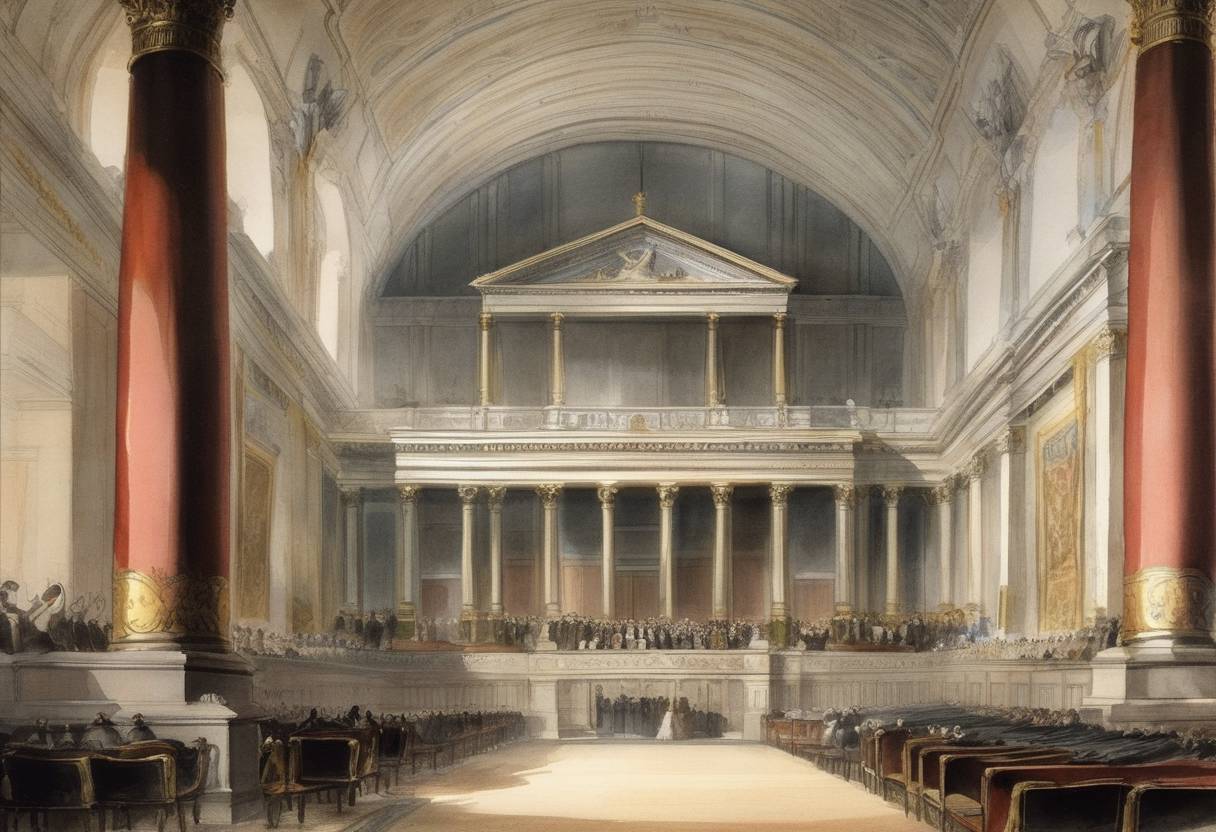
On December 12, 1849, the first Chamber of Deputies in the Kingdom of Sardinia was officially dissolved, leading to the announcement of new elections. This event occurred against the backdrop of significant political and social upheaval in 19th-century Italy.
The Kingdom of Sardinia, consisting of the island of Sardinia, Piedmont, and Savoy, was one of the Italian states playing a pivotal role in the Risorgimento, the movement for Italian unification. The mid-19th century was a period of revolutionary fervor across Europe, including Italy. Amidst these changes, the Kingdom of Sardinia adopted a new constitution in 1848, called the Statuto Albertino, which established a constitutional monarchy with a parliament.
First Italian War of Independence: In 1848, the Kingdom of Sardinia took a leadership role in the conflict against the Austrian Empire, which aimed to liberate Lombardy-Venetia from Austrian control. However, following initial successes, the Sardinian forces suffered defeat by the Austrians in 1849.
Political Instability and Reforms: The defeat was followed by internal instability and the necessity to manage conservative and liberal factions within the state. King Charles Albert abdicated in favor of his son, Victor Emmanuel II.
New Leadership: Under Victor Emmanuel II, the new political direction sought stability and reform, recognizing the need to consolidate the government after the military failure.
The dissolution of the Chamber of Deputies was an essential step in reinvigorating the political system. It was a strategic decision to hold new elections that reflected a renewed commitment to the constitutional framework and potentially address the desires of a broader liberal agenda:
Manifestation of Royal Authority: By dissolving the Chamber, the monarch exhibited his power to refresh the governmental body, thereby ensuring continued loyalty and alignment with the new political vision.
Encouragement of Political Participation: Fresh elections were anticipated to evoke greater political engagement from the populace, seeking to stabilize the newly constitutional state and reduce factional tensions that had arisen in the preceding months.
In the aftermath of the Chamber’s dissolution, new elections were promptly organized. These elections were instrumental in fostering a legislative body that could function effectively under the Statuto Albertino, solidifying Victor Emmanuel II’s leadership.
This political recalibration contributed not only to the stabilization of the Kingdom of Sardinia but also set the stage for the critical role that Sardinia-Piedmont would play in the forthcoming Italian unification efforts, marking the commencement of new political dynamics characteristic of mid-19th-century Italy.
Source: www.treccani.it