The Battle of Spotsylvania Court House
1864 · Spotsylvania County, United States
The Battle of Spotsylvania Court House began during the American Civil War, lasting until May 21.
September 1, 1862
The Battle of Chantilly (Ox Hill) took place as part of the American Civil War, resulting in an inconclusive outcome but significant strategic implications.
Fairfax County, United States | Union and Confederate Armies
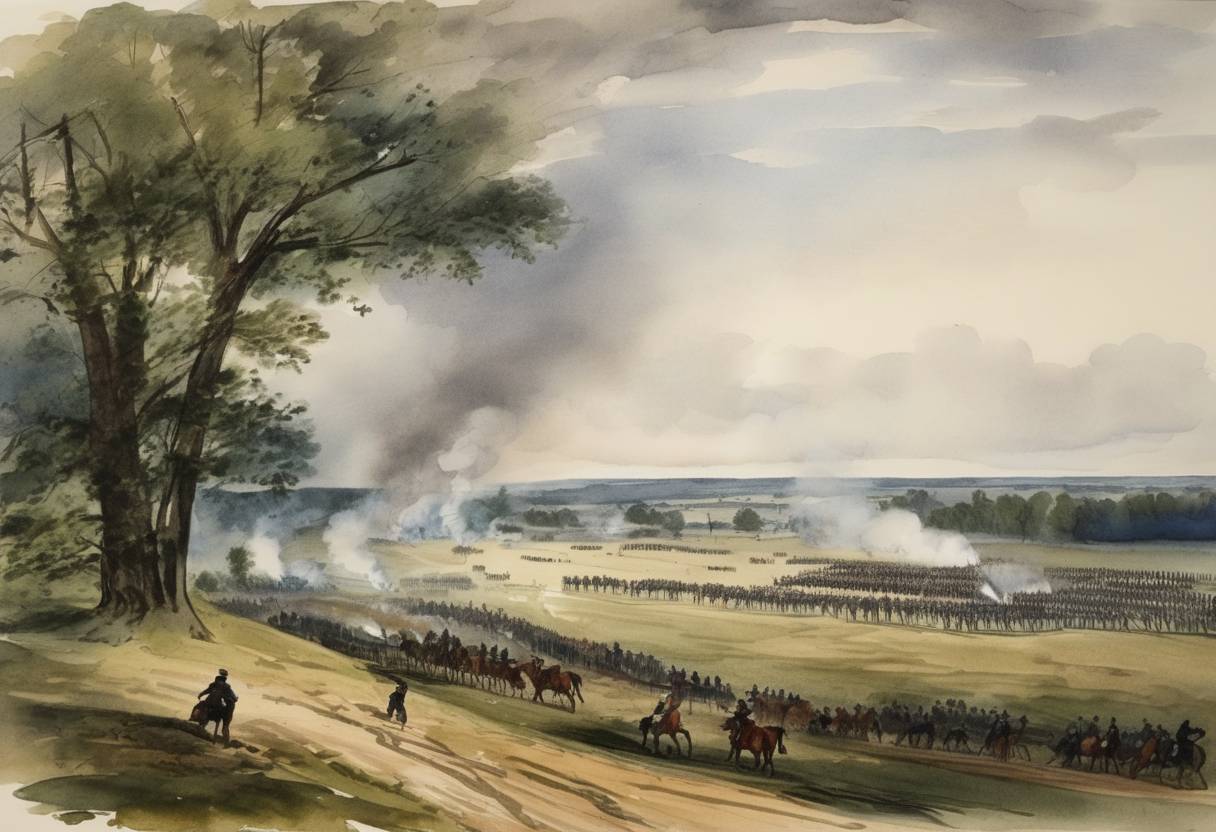
The Battle of Chantilly, also known as the Battle of Ox Hill, was fought on September 1, 1862, during the American Civil War. This inconclusive engagement marked the continuation and aftermath of the Second Battle of Bull Run (Second Manassas).
Following their victory at the Second Battle of Bull Run, Confederate forces under General Robert E. Lee sought to capitalize on their momentum by threatening Union General John Pope’s Army of Virginia. Lee aimed to flank Pope’s army and cut off their path of retreat to Washington, D.C. To execute this maneuver, Lee dispatched Major General Thomas J. “Stonewall” Jackson on a flanking march north of Pope’s position.
The battle commenced in late afternoon, with both sides suffering from visibility issues due to the heavy rain. The terrain and weather contributed to disorganization within both armies.
The Battle of Chantilly did not alter the overall strategic situation immediately but had notable consequences:
The battle underscored the chaotic nature of the 1862 Northern Virginia Campaign, highlighting both the challenges of battlefield communication and the ferocity of mid-war engagements.
Source: www.battlefields.org