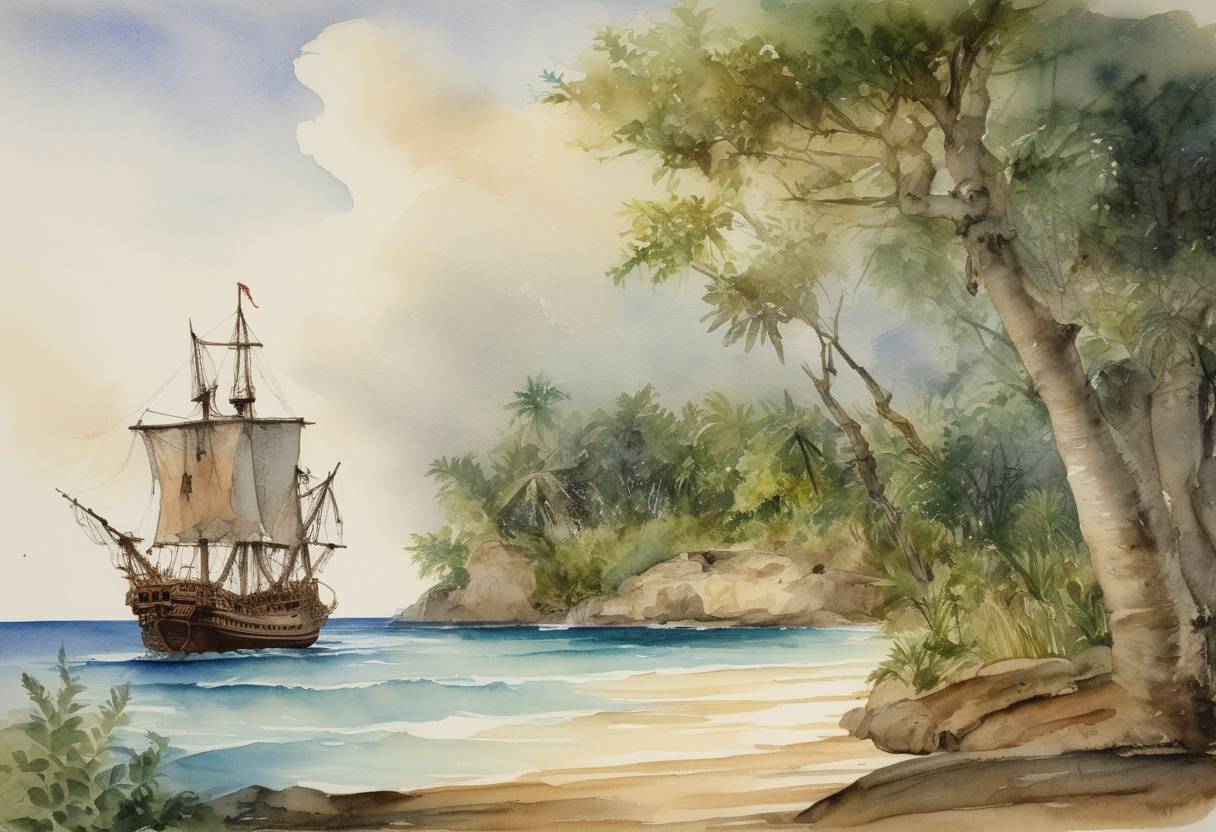
Columbus’ Sighting of Land: October 11, 1492
On the evening of October 11, 1492, Christopher Columbus and his crew aboard the Niña, the Pinta, and the Santa María were nearing a pivotal moment in their historic voyage across the Atlantic Ocean. After weeks at sea since departing the Canary Islands on September 6, the crew was growing anxious, with some beginning to lose faith in the success of their expedition. Morale was boosted significantly on this particular night, however, when signs of nearby land became evident to the weary sailors.
Signs of Land
As the ships sailed westward, the crew of the Pinta, under the command of Martín Alonso Pinzón, noticed unusual indicators of nearby land. Seafaring tradition held that floating vegetation could be a telltale sign of land, and that evening, they spotted such debris at the ship’s bow. Additionally, flickering lights were seen on the horizon, further suggesting proximity to land. These observations reinvigorated the crew, assuring them that they were close to achieving the mission’s goal of finding new territories.
The Impact of the Sighting
The sighting of land on October 11 was a culmination of persistent efforts and navigation expertise displayed by Columbus and his crew. The following day, October 12, 1492, Columbus would officially make landfall on an island in the Bahamas. He named this island San Salvador, though it was already known as Guanahani to its indigenous Lucayan inhabitants. This event marked the beginning of sustained European exploration and colonization in the Americas, fundamentally altering the course of history.
Historical Significance
This moment on October 11, 1492, stands as a critical turning point in global history. Columbus’ voyage opened the way for the widespread exchange known as the Columbian Exchange, which transferred plants, animals, cultures, human populations, and ideas between the continents of the Old World and the New World. This set the stage for the complex global interactions that would follow, influencing cultures and societies worldwide.