Petrarch's Ascent of Mont Ventoux: April 26, 1336
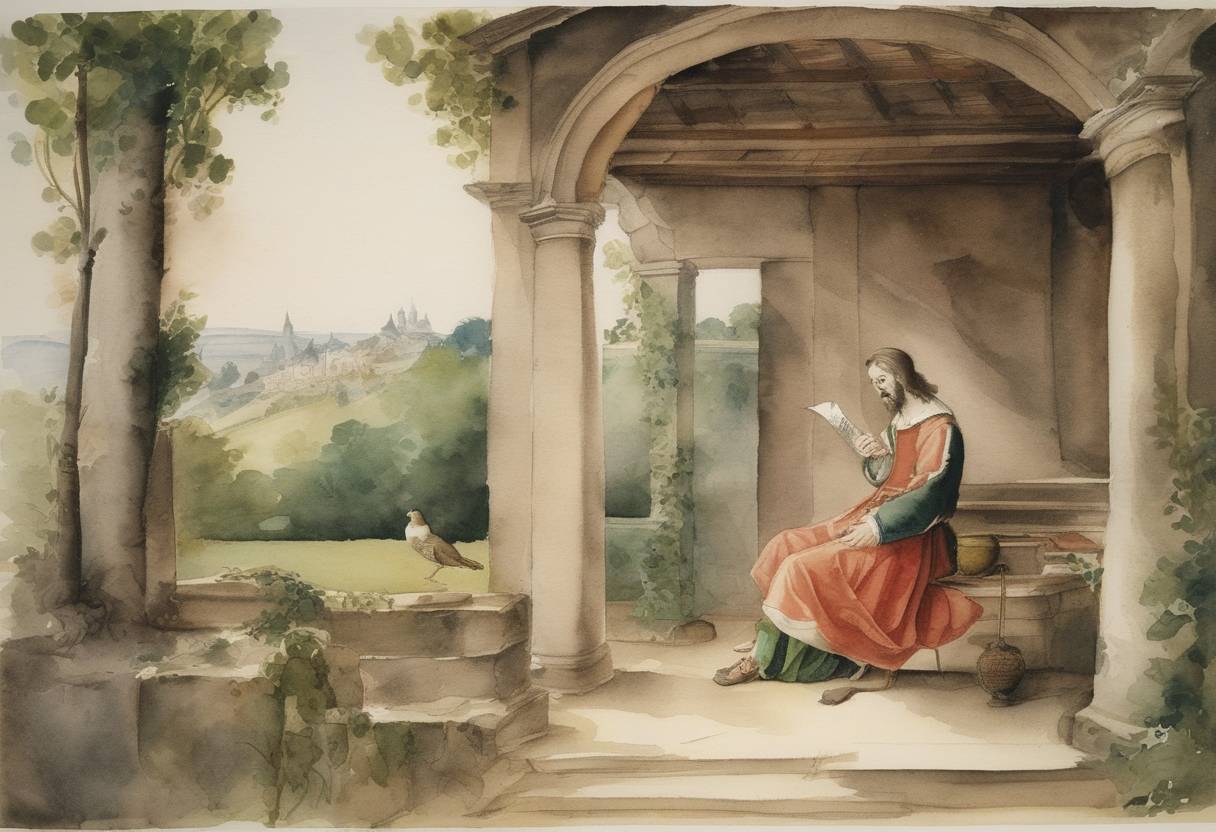
1336 · Mont Ventoux, France
Francesco Petrarca, known as Petrarch, ascends Mont Ventoux in France, an event often considered symbolic of the Renaissance's humanist spirit.
August 27, 1593
Pierre de Ronsard, a prominent French poet in the literature of the Renaissance, passed away.
Saint-Cosme-en-l'Isle, France
On December 27, 1585, Pierre de Ronsard, one of the most significant poets of the French Renaissance, passed away. Known as the “Prince of Poets” in his time, Ronsard was a central figure in the literary movement known as La Pléiade.
Born on September 11, 1524, in the Château de la Poissonnière, near Vendôme in the Kingdom of France, Ronsard was educated at the Collège de Navarre in Paris. His initial career at the court was interrupted by a hearing problem, which redirected his ambitions toward literature.
Ronsard was instrumental in advancing the French language’s literary capability, promoting the use of vernacular French rather than Latin in poetry. He co-founded the group of poets called La Pléiade, which sought to enrich French lyric poetry by imitating classical forms and themes, thus elevating the status of the French language.
Ronsard’s work had a profound influence on the development of French poetry, and his ideas resonated with later poets. His efforts to blend classical traditions with French poetic forms significantly impacted the Renaissance humanist ideology in France.
Ronsard’s choice to embellish the French language, his nuanced use of the alexandrine verse form, and his ability to employ a wide range of emotions and themes have made his work enduringly popular. His poetry reflects both the cultural aspirations of the Renaissance and a deeply personal introspective quality, ensuring his place as a pivotal literary figure of his era.
Pierre de Ronsard’s death marked the end of an era in French poetry. As a bridge between medieval poetic forms and the burgeoning Renaissance style, his contributions to literature provided a foundation for future generations. His work remains studied and celebrated for its artistic excellence and its role in the elevation of French cultural literature.
Source: en.wikipedia.org