Maurice Becomes Byzantine Emperor - August 13, 582
582 · Constantinople, Byzantine Empire
Maurice became the Byzantine Emperor, marking the beginning of his reign.
November 27, 0602
The Byzantine Emperor Maurice and his five sons are executed by the usurper Phocas. This marks a significant turning point in Byzantine history, as Phocas's reign would be characterized by instability and would eventually lead to the empire's conflicts with the Sassanian Empire.
Chalcedon, Turkey | Byzantine Empire
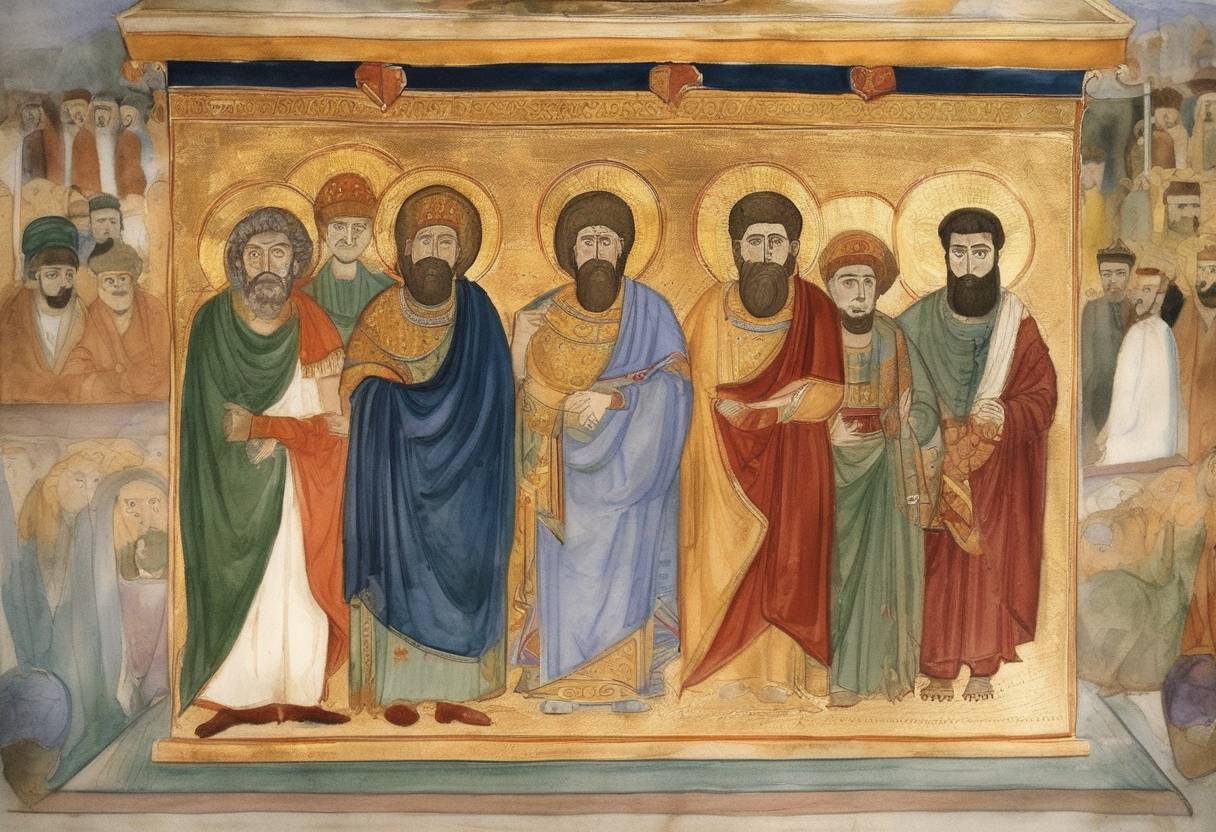
On November 27, 602, a pivotal event in Byzantine history unfolded with the execution of Emperor Maurice and his five sons by the usurper Phocas. This brutal act marked a significant and destabilizing shift in the Byzantine Empire, influencing both internal and external political landscapes.
Emperor Maurice had ascended to the Byzantine throne in 582, following the reign of Tiberius II. His tenure was initially marked by competence and military success, notably stabilizing the Balkan frontiers and restoring stability in the Persian conflicts. However, financial strain caused by ongoing military campaigns and strict fiscal measures to replenish the empire’s treasury led to widespread dissatisfaction.
The immediate catalyst for his downfall came when Maurice ordered his troops to winter beyond the Danube River, a harsh and unpopular decision that sparked a mutiny led by an officer named Phocas. The mutineers marched on Constantinople, amplifying the unrest within the capital.
With growing support, Phocas seized power, compelling Maurice to flee with his family. Captured shortly after, Maurice and his sons met a grim fate. Their executions not only marked the gruesome beginning of Phocas’s notorious reign but also extinguished a legitimate line of succession, plunging the empire into chaos.
Phocas’s ascension precipitated a period characterized by brutal authoritarianism and significant turmoil. His reign quickly came under challenge from within both domestic factions and military adversaries. This internal discord weakened the Byzantine Empire, providing an advantageous context for external aggression.
The instability under Phocas prompted substantial conflict with the neighboring Sassanian Empire. Relations severely deteriorated, and the empire soon found itself embroiled in protracted and costly wars, which were detrimental to its longevity and stability. These conflicts contributed to a weakened Byzantine state, tilting the balance of power in the region.
The execution of Maurice and his sons on November 27, 602, thus represents a turning point in Byzantine history. It set off a chain of events that would lead to further unrest and vulnerability, reshaping the empire’s fate in the subsequent decades.