Creation of the United States National Park Service
1916 · Washington, D.C., United States
The United States National Park Service is created.
September 24, 1906
U.S. President Theodore Roosevelt proclaims Devils Tower in Wyoming as the nation's first National Monument.
Wyoming, United States | United States National Park Service
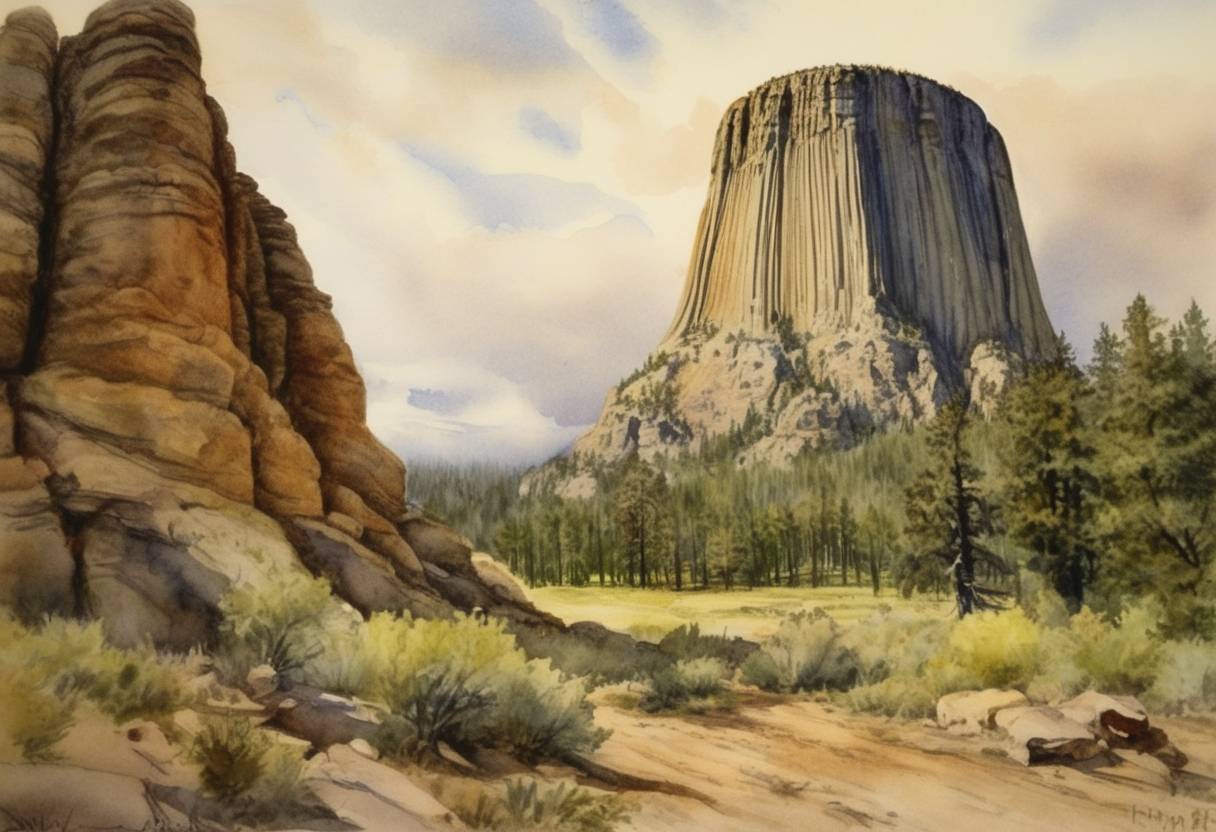
On September 24, 1906, U.S. President Theodore Roosevelt proclaimed Devils Tower in Wyoming as the first National Monument of the United States. This historic action was authorized under the American Antiquities Act, which had been signed into law earlier that same year. The Antiquities Act granted the President the authority to create national monuments from federal lands to protect significant natural, cultural, or scientific features.
The Antiquities Act of 1906: The legislation was inspired by growing concerns over the preservation of archaeological sites, primarily in the American Southwest. Supported by advocates such as anthropologists and conservationists, its passage marked a pivotal moment for conservation efforts in the U.S.
Theodore Roosevelt’s Conservation Legacy: Roosevelt was a staunch conservationist, and his administration was characterized by noteworthy efforts to preserve natural sites. The declaration of Devils Tower as a national monument was consistent with his broader agenda to protect natural landscapes and wildlife.
Devils Tower: Located in the Black Hills, northeast Wyoming, Devils Tower is a geological marvel and a site of cultural significance. It rises dramatically 1,267 feet above the Belle Fourche River, featuring unique hexagonal columns of igneous rock. The tower holds particular importance to several Native American tribes, featuring prominently in cultural traditions and stories.
Immediate Effect: The designation of Devils Tower initiated a tradition of safeguarding areas of natural and cultural importance, paving the way for the creation of future national monuments and national parks.
Long-term Influence: Over the years, the flexibility of the Antiquities Act has enabled subsequent presidents to protect countless sites of historical, archaic, and scientific value across the country. The move also set a precedent that reaffirmed the commitment to conservation within the U.S. policy framework.
Tourism and Culture: Devils Tower has become a significant tourist attraction, drawing visitors from around the world and bolstering the local economy while providing an opportunity for education and cultural exchange.
As the inaugural national monument, Devils Tower remains a symbol of early 20th-century conservation efforts in the United States and a reminder of the enduring importance of preserving the nation’s natural and cultural heritage.
Source: www.nps.gov