Founding of Rattanakosin (Bangkok) - April 21, 1782
1782 · Bangkok, Thailand
The city of Rattanakosin, now known as Bangkok, was founded as the capital of the Kingdom of Siam (modern-day Thailand).
December 28, 1767
King Taksin the Great founded the city of Thonburi as the capital of Siam (now Thailand) after the fall of Ayutthaya to the Burmese, marking a significant moment in Thai history.
Thonburi, Thailand | Kingdom of Siam
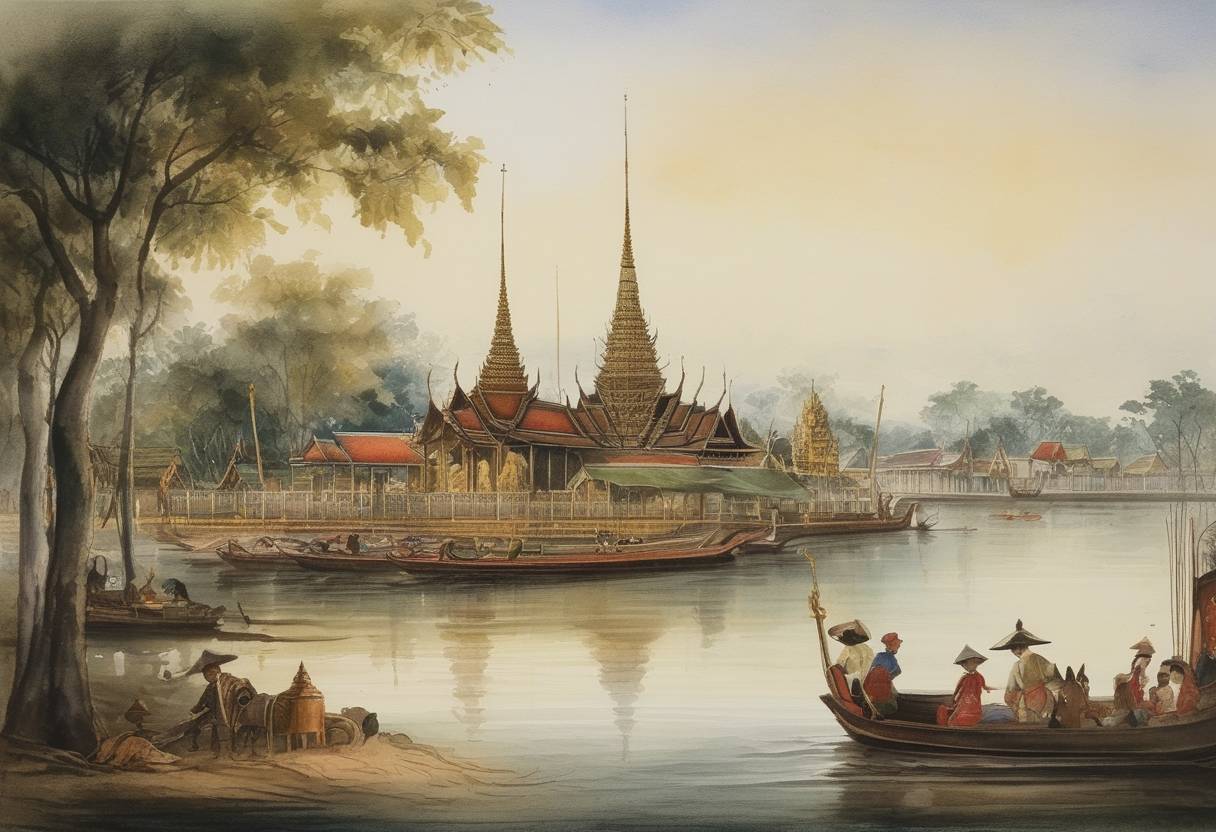
The founding of Thonburi as the capital of Siam by King Taksin the Great on December 28, 1767, marks a pivotal moment in Thai history. This event occurred in the aftermath of the devastating fall of Ayutthaya to the Burmese forces.
The Fall of Ayutthaya: In April 1767, the ancient capital of Ayutthaya, a flourishing kingdom and trade center, fell to the Burmese army after a prolonged siege. The city was thoroughly sacked and left in ruins, marking the end of the Ayutthaya Kingdom, which had existed for over 400 years.
Political Fragmentation: Following Ayutthaya’s destruction, the territory of Siam (modern-day Thailand) was divided into several small kingdoms and warlords, leading to a period of significant political fragmentation and instability.
Leadership and Unification: Taksin, a former governor of the Tak province, emerged as a charismatic and capable military leader. He managed to rally the scattered Siamese forces and orchestrate a series of successful campaigns against rival factions and remaining Burmese forces.
Coronation as King: Taksin was crowned as King of Siam in December 1767. His immediate focus was on reestablishing a central authority and restoring Siam’s sovereignty.
Strategic Relocation: Recognizing the vulnerability of Ayutthaya and its devastated state, King Taksin made the strategic decision to relocate the capital to Thonburi. This site was strategically positioned on the west bank of the Chao Phraya River, near the Gulf of Thailand, enabling better defense against potential invasions.
Reconstruction Efforts: Thonburi was developed rapidly, with efforts focused on building fortifications, restoring religious and governmental institutions, and initiating trade networks necessary for economic recovery.
Preservation of Siamese Identity: King Taksin’s decisive actions helped preserve the Siamese cultural and political identity during a period of existential threat. By founding a new capital, he provided a foundation for the continuation and eventual resurgence of Siam.
Foundation for Future Growth: Thonburi’s establishment as the capital laid the groundwork for future expansion under successive kings, leading to the eventual foundation of Bangkok in 1782 by King Rama I, which succeeded Thonburi as the capital.
King Taksin’s leadership during this tumultuous period remains a significant chapter in Thai history, reflecting resilience and adaptability in the face of adversity.
Source: www.britannica.com