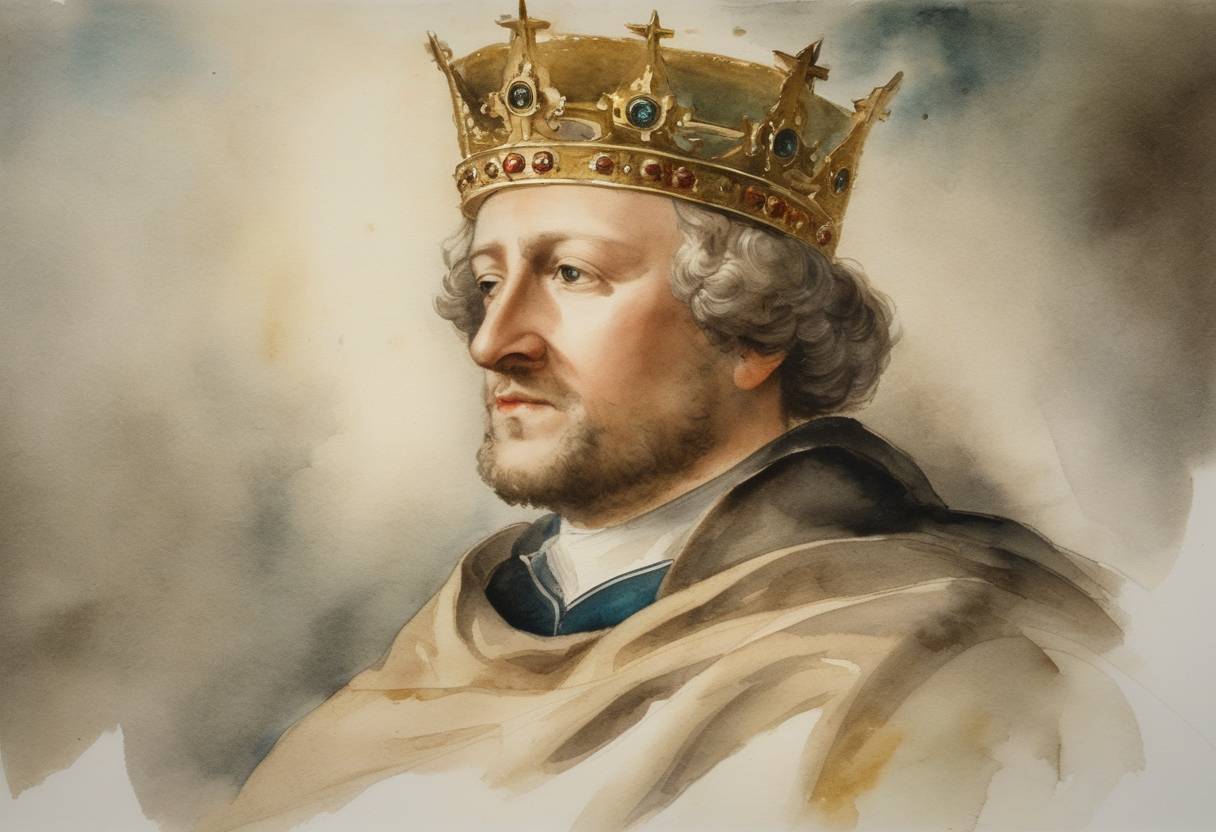
Birth of Frederick II, Holy Roman Emperor
Frederick II was born on December 26, 1194, in Jesi, a town near Ancona in the Marche region of Italy. He was a pivotal figure in medieval European history, serving as King of Sicily, King of Germany, King of Jerusalem, and Holy Roman Emperor. His birth marked the continuation of the Hohenstaufen dynasty’s influence in European politics and laid the foundation for a reign that would be marked by both conflict and cultural achievement.
Early Life and Ancestry
Frederick was the son of Emperor Henry VI and Constance of Sicily, placing him in a position of unique power from birth. His father was a member of the Hohenstaufen dynasty, renowned for its ambition and political machinations within the Holy Roman Empire, while his mother was from the esteemed Norman line that ruled Sicily. This distinct heritage granted Frederick a claim to a diverse collection of territories, setting the stage for his future ambitions.
The Political Context
At the time of Frederick’s birth, the Holy Roman Empire was a complex web of territories across Central Europe, with ambitions extending into Italy and beyond. Frederick’s paternal grandfather, Frederick I Barbarossa, had established a legacy of imperial power but also of ongoing struggles with the Papacy and various regional powers. His father, Henry VI, worked to consolidate imperial authority, particularly through the conquest of the Kingdom of Sicily, which was achieved by marrying Constance and annexing her inherited lands.
Historical Significance
Frederick II’s birth is significant as it foreshadowed the emergence of a ruler who would influence not only the political landscape of his era but also European cultural and intellectual life. Known later as “Stupor Mundi” or “Wonder of the World,” Frederick was unprecedentedly involved in politics and the arts. His reign was characterized by efforts to centralize imperial authority, confrontations with the Papacy, and a revival of classical culture that prefigured the Renaissance.
Aftermath and Consequences
Following the death of his father in 1197, Frederick faced numerous challenges, including the complex task of securing his inherited territories against rival claimants and political adversaries. Despite these obstacles, he eventually solidified his rule, leading an empire that left a lasting legacy on European medieval history. His endeavors in the Kingdom of Jerusalem and the broader Mediterranean also underscore his role as a key transitional figure between western and eastern powers.
Frederick II’s birth set into motion a lifetime marked by both remarkable achievements and controversies that still intrigue historians today. His reign would prove to be one of the most dynamic and transformative in the medieval world.