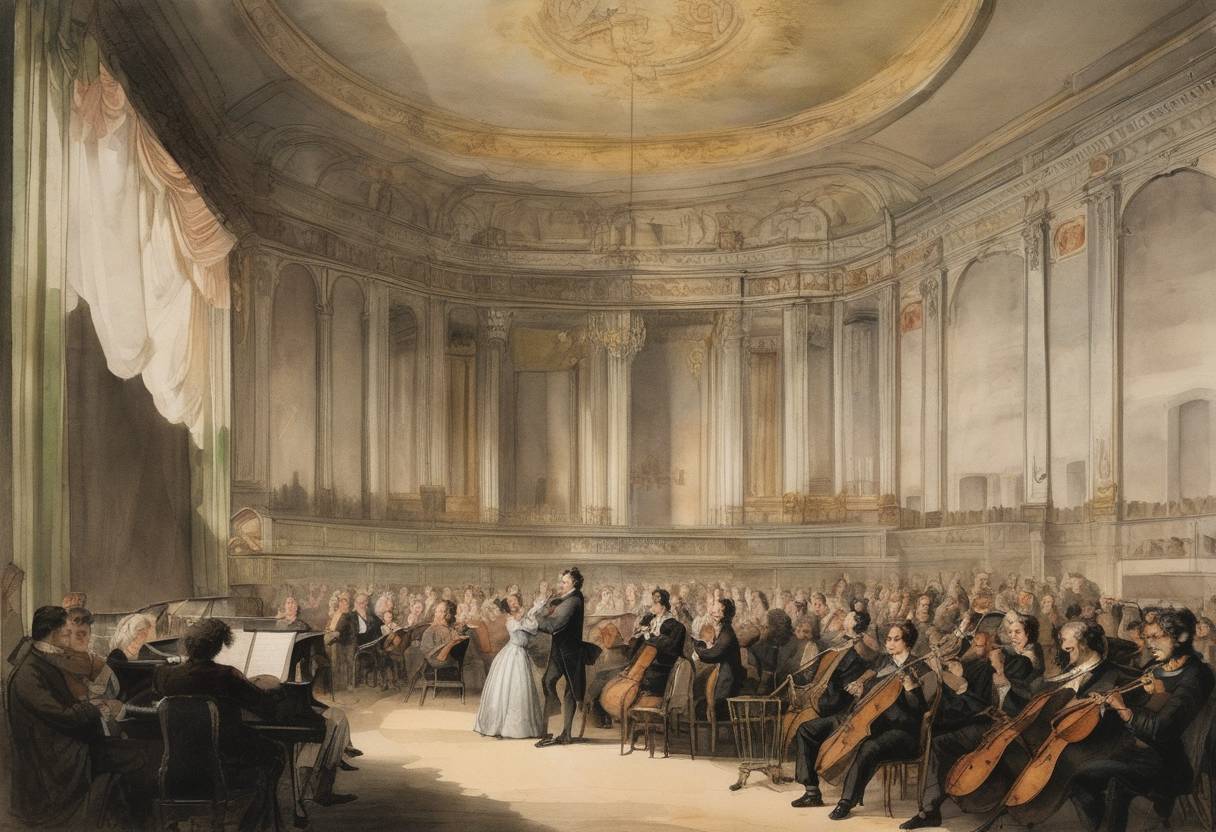
Beethoven’s Symphony No. 5 and Symphony No. 6 Premiere on December 20, 1808
On December 20, 1808, the Austrian composer Ludwig van Beethoven premiered two of his most celebrated symphonies—Symphony No. 5 in C minor, Op. 67, and Symphony No. 6 in F major, Op. 68, also known as the “Pastoral” Symphony—at the Theater an der Wien in Vienna. This event was a significant moment in the history of classical music.
Historical Context
By the time of this concert, Beethoven was already an established and renowned composer. However, he was also grappling with increasing deafness, a condition that deeply affected his personal and professional life. Despite these challenges, Beethoven continued to produce music that would cement his legacy as one of the greatest composers in Western classical music.
The Concert Program
The concert at the Theater an der Wien was a lengthy four-hour event, an arduous yet a common practice for concerts of that time. The program consisted of several of Beethoven’s works, including:
- Symphony No. 6 in F major, Op. 68 (“Pastoral”): This symphony reflects Beethoven’s love of nature and is structured in five movements, each depicting scenes of rural life.
- Symphony No. 5 in C minor, Op. 67: Renowned for its iconic four-note opening motif, the Fifth Symphony is a quintessential example of classical music’s dramatic power and ingenuity.
- Other compositions performed included the Piano Concerto No. 4 in G major, Op. 58, and the Choral Fantasy, Op. 80, among others.
Symphony No. 5
The Fifth Symphony, with its dramatic and emotional depth, is considered a masterpiece of the symphonic genre. Its famous opening motif has been interpreted in various ways, often symbolizing fate knocking at the door. The symphony progresses from the tension of the C minor opening towards a triumphant C major finale, representing a journey from struggle to victory.
Symphony No. 6 (“Pastoral”)
The “Pastoral” Symphony stands in stark contrast to the Fifth, offering a gentle and bucolic portrayal of nature. Its five movements are:
- Awakening of cheerful feelings upon arrival in the countryside.
- Scene by the brook.
- Peasants’ merrymaking.
- Thunderstorm.
- Shepherd’s song; cheerful and thankful feelings after the storm.
Beethoven’s depiction of rural life and nature captures a sense of tranquility and introspection, hallmarking the symphony as an idyllic and programmatic work.
Aftermath and Legacy
Despite challenging conditions, as the concert was held in an unheated theater during winter, and the performance was under-rehearsed, Beethoven’s profound compositions left an indelible impact on audiences and critics alike. Symphony No. 5 and Symphony No. 6 have since become cornerstones of classical music, profoundly influencing the development of the symphonic form and inspiring countless musicians and composers to this day. The premiere highlighted Beethoven’s enduring genius and his ability to transcend personal adversity through his art.