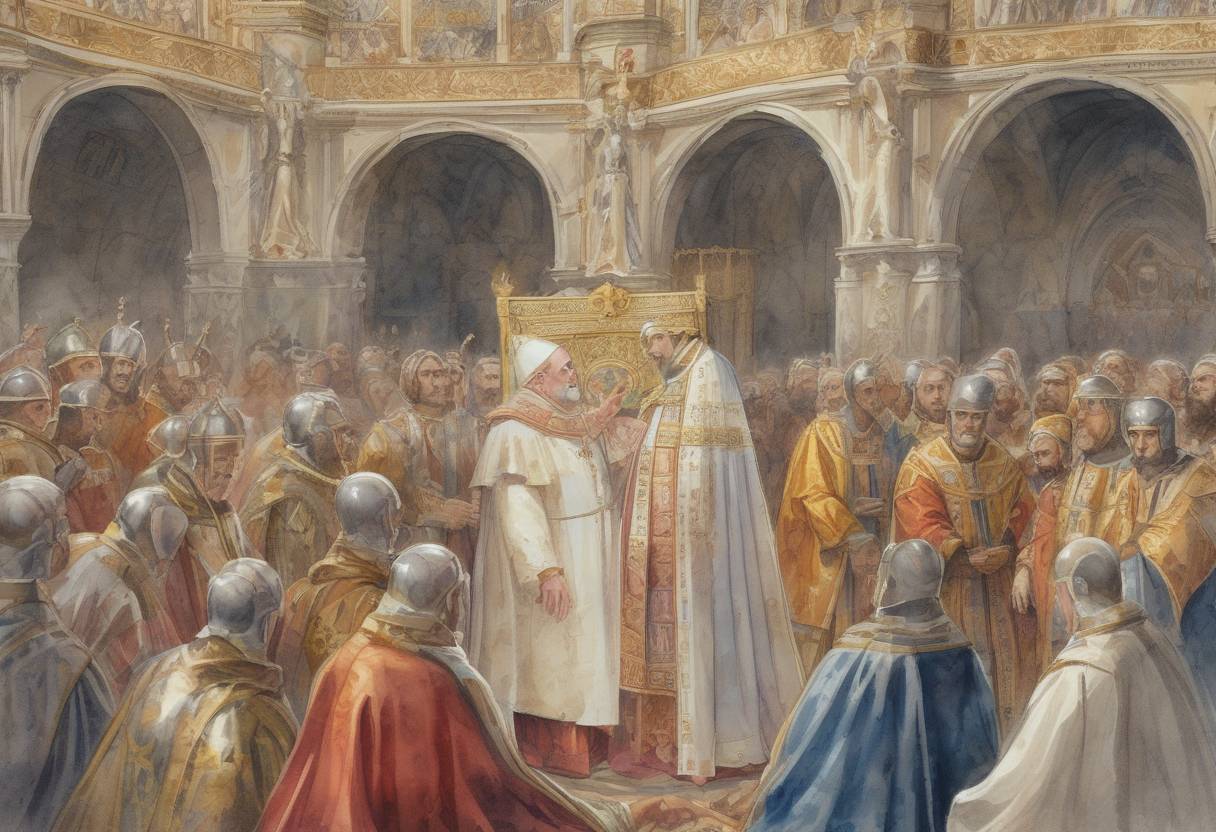
Pope Stephen II Anoints Pepin the Short as King of the Franks
On February 6, 754, a significant event unfolded that would shape the relationship between the papacy and European monarchies for centuries: Pope Stephen II anointed Pepin the Short as King of the Franks. This ceremony marked the first time a pope had crowned a king, establishing a precedent for papal involvement in the political affairs of Europe.
Historical Context
Background of Pepin the Short
Pepin the Short, also known as Pepin III, was the son of Charles Martel, the Frankish leader renowned for his victory at the Battle of Tours in 732, which halted the advance of Muslim forces into Western Europe. Upon Charles Martel’s death, Pepin and his brother Carloman inherited the leadership of the Frankish realm. By 747, Carloman had retired to a monastic life, leaving Pepin as the sole ruler.
The Decline of Merovingian Power
At the time, the Merovingian dynasty nominally ruled the Franks, but their power had waned significantly. The Merovingian kings were often referred to as “do-nothing kings,” with real power held by the mayors of the palace, a position Pepin himself occupied. Seeking to legitimize his rule, Pepin sought the support of the papacy.
Papal Interests
Pope Stephen II faced threats from the Lombards, who were encroaching on papal territories in Italy. The Byzantine Empire, traditionally the protector of the papacy, was unable to provide assistance due to its own internal struggles. Thus, the pope sought an alliance with the Franks, who had the military strength to counter the Lombard threat.
The Anointing Ceremony
In 751, Pepin sent envoys to Pope Zachary, Stephen II’s predecessor, to inquire whether it was right for someone with the title but not the power of a king to rule. Pope Zachary responded that it was better for the one who wielded power to be king, effectively endorsing Pepin’s claim.
In 754, Pope Stephen II traveled across the Alps to meet Pepin in the Frankish kingdom. On February 6, in a solemn ceremony at the Basilica of Saint-Denis near Paris, Stephen anointed Pepin as king. This act was not merely symbolic; it conferred divine legitimacy on Pepin’s rule and established the precedent of papal authority in the crowning of kings.
Consequences and Significance
Strengthened Papal-Frankish Alliance: The anointing solidified the alliance between the papacy and the Frankish kingdom. In return for papal support, Pepin pledged to protect the papal territories, which he did by defeating the Lombards and donating the conquered lands to the pope, a gift known as the Donation of Pepin. This act laid the foundation for the Papal States.
Precedent for Papal Authority: The ceremony set a precedent for future papal involvement in the crowning of European monarchs. This relationship would reach its zenith with the crowning of Charlemagne, Pepin’s son, as Emperor of the Romans by Pope Leo III in 800.
Shift in Power Dynamics: The event marked a shift in the power dynamics of Western Europe, with the papacy emerging as a significant political force. It also signaled the decline of the Merovingian dynasty and the rise of the Carolingian dynasty, which would dominate European politics for the next century.
In summary, the anointing of Pepin the Short by Pope Stephen II was a pivotal moment in medieval history, intertwining the destinies of the papacy and the Frankish kingdom and setting the stage for the complex interplay of religious and political power in Europe.