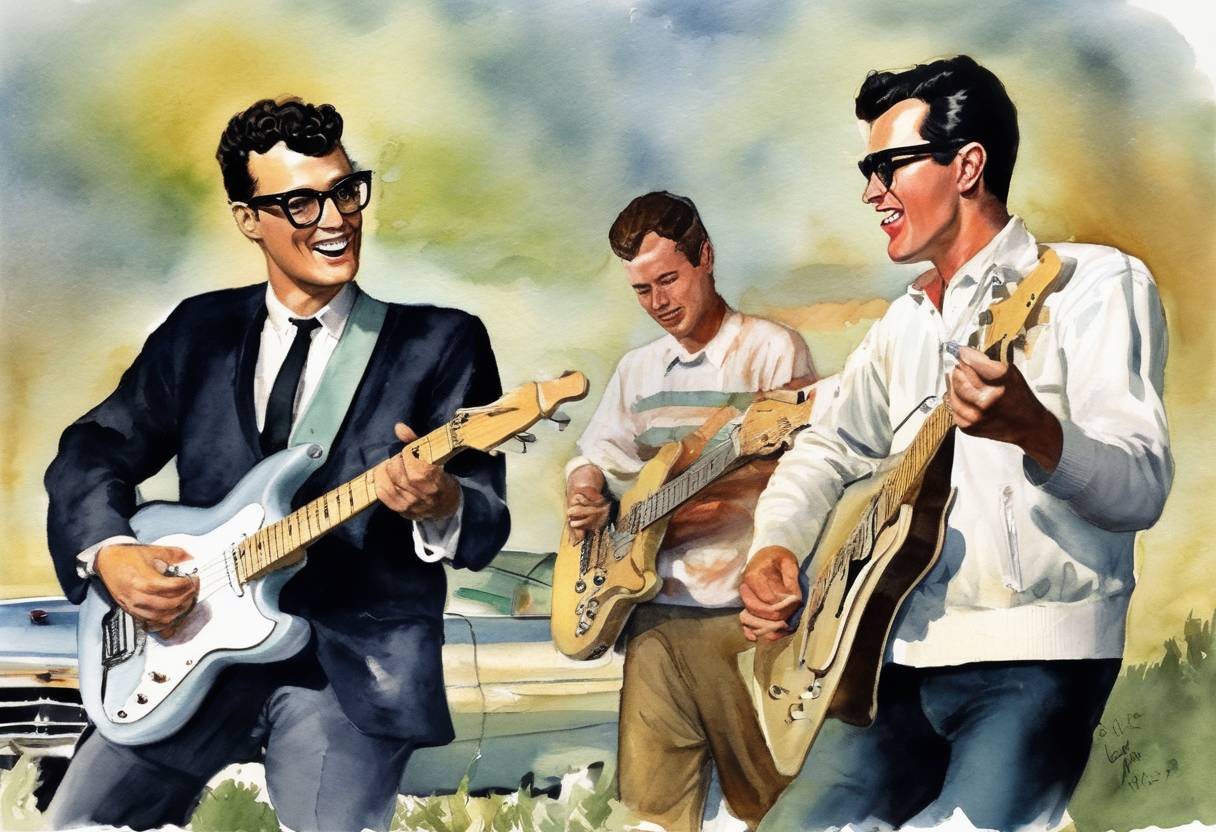
The Day the Music Died: February 3, 1959
On February 3, 1959, a tragic plane crash near Clear Lake, Iowa, claimed the lives of three prominent figures in the early rock and roll scene: Buddy Holly, Ritchie Valens, and J.P. Richardson, known as The Big Bopper. This event is often referred to as “The Day the Music Died,” a phrase popularized by Don McLean’s 1971 song “American Pie.”
Background
Buddy Holly
- Full Name: Charles Hardin Holley
- Born: September 7, 1936, in Lubbock, Texas
- Career Highlights: Buddy Holly was a pioneering figure in rock and roll, known for hits like “Peggy Sue” and “That’ll Be the Day.” His innovative approach to music, including his use of the Fender Stratocaster guitar and his role as a singer-songwriter, left a lasting impact on the genre.
Ritchie Valens
- Full Name: Richard Steven Valenzuela
- Born: May 13, 1941, in Pacoima, California
- Career Highlights: Ritchie Valens was a Mexican-American musician who brought Latin influences into rock and roll. He is best known for songs like “La Bamba” and “Donna.” Despite his brief career, Valens is credited with paving the way for future generations of Latino musicians.
J.P. Richardson (The Big Bopper)
- Full Name: Jiles Perry Richardson Jr.
- Born: October 24, 1930, in Sabine Pass, Texas
- Career Highlights: Known for his deep voice and energetic style, The Big Bopper was a disc jockey and musician. His most famous song, “Chantilly Lace,” became a rock and roll classic.
The Winter Dance Party Tour
The three musicians were part of the “Winter Dance Party” tour, which was a grueling series of performances across the Midwest. The tour was plagued by logistical issues, including long bus rides in freezing conditions, which led to fatigue and illness among the performers.
The Plane Crash
- Date: February 3, 1959
- Location: Near Clear Lake, Iowa
- Aircraft: Beechcraft Bonanza
- Pilot: Roger Peterson
After a performance at the Surf Ballroom in Clear Lake, Buddy Holly chartered a small plane to fly to the next tour stop in Moorhead, Minnesota. The decision was made to avoid the uncomfortable bus ride. Ritchie Valens and The Big Bopper secured seats on the plane due to a coin toss and a request to avoid the bus, respectively.
Shortly after takeoff, the plane encountered poor weather conditions. The inexperienced pilot, Roger Peterson, was unable to navigate the storm, leading to the crash that killed all on board.
Aftermath and Legacy
The tragic loss of these young musicians sent shockwaves through the music world. Buddy Holly, Ritchie Valens, and The Big Bopper were all at pivotal points in their careers, and their deaths marked a significant moment in rock and roll history.
- Buddy Holly’s Influence: Holly’s approach to music and his band setup influenced future artists, including The Beatles and The Rolling Stones.
- Ritchie Valens’ Legacy: Valens is remembered as a trailblazer for Latino musicians in the rock genre.
- The Big Bopper’s Impact: Known for his charismatic performances, The Big Bopper left a lasting impression on the rock and roll scene.
The event underscored the risks associated with the burgeoning rock and roll lifestyle and highlighted the need for improved safety measures in the music industry. “The Day the Music Died” remains a poignant reminder of the fleeting nature of life and the enduring legacy of these artists.