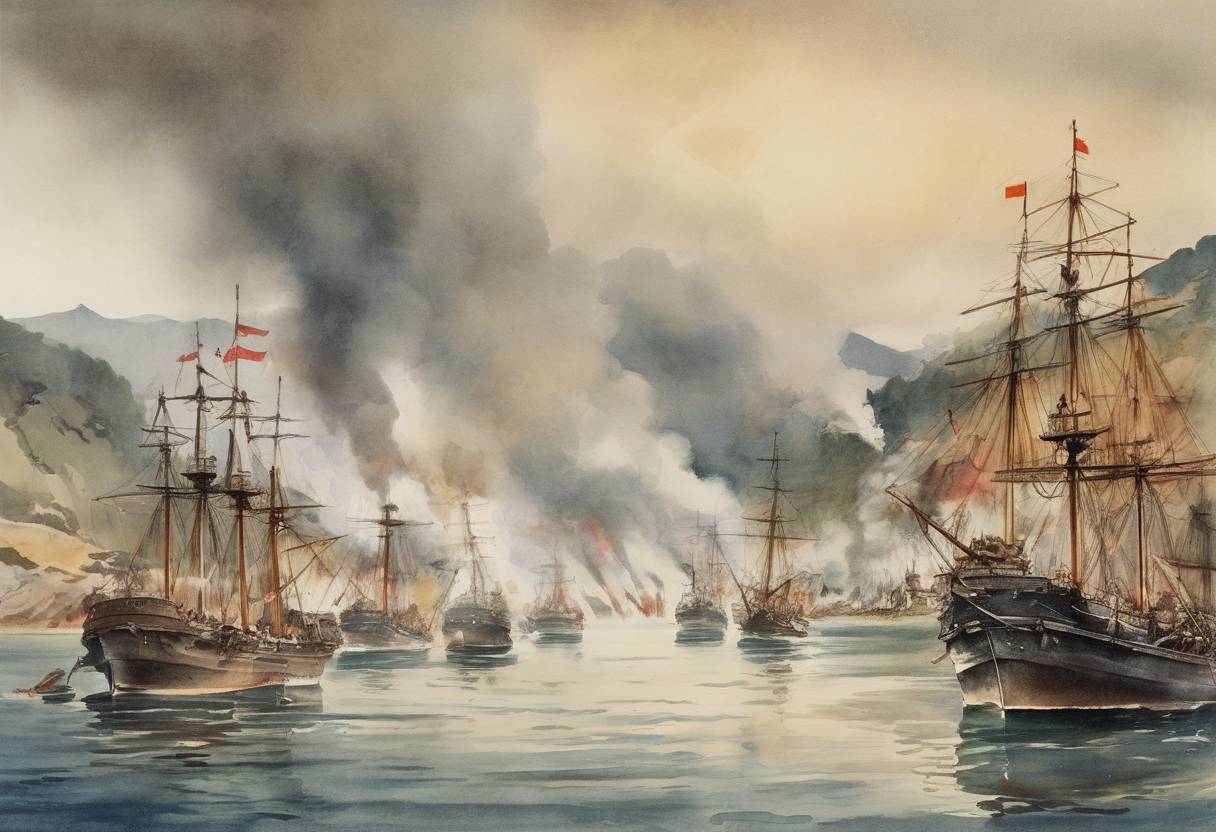
The Russo-Japanese War: The Surprise Attack on Port Arthur
Background
The Russo-Japanese War (1904-1905) was a pivotal conflict that marked the emergence of Japan as a significant military power and highlighted the declining influence of the Russian Empire in East Asia. The war was primarily fought over imperial ambitions in Manchuria and Korea, regions both nations sought to dominate.
Prelude to War
In the late 19th and early 20th centuries, Japan and Russia were expanding their empires in East Asia. Japan, having modernized rapidly during the Meiji Restoration, sought to assert its influence over Korea and Manchuria. Russia, meanwhile, was extending its Trans-Siberian Railway and had secured a lease on the strategically important Port Arthur (modern-day Lüshunkou) from China, which it fortified as a naval base.
Tensions escalated as diplomatic negotiations failed to resolve the competing interests. Japan, recognizing the strategic advantage of a preemptive strike, decided to act decisively.
The Surprise Attack on Port Arthur
Date: February 8, 1904
On the night of February 8, 1904, Japan launched a surprise naval attack on the Russian fleet stationed at Port Arthur. This attack marked the beginning of the Russo-Japanese War.
Key Events
Naval Engagement: The Japanese fleet, under the command of Admiral Tōgō Heihachirō, approached Port Arthur under the cover of darkness. The attack commenced with a torpedo assault on the Russian ships anchored in the harbor.
Initial Success: The surprise attack inflicted significant damage on the Russian fleet, disabling several key vessels. This initial success allowed the Japanese to establish naval dominance early in the conflict.
Blockade and Siege: Following the attack, the Japanese navy effectively blockaded Port Arthur, preventing Russian reinforcements and supplies from reaching the besieged garrison. This blockade was a critical component of Japan’s strategy to weaken Russian defenses.
Aftermath and Consequences
Prolonged Siege: The siege of Port Arthur continued for several months, culminating in the fall of the fortress to Japanese forces in January 1905. This victory was a significant blow to Russian morale and military capability.
Broader Impact: The Russo-Japanese War ended with the Treaty of Portsmouth in September 1905, mediated by U.S. President Theodore Roosevelt. The treaty recognized Japan’s interests in Korea and ceded control of Port Arthur and the southern half of Sakhalin Island to Japan.
Global Significance: The war demonstrated the effectiveness of Japan’s modernized military and marked the first time an Asian power defeated a European nation in modern warfare. It also contributed to internal unrest in Russia, setting the stage for the 1905 Russian Revolution.
The surprise attack on Port Arthur was a decisive moment that set the tone for the Russo-Japanese War, showcasing Japan’s strategic acumen and altering the balance of power in East Asia.