1940 · Paris, France
Paris falls under German occupation during World War II.
June 3, 1940
World War II: The Luftwaffe bombs Paris, France, as part of the German offensive in Western Europe.
Paris, France | Luftwaffe
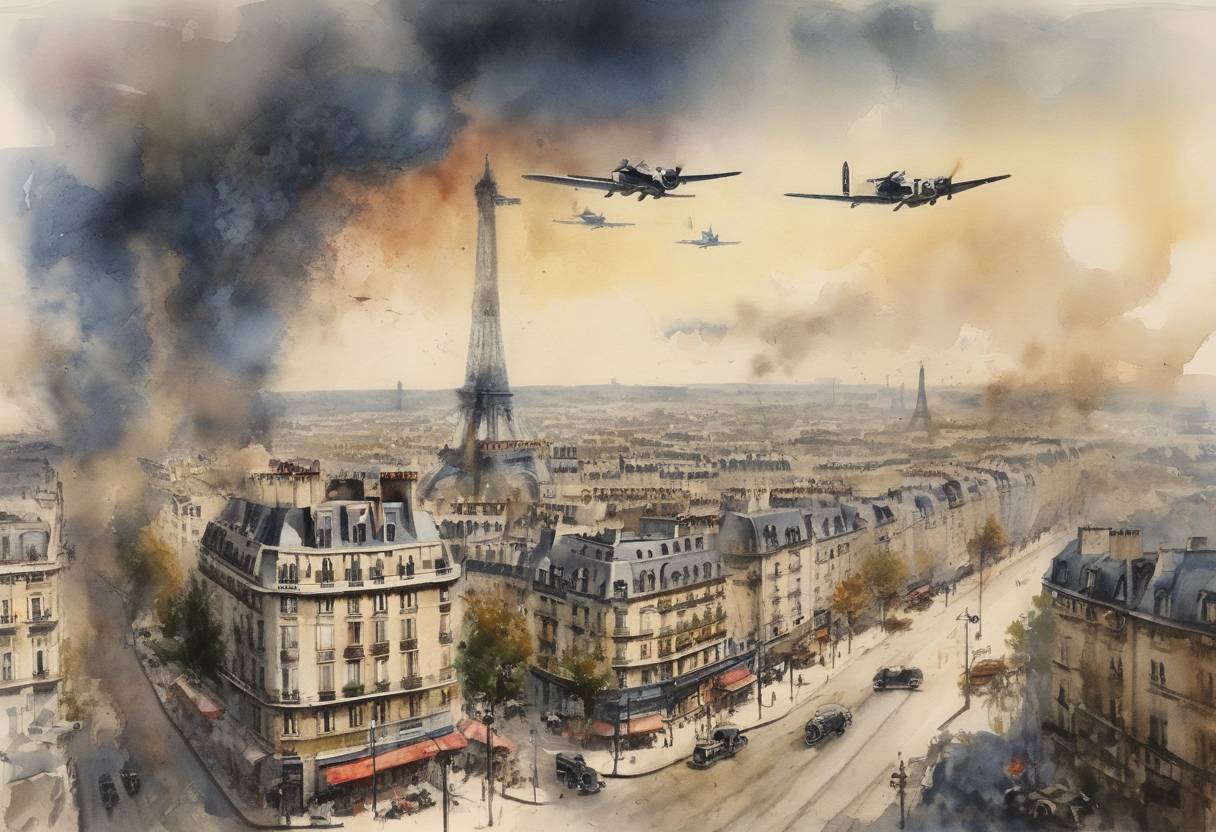
On June 3, 1940, during the early stages of World War II, the German Luftwaffe launched a significant bombing raid on Paris, France. This event was part of the broader German offensive in Western Europe, known as the Battle of France, which aimed to swiftly defeat French and Allied forces.
The Battle of France: The German invasion of France began on May 10, 1940, with the implementation of the Blitzkrieg strategy, characterized by rapid and overwhelming force. The German military sought to bypass the heavily fortified Maginot Line by advancing through the Ardennes Forest, catching the French and British forces off guard.
Fall of Belgium and the Netherlands: By late May 1940, German forces had successfully invaded Belgium and the Netherlands, further isolating France and weakening the Allied defensive positions.
Dunkirk Evacuation: From May 26 to June 4, 1940, the British Expeditionary Force and other Allied troops were evacuated from Dunkirk in Operation Dynamo. This evacuation was a desperate retreat in the face of the German advance, leaving France more vulnerable to attack.
Target and Execution: On June 3, 1940, the Luftwaffe targeted Paris in a bombing raid intended to demoralize the French population and government. The attack aimed at military and industrial targets, but it also caused civilian casualties and damage to the city.
Impact on Paris: While the bombing did not result in extensive destruction compared to later wartime bombings in other cities, it marked a significant psychological blow to the French capital. The raid heightened the sense of urgency and fear among Parisians and the French government.
Fall of Paris: The bombing of Paris was a precursor to the city’s fall. On June 14, 1940, German forces entered Paris unopposed, marking a pivotal moment in the Battle of France. The French government had already fled to Bordeaux, and the city was declared an open city to avoid further destruction.
French Surrender: On June 22, 1940, France signed an armistice with Germany, leading to the occupation of northern and western France and the establishment of the Vichy regime in the unoccupied southern part of the country.
Broader Significance: The fall of Paris and the subsequent French surrender were significant victories for Nazi Germany, demonstrating the effectiveness of Blitzkrieg tactics and altering the balance of power in Europe. It also set the stage for the Battle of Britain, as Germany turned its attention to the United Kingdom.
The bombing of Paris on June 3, 1940, was a crucial moment in the early phase of World War II, symbolizing the rapid and devastating nature of the German offensive in Western Europe.
Source: en.wikipedia.org