The Siege of Paris Begins: November 25, 885
885 · Paris, West Francia
The Siege of Paris begins as a Viking fleet, led by Sigfred and Sinric, arrives at the city, marking a significant event in the Viking invasions of France.
March 28, 0845
Paris is sacked by Viking raiders, led by Ragnar Lodbrok, during the Siege of Paris.
Paris, West Francia | Vikings
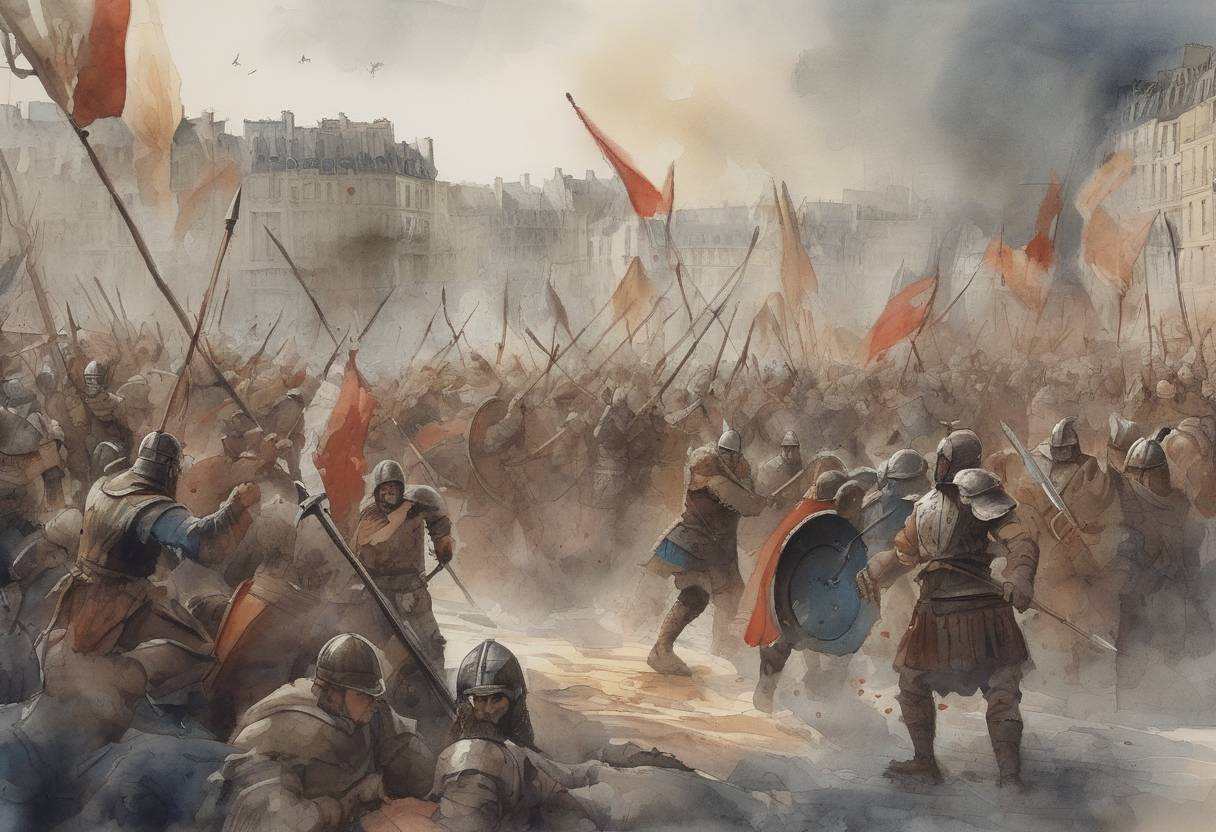
On March 28, 845, Paris was sacked by Viking raiders led by the legendary Norse chieftain Ragnar Lodbrok. This event marked a significant moment in the history of the Viking incursions into the Frankish territories during the early medieval period.
Viking Expansion: By the 9th century, Norsemen from Scandinavia had begun extensive raids across Europe. These raids were driven by a combination of factors, including overpopulation, political instability in Scandinavia, and the lure of wealth in the more prosperous regions of Europe.
Frankish Empire: At the time, the Frankish Empire was under the rule of Charles the Bald, a grandson of Charlemagne. The empire was a prime target for Viking raids due to its wealth and the relative weakness of its defenses against the agile Viking longships.
Ragnar Lodbrok: According to historical accounts, Ragnar Lodbrok, a semi-legendary Norse figure, led a fleet of approximately 120 ships carrying thousands of Viking warriors up the Seine River towards Paris.
The Attack: The Vikings arrived in Paris on Easter Sunday, March 28, 845. The timing was strategic, as many of the city’s defenders were attending religious services, leaving the city vulnerable.
Sacking of Paris: The Vikings quickly overpowered the city’s defenses. They plundered the city, taking considerable loot and capturing numerous hostages. The Frankish defenders were unable to mount an effective resistance against the well-coordinated Viking forces.
Ransom and Withdrawal: Charles the Bald, recognizing the threat posed by the Vikings and the inability to defeat them militarily, opted to pay a substantial ransom of 7,000 pounds of silver to secure their withdrawal. This payment, known as Danegeld, became a common practice in dealing with Viking threats.
Impact on Frankish Policy: The siege highlighted the vulnerability of the Frankish territories to Viking raids. It prompted changes in military strategies, including the construction of fortified bridges and the establishment of local defense forces to better protect against future incursions.
Legacy of Ragnar Lodbrok: While the historical accuracy of Ragnar Lodbrok’s involvement is debated, his legendary status was cemented through sagas and stories that depicted him as a quintessential Viking hero. His exploits, whether factual or embellished, contributed to the enduring legacy of the Viking Age.
The Siege of Paris in 845 was a pivotal event that underscored the reach and impact of Viking raids across Europe. It demonstrated the need for stronger defenses and more effective responses to the Viking threat, influencing the political and military landscape of the time. The event also contributed to the mythos surrounding the Viking Age, with figures like Ragnar Lodbrok becoming emblematic of the era’s adventurous and often brutal spirit.
Source: en.wikipedia.org