Discovery of Puerto Rico by Christopher Columbus on November 19, 1493
1493 · Puerto Rico, Spain
Christopher Columbus discovered Puerto Rico during his second voyage to the Americas.
March 15, 1493
Christopher Columbus returned to Spain after his first voyage to the Americas.
Palos de la Frontera, Spain | Spanish Crown
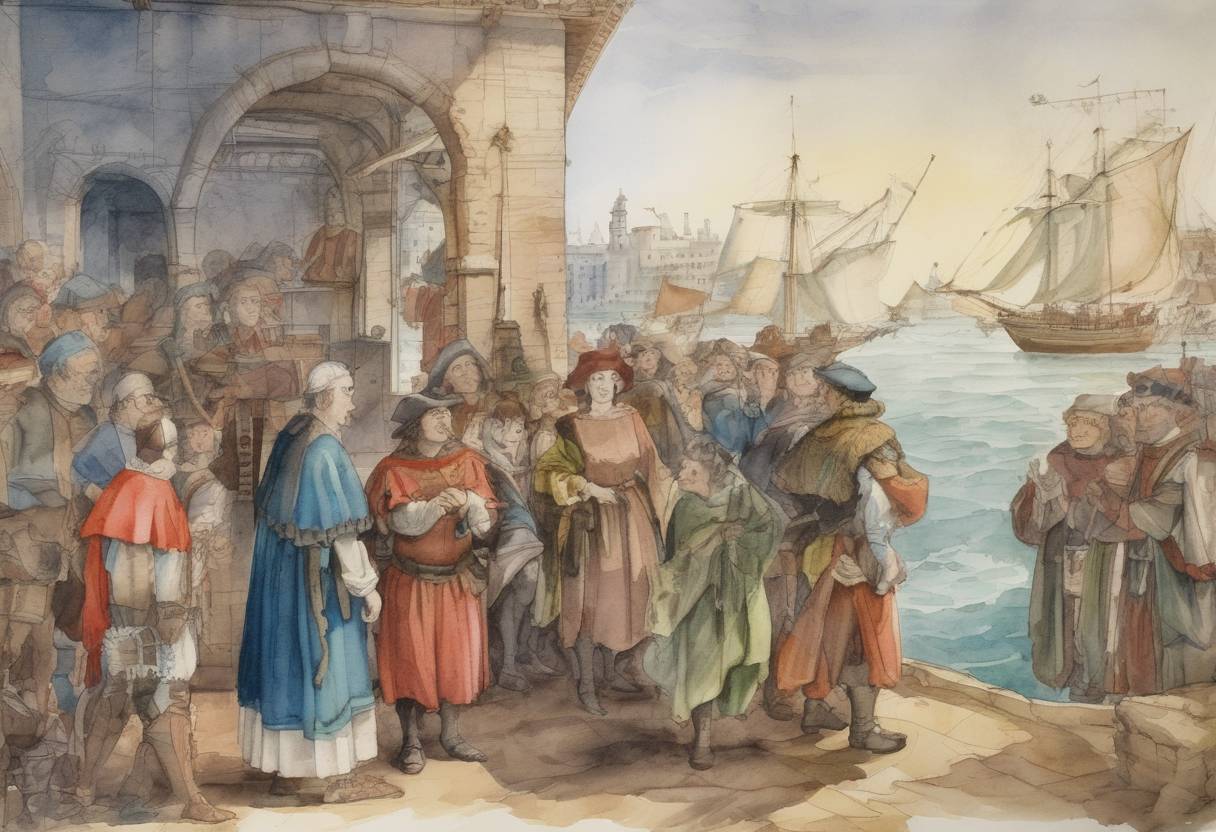
On March 15, 1493, Christopher Columbus returned to Spain after his first voyage to the Americas, marking a pivotal moment in world history. This event signified the beginning of sustained European exploration and colonization of the Americas, which would have profound and lasting impacts on global history.
Christopher Columbus, an Italian navigator sailing under the Spanish flag, embarked on his first voyage across the Atlantic Ocean on August 3, 1492. Sponsored by the Catholic Monarchs, Queen Isabella I and King Ferdinand II of Spain, Columbus sought a westward sea route to Asia, aiming to establish direct trade links with the continent’s lucrative markets.
Columbus set sail with three ships: the Santa María, the Pinta, and the Niña. After a challenging journey across the Atlantic, he and his crew sighted land on October 12, 1492, which he named San Salvador (present-day Bahamas). Over the following months, Columbus explored parts of the Caribbean, including the islands now known as Cuba and Hispaniola.
Columbus’s return journey was fraught with difficulties, including severe storms that separated his ships. Despite these challenges, Columbus arrived back in Spain on March 15, 1493, docking in the port of Palos de la Frontera. His return was met with great excitement and curiosity, as he brought with him news of the “New World,” as well as indigenous people, gold, and other goods.
Columbus’s successful return and the reports of his discoveries had significant implications:
Immediate Impact: Columbus was received as a hero by the Spanish court. His voyage was seen as a major triumph, and he was granted the title of “Admiral of the Ocean Sea” and promised a share of the profits from his discoveries.
Subsequent Voyages: Columbus’s initial voyage paved the way for further expeditions. He would make three more voyages to the Americas, continuing to explore and claim territories for Spain.
European Colonization: Columbus’s discoveries initiated a period of European exploration and colonization in the Americas. This led to the exchange of goods, cultures, and ideas between the Old and New Worlds, known as the Columbian Exchange.
Impact on Indigenous Peoples: The arrival of Europeans had devastating effects on indigenous populations, including the spread of diseases, displacement, and the beginning of centuries of colonization and exploitation.
Columbus’s return on March 15, 1493, thus marks a significant turning point in history, heralding the age of exploration and the profound transformations that would follow in the centuries to come.
Source: en.wikipedia.org