The War of 1812: James Madison's Declaration of War Request
1812 · Washington, D.C., United States
U.S. President James Madison asked Congress to declare war on the United Kingdom, leading to the War of 1812.
January 14, 1784
The United States ratifies the Treaty of Paris, officially ending the American Revolutionary War.
Annapolis, United States | United States Congress
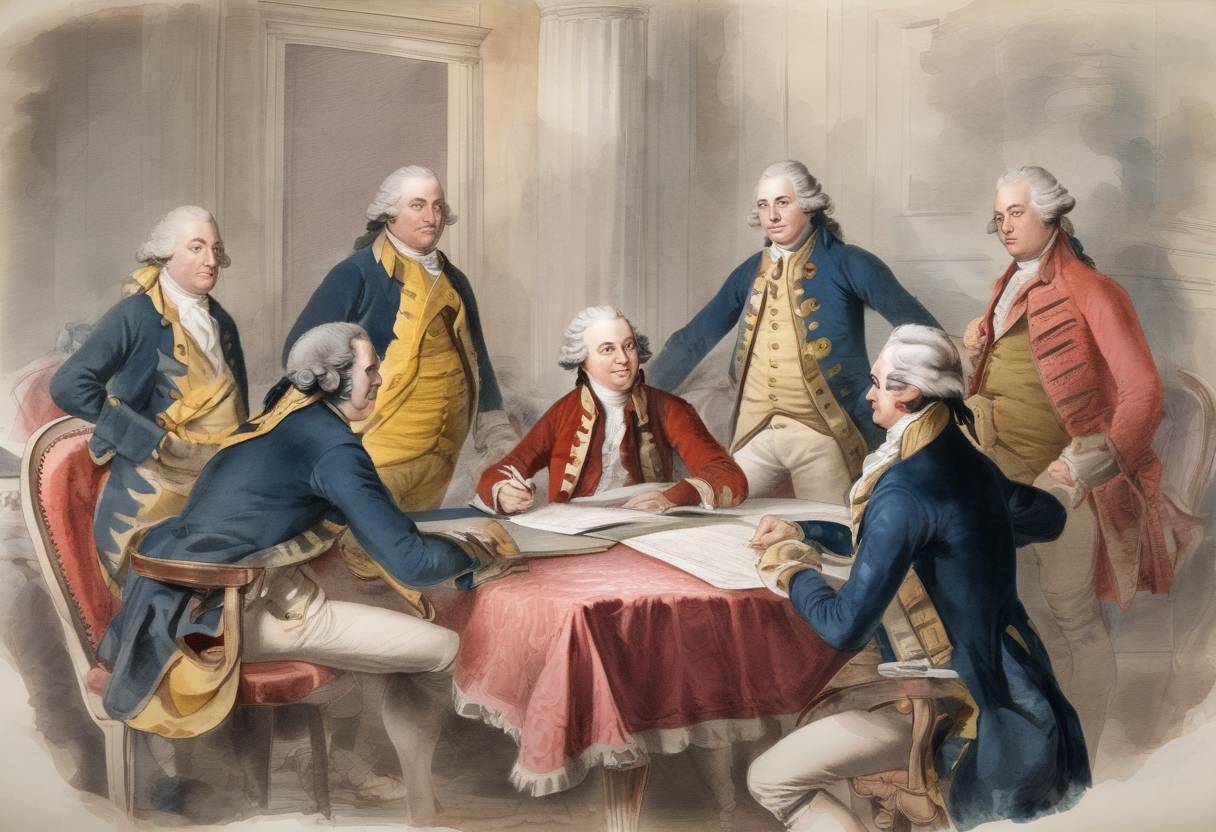
On January 14, 1784, the United States Congress ratified the Treaty of Paris, officially bringing an end to the American Revolutionary War. This significant event marked the formal conclusion of hostilities between Great Britain and its former colonies, solidifying American independence and setting the stage for the new nation’s future.
The American Revolutionary War, which began in 1775, was a conflict between the thirteen American colonies and Great Britain. The war was driven by the colonies’ desire for independence and resistance to British imperial policies. After years of intense fighting, the American victory at the Battle of Yorktown in 1781 effectively ended major military operations.
Negotiations for peace began in 1782 in Paris, with American representatives including Benjamin Franklin, John Adams, and John Jay. The Treaty of Paris was signed on September 3, 1783. Key terms of the treaty included:
The ratification of the treaty by the United States Congress was a crucial step in formalizing the end of the war. The treaty required ratification within six months of its signing, and Congress met this deadline by ratifying it on January 14, 1784, in Annapolis, Maryland. This act confirmed the United States’ commitment to the terms agreed upon and ensured the treaty’s implementation.
The ratification of the Treaty of Paris had profound implications:
The ratification of the Treaty of Paris was a pivotal moment in American history, marking the successful conclusion of the struggle for independence and the beginning of a new era for the United States.
Source: en.wikipedia.org