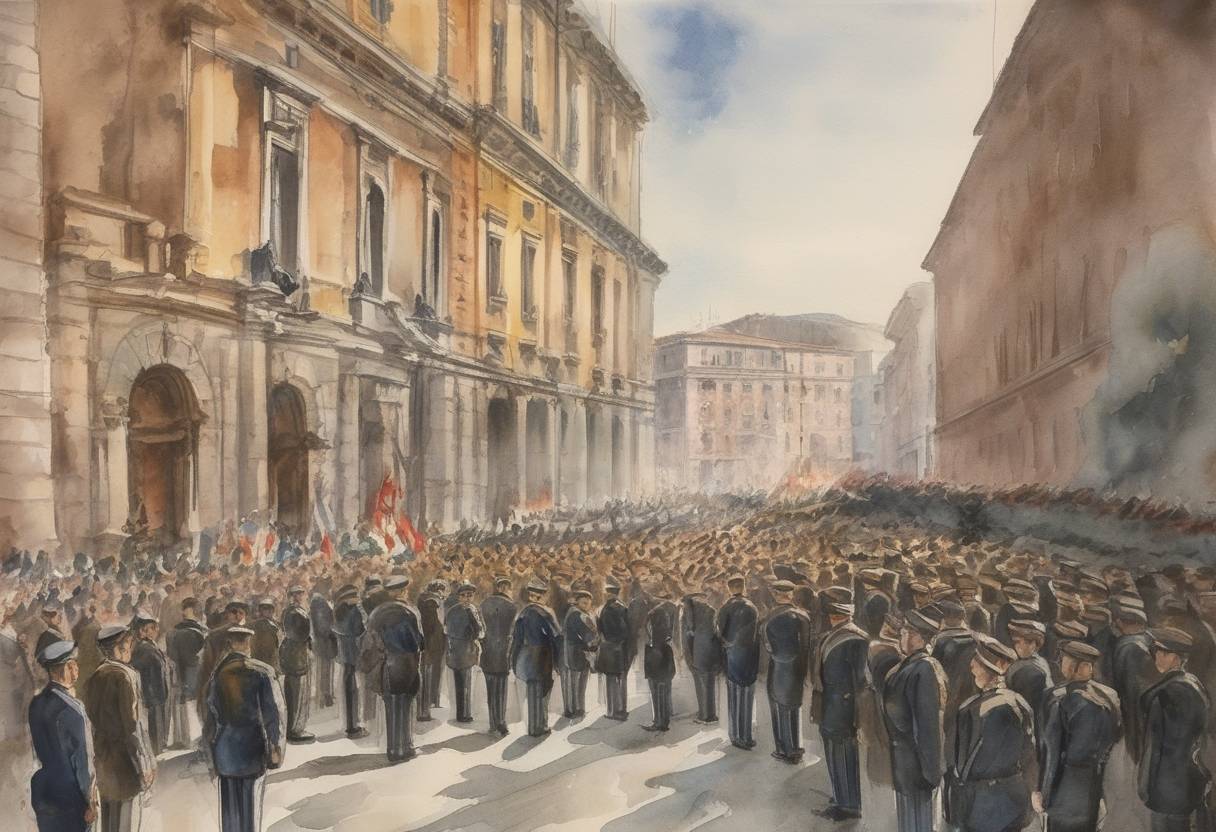
The Fall of Mussolini: July 25, 1943
On July 25, 1943, a pivotal moment in World War II and Italian history unfolded as Benito Mussolini was dismissed as Prime Minister of Italy and subsequently arrested. This event marked the beginning of the end for the Fascist regime in Italy, which Mussolini had led since 1922.
Context Leading Up to the Event
By 1943, Italy was facing severe military setbacks in World War II. The Allied invasion of Sicily, which began on July 9, 1943, was a significant blow to Italian morale and demonstrated the vulnerability of Mussolini’s regime. The Italian population was increasingly disillusioned with the war and the hardships it brought, including economic instability and widespread destruction.
The Fascist regime, which had once enjoyed widespread support, was now under immense pressure both from the public and within its own ranks. The Grand Council of Fascism, the highest governing body of the Fascist Party, began to question Mussolini’s leadership and the direction in which he was taking the country.
The Vote of No Confidence
On the night of July 24-25, 1943, the Grand Council of Fascism convened a meeting that would prove to be historic. For the first time, the council openly challenged Mussolini’s authority. The meeting was marked by intense debates and culminated in a vote of no confidence against Mussolini. The motion, proposed by Dino Grandi, passed with 19 votes in favor, 7 against, and 1 abstention.
This vote effectively stripped Mussolini of his powers and called for King Victor Emmanuel III to resume his constitutional authority.
Mussolini’s Arrest
Following the council’s decision, King Victor Emmanuel III summoned Mussolini to his palace on July 25, 1943. During their meeting, the King informed Mussolini that he was being replaced as Prime Minister by Marshal Pietro Badoglio. As Mussolini left the palace, he was arrested by the Carabinieri, the Italian military police, and taken into custody.
Aftermath and Historical Significance
Mussolini’s dismissal and arrest marked the collapse of the Fascist regime in Italy. Marshal Badoglio’s new government immediately began secret negotiations with the Allies, leading to an armistice on September 8, 1943. This shift significantly altered the dynamics of World War II, as Italy transitioned from being an Axis power to co-belligerent with the Allies.
The fall of Mussolini also had profound implications for Italy’s future. It paved the way for the eventual establishment of a democratic republic after the war, as well as the end of Fascist influence in Italian politics.
In summary, the events of July 25, 1943, were a turning point in both Italian and world history, signaling the decline of Fascism in Italy and contributing to the broader Allied efforts in World War II.