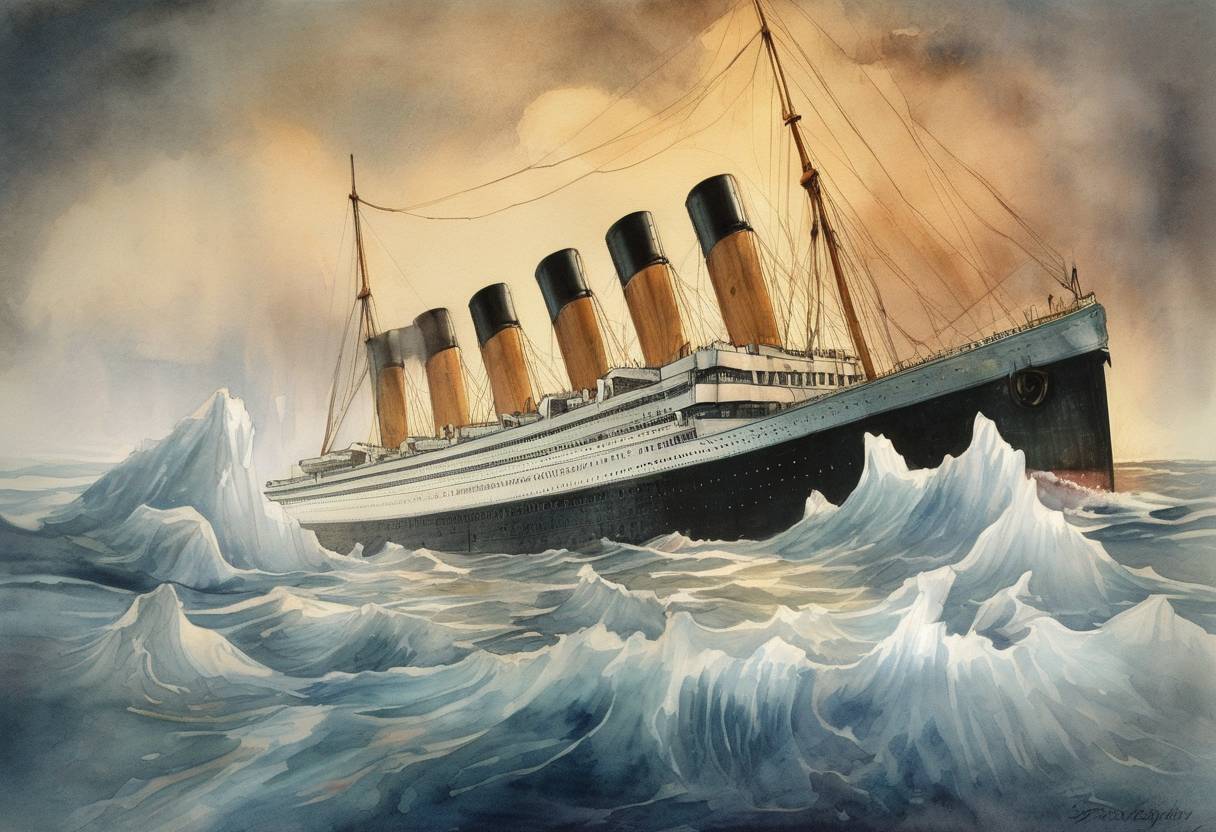
The Sinking of the RMS Titanic: April 14, 1912
On the night of April 14, 1912, the RMS Titanic, a British passenger liner operated by the White Star Line, struck an iceberg in the North Atlantic Ocean. This tragic event led to the sinking of the ship and resulted in the loss of over 1,500 lives, making it one of the deadliest maritime disasters in history.
Background
The Titanic was the largest ship afloat at the time of her maiden voyage from Southampton to New York City. Designed to be the epitome of luxury and safety, the Titanic was equipped with advanced safety features, including watertight compartments and remotely activated watertight doors. However, it only carried enough lifeboats for about half of the passengers and crew on board, a common practice at the time due to outdated maritime safety regulations.
Key Events Leading Up to the Collision
- April 10, 1912: The Titanic set sail from Southampton, England, with stops in Cherbourg, France, and Queenstown (now Cobh), Ireland, before heading towards New York City.
- April 14, 1912: Throughout the day, the Titanic received several ice warnings from other ships in the area. Despite these warnings, the ship maintained a high speed of approximately 22 knots.
The Collision
- 11:40 PM (Ship’s Time): Lookouts Frederick Fleet and Reginald Lee spotted an iceberg directly in the ship’s path. The crew attempted to steer the ship away and reverse the engines, but it was too late. The iceberg scraped along the starboard side of the Titanic, causing a series of punctures below the waterline.
The Sinking
- Midnight to 2:20 AM: The Titanic’s compartments began to flood rapidly. The ship’s design allowed it to stay afloat with up to four compartments breached, but the iceberg had damaged at least five.
- Lifeboats Launched: The crew began evacuating passengers into lifeboats, but the process was chaotic and poorly managed. Many lifeboats were launched underfilled due to a lack of clear instructions and panic among passengers.
- 2:20 AM: The Titanic broke apart and sank into the icy waters of the Atlantic Ocean.
Aftermath
- Rescue Efforts: The RMS Carpathia arrived at approximately 4:00 AM and rescued over 700 survivors from lifeboats.
- Casualties: Over 1,500 people perished in the disaster, including passengers and crew. The tragedy highlighted the inadequacies in maritime safety regulations and led to significant changes, including the establishment of the International Convention for the Safety of Life at Sea (SOLAS) in 1914.
Historical Significance
The sinking of the Titanic remains a poignant reminder of human fallibility and the limits of technology. It has been the subject of extensive research, numerous books, films, and cultural references, serving as a catalyst for improvements in maritime safety standards worldwide.