Election of Rodrigo Borgia as Pope Alexander VI - August 11, 1492
1492 · Rome, Papal States (now Italy)
Rodrigo Borgia is elected as Pope Alexander VI.
March 6, 1447
Nicholas V is elected as the new pope, succeeding Pope Eugene IV.
Rome, Papal States | Catholic Church
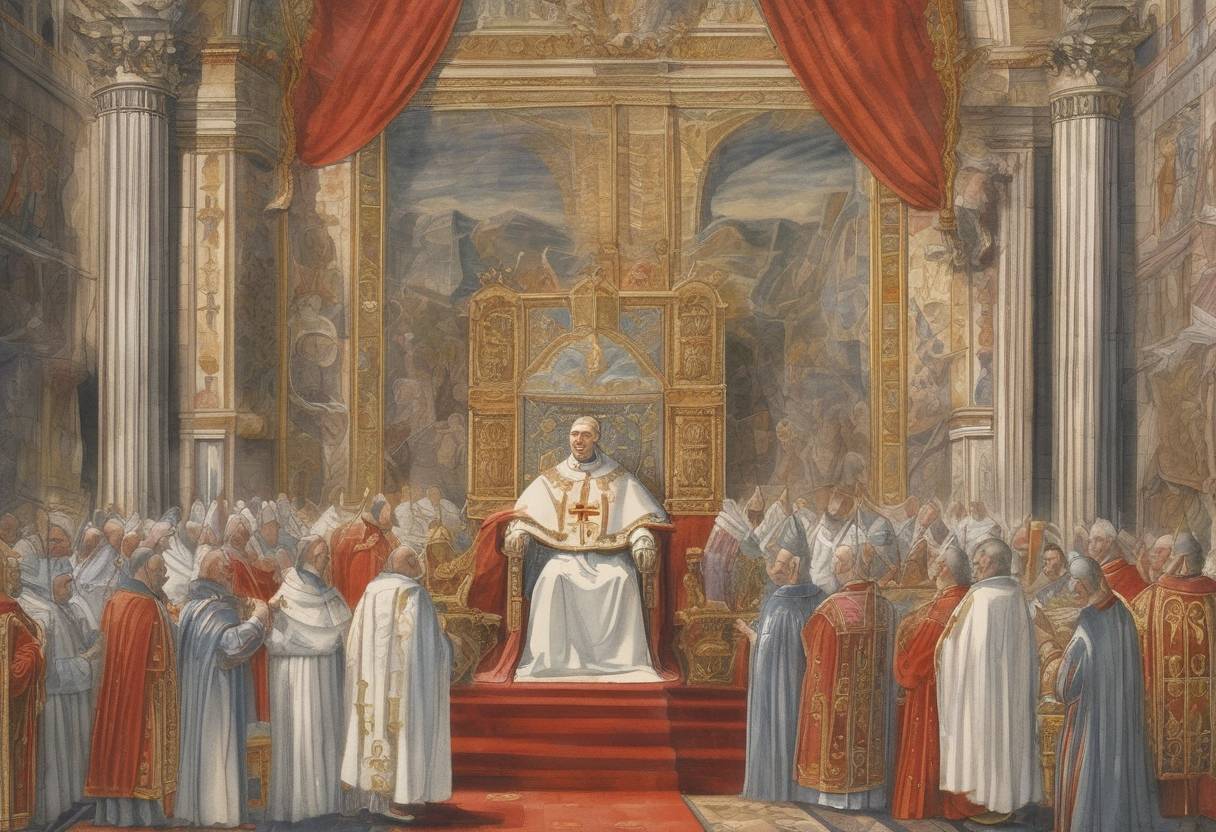
On March 6, 1447, Tommaso Parentucelli was elected as Pope Nicholas V, succeeding Pope Eugene IV. This election marked a significant moment in the history of the Catholic Church, as Nicholas V would go on to play a pivotal role in the Renaissance and the consolidation of papal authority.
Pope Eugene IV: His papacy, from 1431 to 1447, was marked by significant challenges, including conflicts with the Council of Basel and political struggles within Italy. Despite these difficulties, Eugene IV managed to maintain the papacy’s influence and laid the groundwork for his successor.
Tommaso Parentucelli: Born in 1397 in Sarzana, Italy, Parentucelli was a well-educated scholar and humanist. Before his election, he served as a bishop and was known for his diplomatic skills and deep commitment to the Church.
Renaissance Patronage: Nicholas V is often celebrated for his patronage of the arts and scholarship. He initiated the construction of the Vatican Library, which became a center for learning and the preservation of classical texts.
Diplomatic Achievements: His papacy was marked by efforts to restore peace in Italy and strengthen the papacy’s political position. Nicholas V worked to reconcile with various European powers and played a role in the negotiations that led to the Peace of Lodi in 1454.
Jubilee of 1450: Nicholas V declared a Jubilee Year in 1450, which attracted pilgrims from across Europe to Rome, enhancing the city’s religious and cultural significance.
Cultural Impact: Nicholas V’s support for the Renaissance helped to transform Rome into a center of art and culture, laying the foundation for future developments in the city.
Church Authority: His diplomatic efforts and administrative reforms strengthened the papacy’s authority, setting a precedent for his successors.
Legacy: Nicholas V’s papacy is often seen as a turning point that bridged the medieval and Renaissance periods, influencing the direction of the Catholic Church and European culture.
In summary, the election of Nicholas V on March 6, 1447, was a momentous event that heralded a new era for the papacy and the broader cultural landscape of Europe. His contributions to the Renaissance and the consolidation of papal power left a lasting legacy that would shape the future of the Church and the continent.
Source: en.wikipedia.org