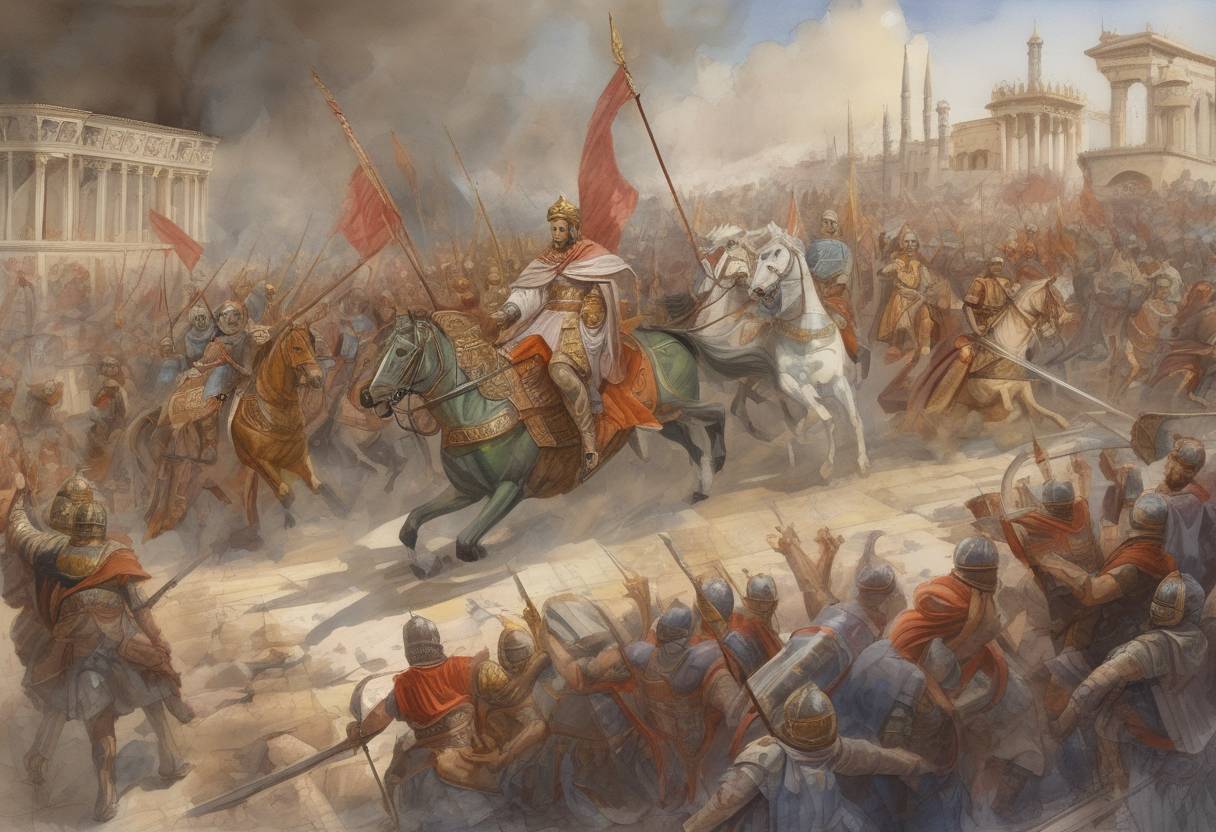
The Revolt of Basiliscus: January 9, 475
On January 9, 475, a significant political upheaval occurred in the Byzantine Empire when Emperor Zeno was forced to flee Constantinople due to a revolt led by his general, Basiliscus. This event marked a tumultuous period in the empire’s history, characterized by political instability and power struggles.
Background
Zeno, originally named Tarasis, was an Isaurian by birth, a group often viewed with suspicion by the Byzantine elite. He ascended to the throne in 474 following the death of his young son, Leo II, who had been co-emperor with him. Zeno’s reign was fraught with challenges, including internal dissent and external threats.
Basiliscus, a prominent military leader and the brother of Empress Verina (the widow of Emperor Leo I), capitalized on the growing discontent against Zeno. His Isaurian origins and unpopular policies made Zeno a target for those seeking to restore traditional Roman power structures.
The Revolt
The revolt was orchestrated with the support of key figures in the Byzantine court, including Empress Verina. On January 9, 475, Basiliscus successfully seized control of Constantinople. Zeno, facing overwhelming opposition, fled the capital with his supporters, seeking refuge in Isauria, his homeland.
Basiliscus was proclaimed emperor shortly thereafter. His ascension was marked by attempts to consolidate power and gain legitimacy, including issuing coins bearing his image and name.
Consequences
Basiliscus’ reign was short-lived, lasting only until August 476. His rule was marred by unpopular decisions, such as his support for the Monophysite doctrine, which alienated the Chalcedonian majority. Additionally, his inability to manage the empire’s finances and military effectively led to further discontent.
Zeno, meanwhile, gathered support in Isauria and plotted his return. In 476, with the help of loyalists and the general Illus, Zeno marched back to Constantinople. Basiliscus, unable to muster sufficient defense, was deposed. Zeno reclaimed the throne, and Basiliscus, along with his family, was exiled and later executed.
Historical Significance
The brief usurpation by Basiliscus highlights the volatile nature of Byzantine politics during this era. It underscores the challenges faced by emperors in maintaining control amidst factionalism and the influence of powerful court figures. Zeno’s eventual restoration to power also set the stage for his continued efforts to stabilize the empire and address the ongoing threats from both internal and external forces.
This episode is a testament to the complex interplay of military, religious, and political dynamics that characterized the Byzantine Empire in the 5th century.