Florence Expels the Medici Family and Restores a Republican Government - May 16, 1527
1527 · Florence, Italy
Florence expels the Medici family and restores a republican government.
June 21, 1527
Niccolò Machiavelli, the Italian diplomat, philosopher, and writer, died. He is best known for his political treatise, 'The Prince,' which is often regarded as one of the first works of modern political philosophy.
Florence, Italy
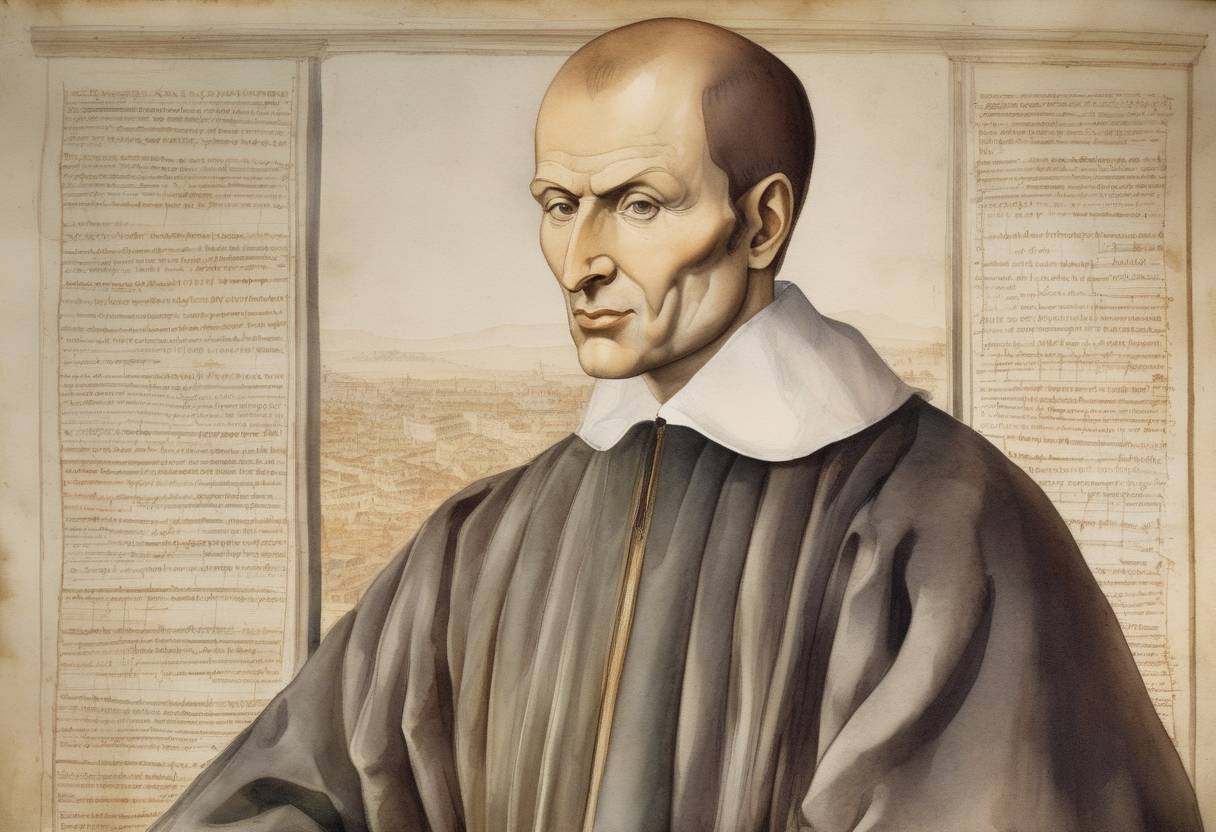
Niccolò Machiavelli, a seminal figure in the development of political philosophy and modern political science, passed away on June 21, 1527, in Florence, Italy. His death marked the end of a life deeply intertwined with the political upheavals of Renaissance Italy, and his works continue to influence political thought to this day.
Born on May 3, 1469, in Florence, Machiavelli lived during a period of intense political instability in Italy. The Italian peninsula was a patchwork of city-states, each vying for power amidst the larger European powers’ interests. This environment profoundly shaped Machiavelli’s views on politics and governance.
Machiavelli’s career was primarily in public service. He served as a diplomat and held various governmental posts in the Florentine Republic. His diplomatic missions exposed him to the workings of different political systems and influential leaders, such as Cesare Borgia, whose ruthless tactics would later inform Machiavelli’s writings.
Machiavelli is best known for his treatise Il Principe (The Prince), written in 1513 and published posthumously in 1532. This work is often regarded as one of the first treatises of modern political philosophy. In The Prince, Machiavelli offers pragmatic advice to rulers on how to maintain power and control, famously advocating for a realistic approach to governance that sometimes necessitates morally ambiguous actions. The phrase “the ends justify the means” is often associated with Machiavellian philosophy, though it is a simplification of his nuanced arguments.
Machiavelli died on June 21, 1527, at the age of 58. His death came shortly after the Medici family, who had been his patrons and adversaries at different times, were expelled from Florence. This political shift marked the end of an era in Florentine politics, one that Machiavelli had both influenced and been influenced by.
Despite his controversial reputation during his lifetime, Machiavelli’s works have endured, offering insights into the complexities of power and statecraft. His ideas have been interpreted in various ways, from a guide for tyrants to a realistic analysis of political power dynamics. Machiavelli’s influence extends beyond political theory into literature, philosophy, and even popular culture, cementing his status as a pivotal figure in Western thought.
Niccolò Machiavelli’s death did not diminish the impact of his ideas. Instead, his writings have sparked centuries of debate and analysis, ensuring his place as a cornerstone of political philosophy. His insights into human nature and governance continue to resonate, making him a timeless figure in the study of politics and history.
Source: en.wikipedia.org