Duncan I Becomes King of Scotland
1034 · Scone, Scotland
Duncan I becomes King of Scotland following the death of Malcolm II.
February 22, 1371
Robert II became King of Scotland, marking the beginning of the Stuart dynasty.
Scone, Scotland | Scottish monarchy
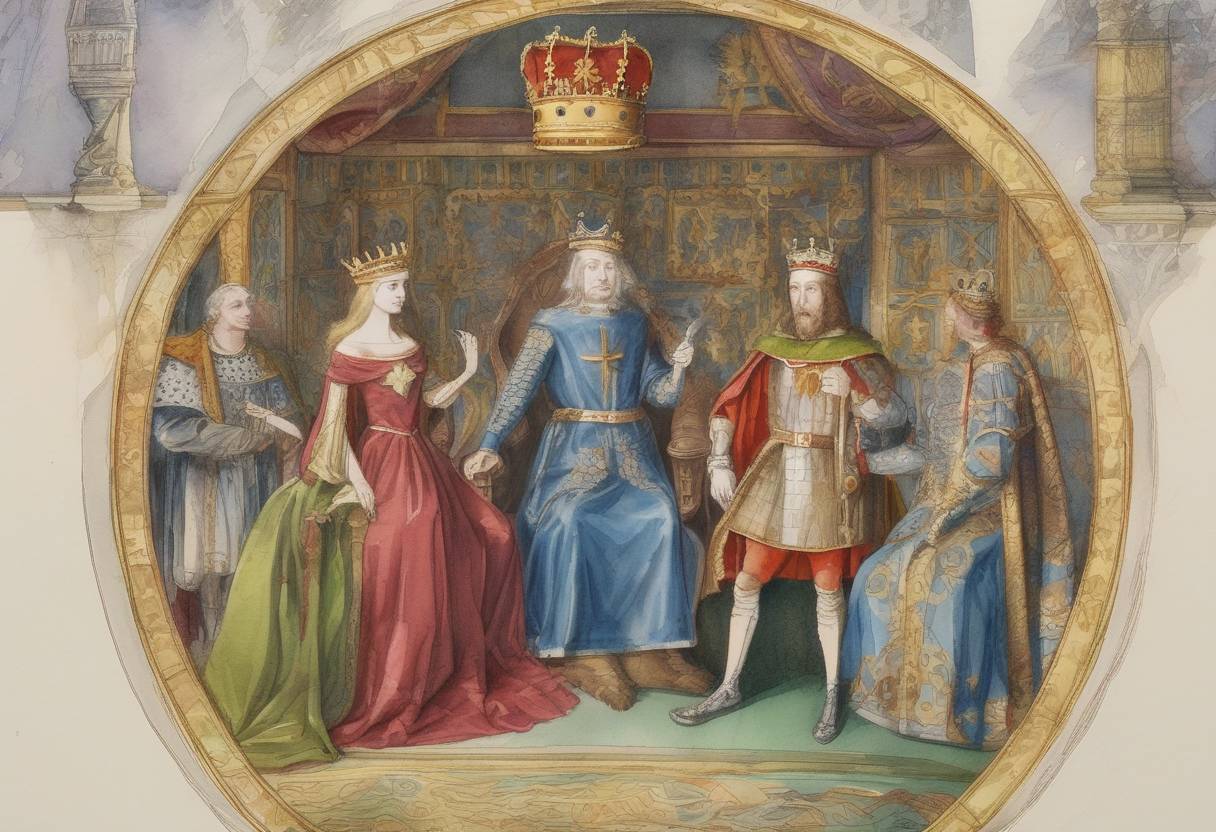
On February 22, 1371, Robert II was crowned King of Scotland, marking the inception of the Stuart dynasty, which would go on to rule Scotland for over three centuries and later the unified kingdoms of England and Scotland. This event was a significant turning point in Scottish history, laying the groundwork for a dynasty that would play a crucial role in the political landscape of the British Isles.
Robert II was born on March 2, 1316, the son of Walter Stewart, 6th High Steward of Scotland, and Marjorie Bruce, the daughter of King Robert the Bruce. This lineage made Robert II a grandson of the revered Scottish king who had successfully led Scotland during the First War of Scottish Independence against England.
The path to the throne was not straightforward for Robert II. His claim was initially overshadowed by the reign of his uncle, David II, who was the son of Robert the Bruce. David II’s reign was marked by ongoing conflicts with England and internal strife, including his capture by the English and subsequent ransom.
David II died on February 22, 1371, without leaving a direct heir, which paved the way for Robert II to ascend the throne. As the closest male relative, Robert’s claim was supported by his position as the High Steward of Scotland, a title that had been held by his family for generations and had become synonymous with loyalty and service to the Scottish crown.
The ascension of Robert II marked the beginning of the Stuart dynasty, which would have a profound impact on Scottish and later British history. The Stuarts were known for their efforts to consolidate royal power and navigate the complex political landscape of medieval Scotland, which was characterized by powerful noble families and frequent conflicts with England.
Under the Stuarts, Scotland would eventually enter into a personal union with England in 1603 when James VI of Scotland also became James I of England, following the death of Elizabeth I. This union laid the foundation for the eventual political unification of the two kingdoms in 1707.
Robert II’s reign, which lasted until his death in 1390, was relatively stable compared to his predecessors. He focused on strengthening the monarchy and managing the relationships with the powerful Scottish nobility. His legacy was carried on by his descendants, who would continue to shape the history of Scotland and the British Isles for centuries.
The Stuart dynasty’s influence extended beyond politics, impacting culture, religion, and the arts, with figures like Mary, Queen of Scots, and Charles I playing pivotal roles in European history.
In summary, Robert II’s coronation on February 22, 1371, was a pivotal moment that set the stage for the Stuart dynasty’s enduring legacy in Scottish and British history.
Source: en.wikipedia.org