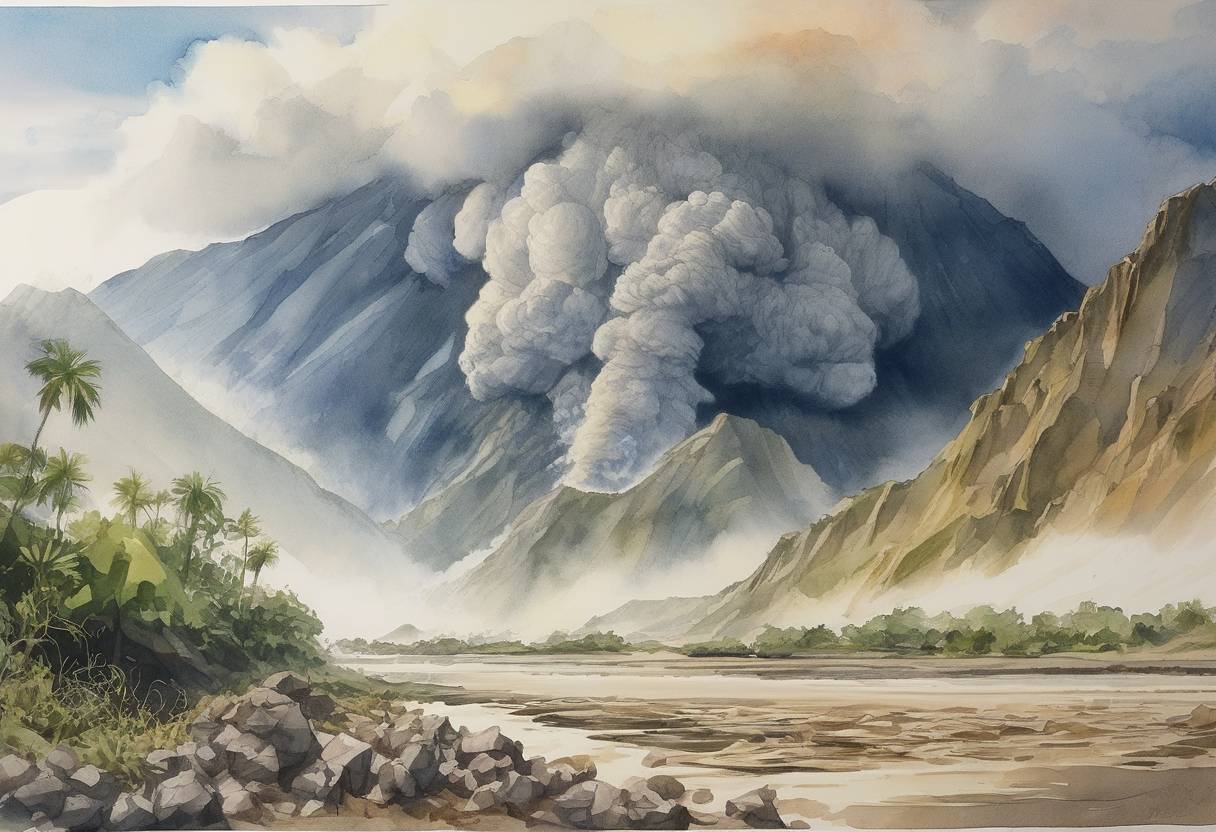
The Eruption of Mount Pinatubo: June 15, 1991
On June 15, 1991, Mount Pinatubo, located on the island of Luzon in the Philippines, erupted in one of the largest volcanic events of the 20th century. This cataclysmic eruption had profound local and global impacts, both immediate and long-lasting.
Background
Mount Pinatubo had been dormant for over 600 years before it began showing signs of activity in April 1991. Initial seismic activity and steam explosions alerted scientists and local authorities to the potential for a significant eruption. The Philippine Institute of Volcanology and Seismology (PHIVOLCS), in collaboration with the United States Geological Survey (USGS), closely monitored the situation.
The Eruption
The climactic eruption on June 15 was preceded by several smaller eruptions and increasing seismic activity. The main event was characterized by a massive explosion that ejected an estimated 10 cubic kilometers of material into the atmosphere. The eruption column reached heights of over 35 kilometers (22 miles), dispersing ash across a vast area.
Local Impact
- Destruction: The eruption caused widespread destruction in the surrounding areas. Ashfall, pyroclastic flows, and lahars (volcanic mudflows) devastated communities, infrastructure, and agriculture.
- Casualties and Displacement: Approximately 847 people lost their lives, primarily due to collapsing roofs under the weight of wet ash. Over 200,000 people were displaced, many of whom were indigenous Aeta communities living on the slopes of the volcano.
- Clark Air Base: The nearby Clark Air Base, a significant U.S. military installation, was heavily damaged and subsequently abandoned.
Global Impact
- Climate Effects: The eruption injected approximately 20 million tons of sulfur dioxide into the stratosphere, forming a global layer of sulfuric acid haze. This led to a temporary cooling of the Earth’s surface by about 0.5 degrees Celsius (0.9 degrees Fahrenheit) over the following two years.
- Atmospheric Changes: The eruption contributed to spectacular sunsets and sunrises worldwide due to the scattering of sunlight by the volcanic aerosols.
Aftermath and Significance
The eruption of Mount Pinatubo had significant implications:
- Volcanology: It provided valuable data for the study of volcanic eruptions and their climatic effects, enhancing predictive models and risk assessment strategies.
- Disaster Preparedness: The successful evacuation efforts, credited with saving thousands of lives, underscored the importance of timely scientific intervention and effective communication in disaster management.
- Environmental and Social Recovery: The affected regions faced long-term challenges in recovery and rehabilitation, with ongoing efforts to manage lahar flows and rebuild communities.
Mount Pinatubo’s eruption remains a pivotal event in both Philippine history and the study of volcanic activity, illustrating the profound interconnectedness of natural phenomena and human society.