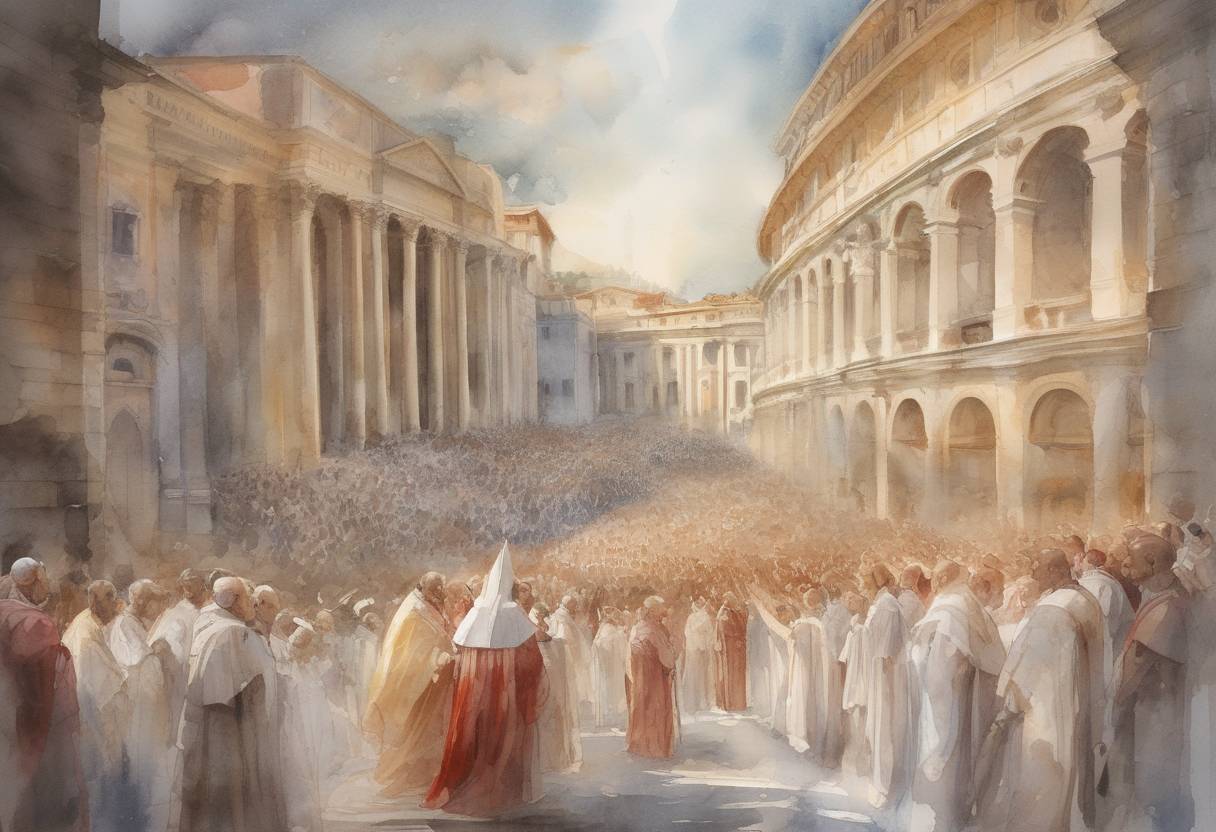
Pope Gelasius I Becomes the 49th Pope of the Catholic Church
On March 1, 492, Gelasius I ascended to the papacy, becoming the 49th pope of the Catholic Church. His papacy, which lasted until his death in 496, is particularly noted for his influential writings on the separation of church and state, a concept that would resonate throughout the centuries.
Background
Gelasius was born in North Africa, although the exact date of his birth is not well-documented. Before becoming pope, he served as a deacon under his predecessor, Pope Felix III. His background and experience within the church hierarchy prepared him for the challenges he would face as pope.
Key Contributions
Separation of Church and State
One of Gelasius I’s most significant contributions was his articulation of the relationship between ecclesiastical and secular powers. In a famous letter to the Byzantine Emperor Anastasius I, known as the “Duo Sunt” (Latin for “There Are Two”), Gelasius outlined his vision of the dual authority of the church and the state. He argued that both powers are divinely instituted but operate in separate spheres:
- Spiritual Authority: The church, led by the pope, holds authority over spiritual matters and the salvation of souls.
- Temporal Authority: The emperor and secular rulers govern temporal affairs and the administration of justice.
This doctrine of the “two swords” became a foundational concept in the development of Western political thought, influencing the medieval understanding of the relationship between church and state.
Theological and Liturgical Contributions
Gelasius was also active in theological debates and liturgical reforms. He is credited with organizing the Roman liturgy and contributing to the development of the Gelasian Sacramentary, a book of liturgical prayers and rites. His efforts helped standardize church practices and strengthen the unity of the Christian community.
Challenges and Legacy
During Gelasius’s papacy, the church faced significant challenges, including the Acacian Schism, a major rift between the Eastern and Western branches of Christianity. Gelasius staunchly defended the primacy of the Roman See and worked to resolve the schism, although it persisted beyond his papacy.
Gelasius I’s writings and policies laid the groundwork for future discussions on the balance of power between church and state. His ideas would echo through the Middle Ages and into the modern era, influencing debates on governance and the role of religion in public life.
Conclusion
Pope Gelasius I’s tenure as pope was marked by his profound impact on the theological and political landscape of his time. His articulation of the separation of church and state remains a significant milestone in the history of the Catholic Church and Western political thought. His legacy continues to be studied and appreciated for its enduring influence on the relationship between religious and secular authorities.