Spain Declares War on Great Britain: June 16, 1779
1779 · Madrid, Spain
Spain declares war on Great Britain, joining France and the American colonies in the American Revolutionary War.
July 15, 1834
The Spanish Inquisition is officially disbanded after more than 350 years of religious persecution and trials.
Madrid, Spain | Spanish Crown
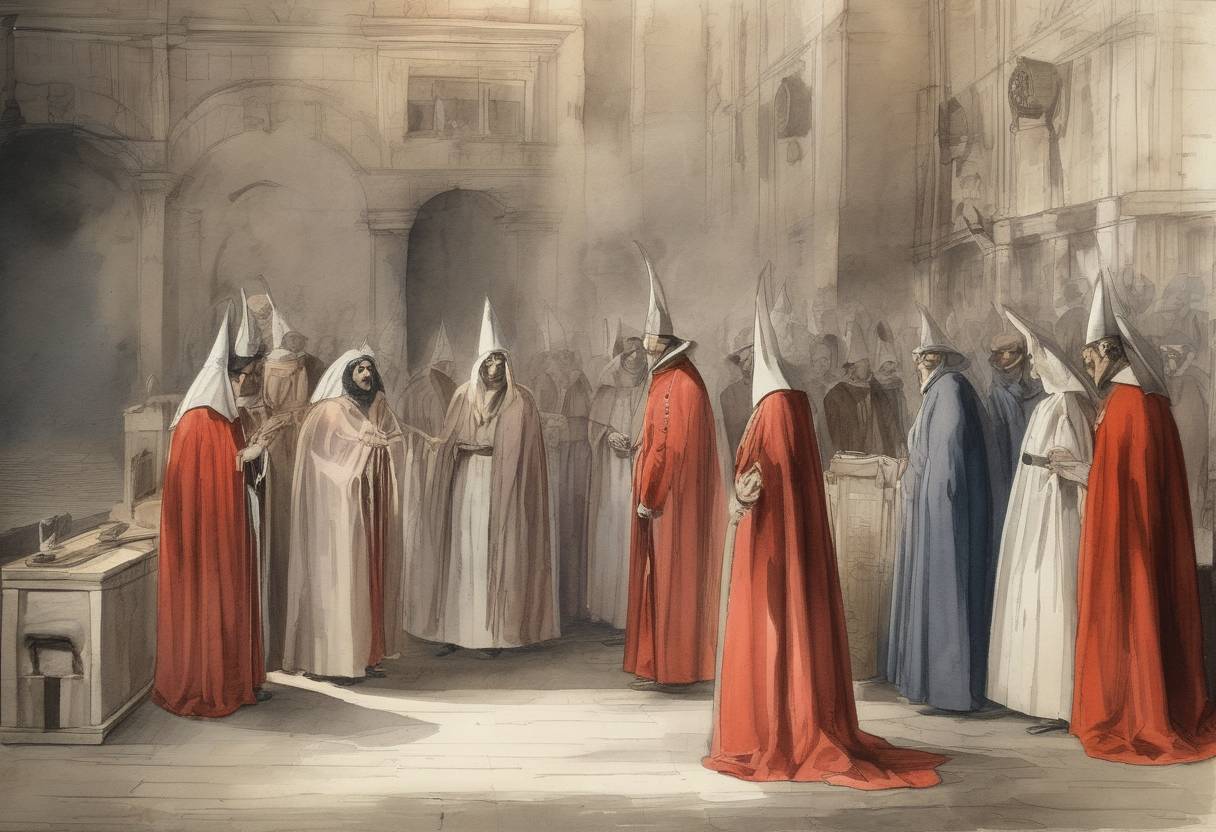
The Spanish Inquisition, a notorious institution known for its religious persecution and trials, was officially disbanded on July 15, 1834. This marked the end of an era that had lasted for over 350 years, beginning in 1478. The Inquisition was established by the Catholic Monarchs, Ferdinand II of Aragon and Isabella I of Castile, with the approval of Pope Sixtus IV. Its primary aim was to maintain Catholic orthodoxy in their kingdoms, particularly targeting converted Jews and Muslims suspected of secretly practicing their former religions.
Establishment: The Spanish Inquisition was part of a broader European movement of inquisitions, but it became infamous for its severity and reach. It was initially intended to ensure the sincerity of converts from Judaism and Islam, known as “conversos” and “Moriscos,” respectively.
Methods and Practices: The Inquisition employed various methods to extract confessions, including torture and public trials, known as “autos-da-fé.” Those found guilty could face severe penalties, including execution by burning.
Expansion of Power: Over time, the Inquisition expanded its scope to include censorship of books, prosecution of heresy, and even cases of witchcraft. It became a powerful tool for the Spanish monarchy to enforce religious and political conformity.
Enlightenment and Reform: By the 18th century, Enlightenment ideas began to challenge the authority and practices of the Inquisition. Calls for reform grew louder, emphasizing reason, individual rights, and religious tolerance.
Napoleonic Influence: During the Napoleonic Wars, the Inquisition was briefly suppressed when Napoleon’s forces occupied Spain. Although it was reinstated after the wars, its power and influence were significantly diminished.
Liberal Movements: The early 19th century saw a rise in liberal movements across Europe, advocating for constitutional government and civil liberties. In Spain, these movements gained momentum, leading to political changes that questioned the legitimacy of the Inquisition.
Royal Decree: On July 15, 1834, Queen Isabella II of Spain issued a royal decree officially abolishing the Spanish Inquisition. This decision was part of broader liberal reforms aimed at modernizing Spain and aligning it with contemporary European values.
Aftermath: The disbandment of the Inquisition was a significant step towards religious tolerance and the separation of church and state in Spain. It marked the end of institutionalized religious persecution and allowed for greater freedom of belief.
The abolition of the Spanish Inquisition was a pivotal moment in Spanish history, symbolizing the decline of medieval religious orthodoxy and the rise of modern secular governance. It reflected broader European trends towards liberalism and human rights, setting the stage for further social and political reforms in Spain.
The legacy of the Inquisition remains a complex and often painful chapter in history, serving as a reminder of the dangers of religious intolerance and the importance of safeguarding individual freedoms.
Source: en.wikipedia.org