The Battle of the Philippine Sea: June 20, 1944
1944 · Philippine Sea, Pacific Ocean
The Battle of the Philippine Sea, a major naval battle of World War II, takes place between the United States and Japan, resulting in a decisive American victory.
May 4, 1942
The Battle of the Coral Sea, a major naval battle in the Pacific Theater of World War II, began between the Imperial Japanese Navy and Allied naval and air forces from the United States and Australia.
Coral Sea, Pacific Ocean | United States Navy
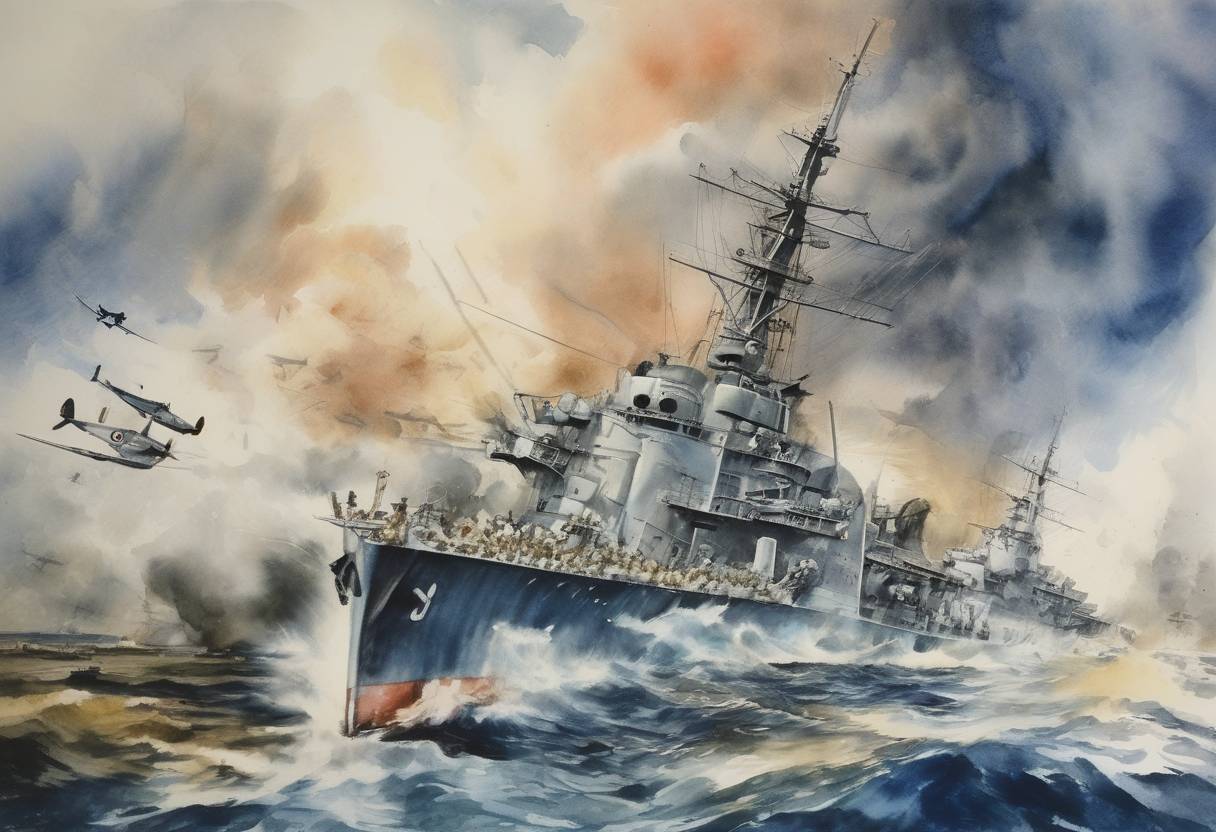
The Battle of the Coral Sea, which began on May 4, 1942, was a pivotal naval engagement in the Pacific Theater of World War II. It marked the first air-sea battle in history where aircraft carriers engaged each other, and the opposing ships never sighted or fired directly upon one another. The battle involved the Imperial Japanese Navy and Allied naval and air forces from the United States and Australia.
In early 1942, following their rapid expansion across the Pacific, the Japanese aimed to strengthen their defensive perimeter by capturing Port Moresby in New Guinea and Tulagi in the Solomon Islands. Control of these locations would provide Japan with strategic bases to threaten Australia and further isolate Allied forces.
The Allies, having broken Japanese codes, were aware of Japan’s plans and prepared to counter the offensive. The U.S. Navy, under the command of Admiral Frank J. Fletcher, dispatched Task Force 17, which included the aircraft carriers USS Lexington and USS Yorktown, to intercept the Japanese fleet.
May 3, 1942: The Japanese forces successfully occupied Tulagi, but their presence was soon discovered by U.S. reconnaissance.
May 4, 1942: The battle commenced with U.S. aircraft launching attacks on Japanese ships at Tulagi, causing significant damage.
May 7, 1942: Known as the “Battle of the Coral Sea,” the main engagement began. The Japanese carrier Shoho was sunk by U.S. aircraft, marking the first time a Japanese carrier was destroyed in the war.
May 8, 1942: Both sides launched airstrikes against each other’s carriers. The USS Lexington was critically damaged and later scuttled, while the USS Yorktown sustained damage but remained operational. The Japanese carrier Shokaku was heavily damaged, and the Zuikaku’s air group suffered significant losses.
The Battle of the Coral Sea was tactically inconclusive, as both sides suffered losses. However, it was strategically significant for several reasons:
Japanese Expansion Halted: The battle thwarted Japan’s plans to capture Port Moresby, marking the first major check on Japanese expansion in the Pacific.
Carrier Warfare: The battle demonstrated the importance of aircraft carriers and air power in naval warfare, setting the stage for future engagements.
Prelude to Midway: The damage to the Japanese carriers Shokaku and Zuikaku meant they could not participate in the subsequent Battle of Midway, contributing to the decisive American victory there.
The Battle of the Coral Sea highlighted the evolving nature of naval warfare and underscored the strategic importance of intelligence and air superiority in the Pacific Theater.
Source: en.wikipedia.org