The Introduction of Postage Stamps for Registered Mail in the United Kingdom on July 23, 1850
1850 · London, United Kingdom
The United Kingdom formally introduces the first postage stamps for registered mail service.
May 6, 1840
The Penny Black, the world's first adhesive postage stamp, was officially issued in the United Kingdom, revolutionizing the postal system.
London, United Kingdom | Royal Mail
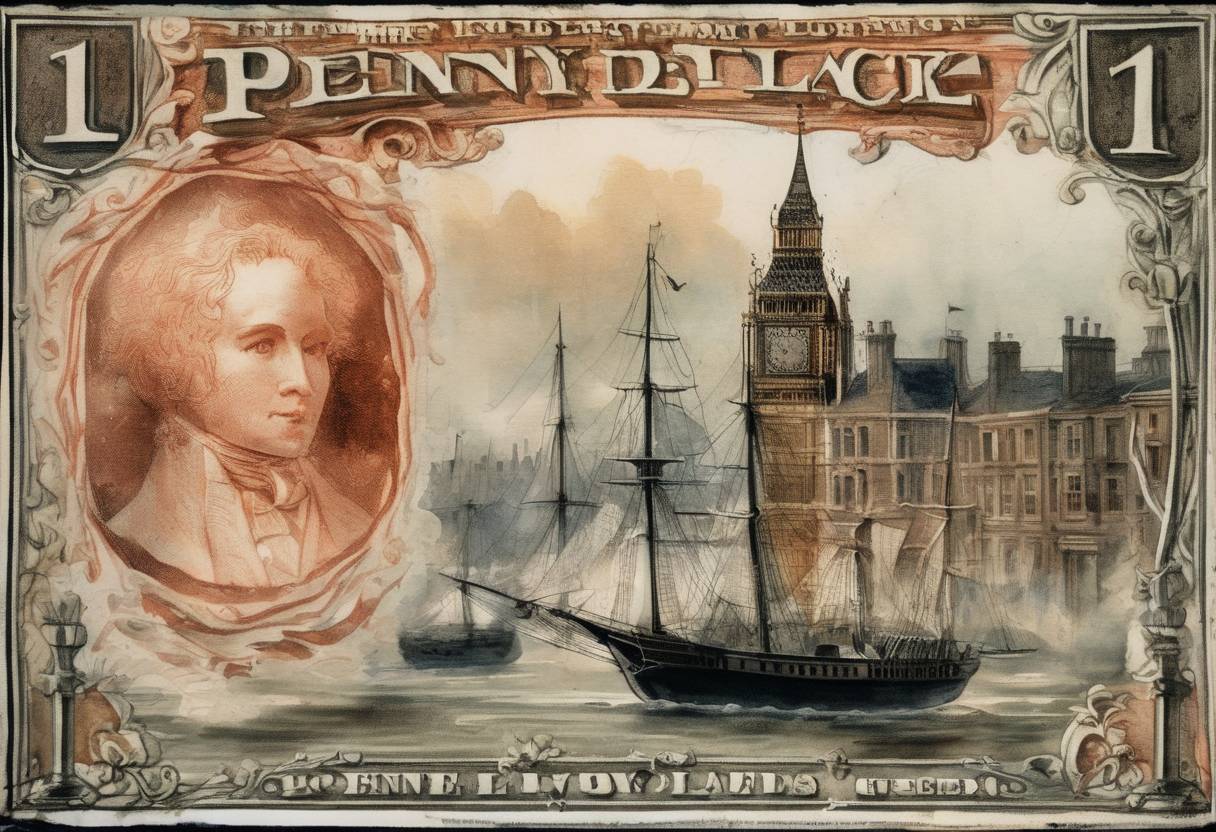
On May 6, 1840, the United Kingdom issued the Penny Black, the world’s first adhesive postage stamp. This innovation marked a significant milestone in the history of communication, revolutionizing the postal system by simplifying and standardizing the process of sending mail.
Before the introduction of the Penny Black, the cost of sending a letter in the UK was determined by the distance it traveled and the number of sheets of paper it contained. This system was not only complex but also expensive, often requiring the recipient to pay for the delivery. The inefficiency and high cost of this system led to widespread calls for reform.
The Penny Black was the brainchild of Sir Rowland Hill, a British educator and social reformer. In 1837, Hill published a pamphlet titled “Post Office Reform: Its Importance and Practicability,” in which he proposed a uniform penny postage rate regardless of distance. Hill’s idea was to prepay postage by affixing a small piece of paper, or stamp, to the letter, thus simplifying the process and making it more accessible to the public.
The Penny Black was officially issued on May 6, 1840. It was initially printed by Perkins, Bacon & Petch, a London-based firm known for its high-quality banknote printing.
The Penny Black was in circulation for just over a year before being replaced by the Penny Red in 1841. The change was made to improve the visibility of cancellation marks, which were difficult to see on the black background.
The issuance of the Penny Black on May 6, 1840, was a pivotal moment in postal history. It not only revolutionized the way mail was sent and received in the UK but also set a precedent for postal systems around the world. The Penny Black remains a highly sought-after collector’s item and a symbol of innovation in communication.
Source: en.wikipedia.org