George W. Bush's Second Inauguration: January 20, 2005
2005 · Washington, D.C., United States
George W. Bush was inaugurated for his second term as President of the United States.
January 20, 2001
George W. Bush was inaugurated as the 43rd President of the United States.
Washington, D.C., United States | U.S. Government
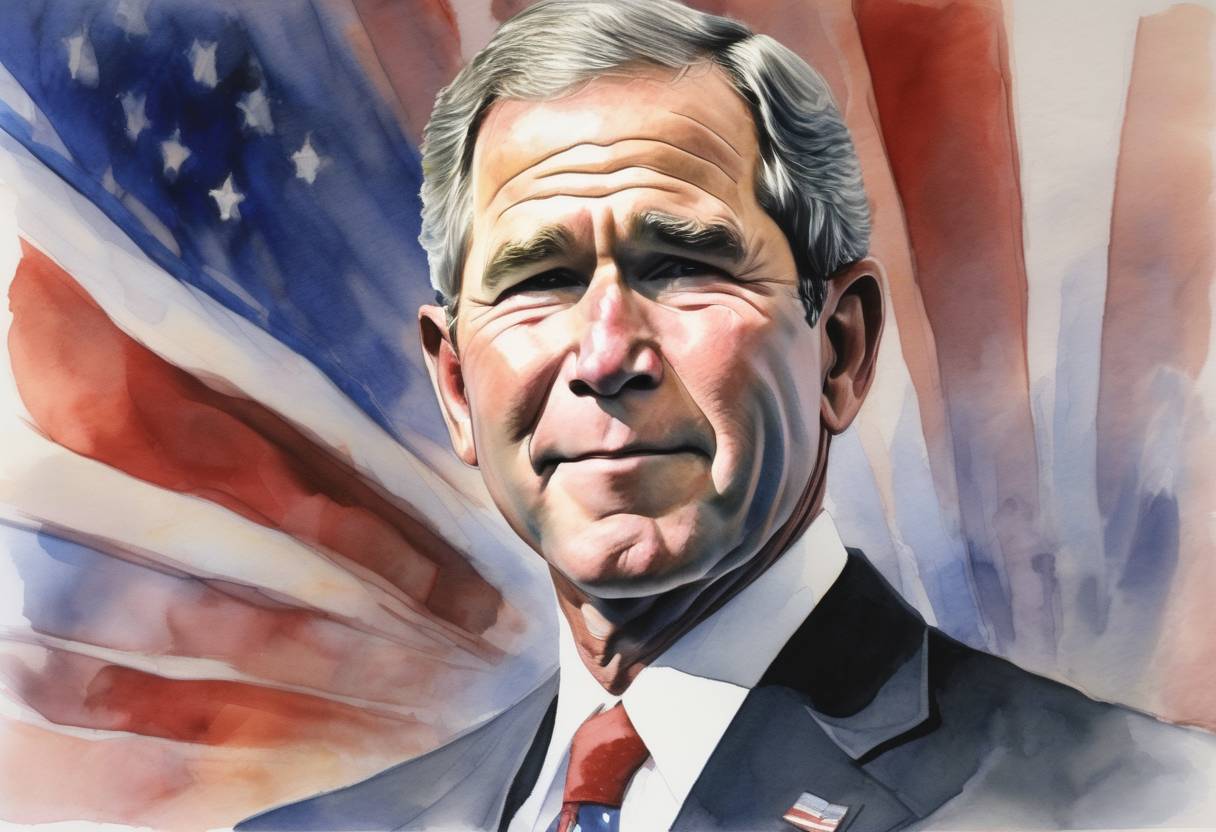
On January 20, 2001, George W. Bush was inaugurated as the 43rd President of the United States. This event marked the beginning of his first term in office, following a highly contentious and closely contested election.
2000 Presidential Election: The election between George W. Bush, the Republican candidate and then-Governor of Texas, and Democratic candidate Vice President Al Gore was one of the closest in U.S. history. The election was notable for its controversial conclusion, particularly the Florida vote recount.
Supreme Court Decision: The election results hinged on the state of Florida, where the vote was extremely close. The U.S. Supreme Court’s decision in Bush v. Gore on December 12, 2000, effectively resolved the dispute in Bush’s favor by halting the Florida recount, awarding him the state’s electoral votes and thus the presidency.
Ceremony Location: The inauguration took place at the United States Capitol in Washington, D.C., a traditional venue for presidential inaugurations.
Oath of Office: Chief Justice William Rehnquist administered the presidential oath of office to George W. Bush. The oath is a constitutionally mandated procedure that officially marks the commencement of a president’s term.
Inaugural Address: In his inaugural speech, President Bush emphasized themes of unity, compassion, and responsibility. He called for a “nation of character” and highlighted the importance of civic duty and bipartisan cooperation.
Political Climate: Bush’s presidency began in a politically divided nation, with the contentious election highlighting deep partisan divides. His call for unity was an attempt to bridge these gaps.
Policy Focus: Early in his presidency, Bush focused on domestic issues such as education reform, tax cuts, and faith-based initiatives. His administration would later be defined by significant foreign policy challenges, particularly following the September 11, 2001, terrorist attacks.
Historical Impact: Bush’s presidency had lasting impacts on both domestic and international fronts, including the initiation of the War on Terror, the wars in Afghanistan and Iraq, and significant tax policy changes.
George W. Bush’s inauguration set the stage for a presidency that would navigate significant challenges and leave a complex legacy in American history.
Source: www.whitehouse.gov