The First Vatican Council and the Dogma of Papal Infallibility
1870 · Vatican City, Vatican City
The Vatican I Ecumenical Council formally adopted the dogma of papal infallibility, defining it as a matter of Catholic faith.
July 18, 1870
The First Vatican Council decreed the dogma of papal infallibility, asserting that the Pope is preserved from the possibility of error when he solemnly declares a dogmatic teaching on faith or morals.
Vatican City, Vatican City | Roman Catholic Church
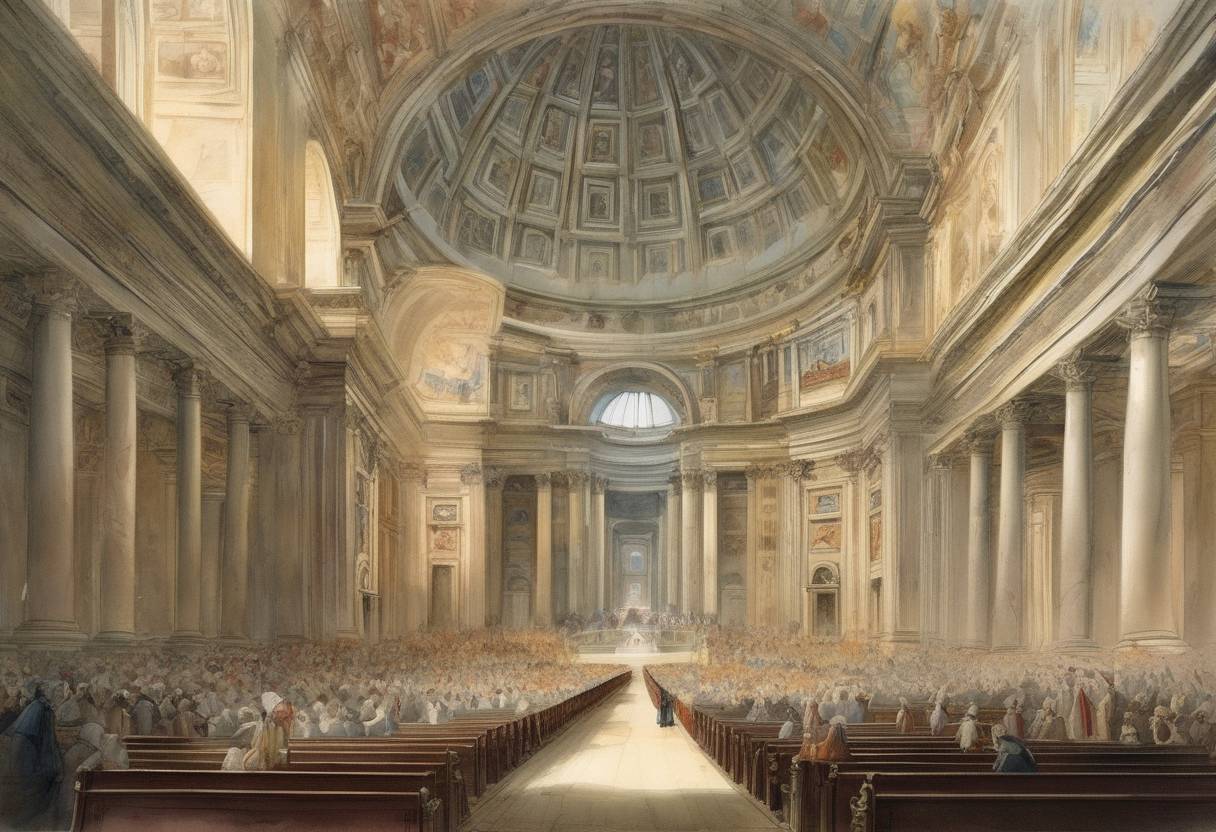
On July 18, 1870, the First Vatican Council, convened by Pope Pius IX, formally decreed the dogma of papal infallibility. This significant event in the history of the Roman Catholic Church took place at St. Peter’s Basilica in Vatican City and marked a pivotal moment in the Church’s doctrinal development.
The First Vatican Council, also known as Vatican I, was the 20th ecumenical council of the Catholic Church. It was convened in 1869 and lasted until 1870. The council was primarily called to address the challenges posed by modernity, including rationalism, liberalism, and materialism, which were seen as threats to the Church’s authority and teachings.
The concept of papal infallibility had been a subject of theological debate for centuries. It refers to the belief that the Pope, when speaking ex cathedra (from the chair of St. Peter) on matters of faith and morals, is preserved from the possibility of error by the Holy Spirit. This doctrine was intended to reinforce the Pope’s authority and the unity of the Church.
Preparation and Debate: The council’s preparation involved extensive theological discussions and debates among bishops and theologians. The issue of papal infallibility was contentious, with some bishops expressing concerns about its implications for the Church’s governance and the role of bishops.
Drafting the Decree: The draft of the decree on papal infallibility, known as “Pastor Aeternus,” was carefully crafted to address these concerns. It emphasized that infallibility applied only to solemn declarations on faith and morals and did not extend to the Pope’s personal opinions or other teachings.
The Vote: On July 13, 1870, the council held a vote on the decree. Out of 601 bishops present, 451 voted in favor, 88 against, and 62 abstained. The final promulgation took place on July 18, 1870, with the formal declaration of the dogma.
The decree “Pastor Aeternus” outlined the conditions under which papal infallibility applies:
The declaration of papal infallibility had significant implications for the Catholic Church:
The dogma of papal infallibility remains a defining aspect of Catholic theology and ecclesiology. It underscores the Church’s commitment to preserving doctrinal purity and continuity in the face of modern challenges. The First Vatican Council’s declaration continues to influence the Church’s approach to teaching authority and its relationship with the broader Christian community.
Source: en.wikipedia.org