The Proclamation of the German Empire: January 18, 1871
1871 · Versailles, France
The German Empire was proclaimed in the Hall of Mirrors at the Palace of Versailles, marking the unification of Germany.
July 20, 1866
The Austro-Prussian War ended with the signing of the Treaty of Prague, which resulted in the dissolution of the German Confederation and the exclusion of Austria from German affairs.
Prague, Czech Republic | Prussia and Austria
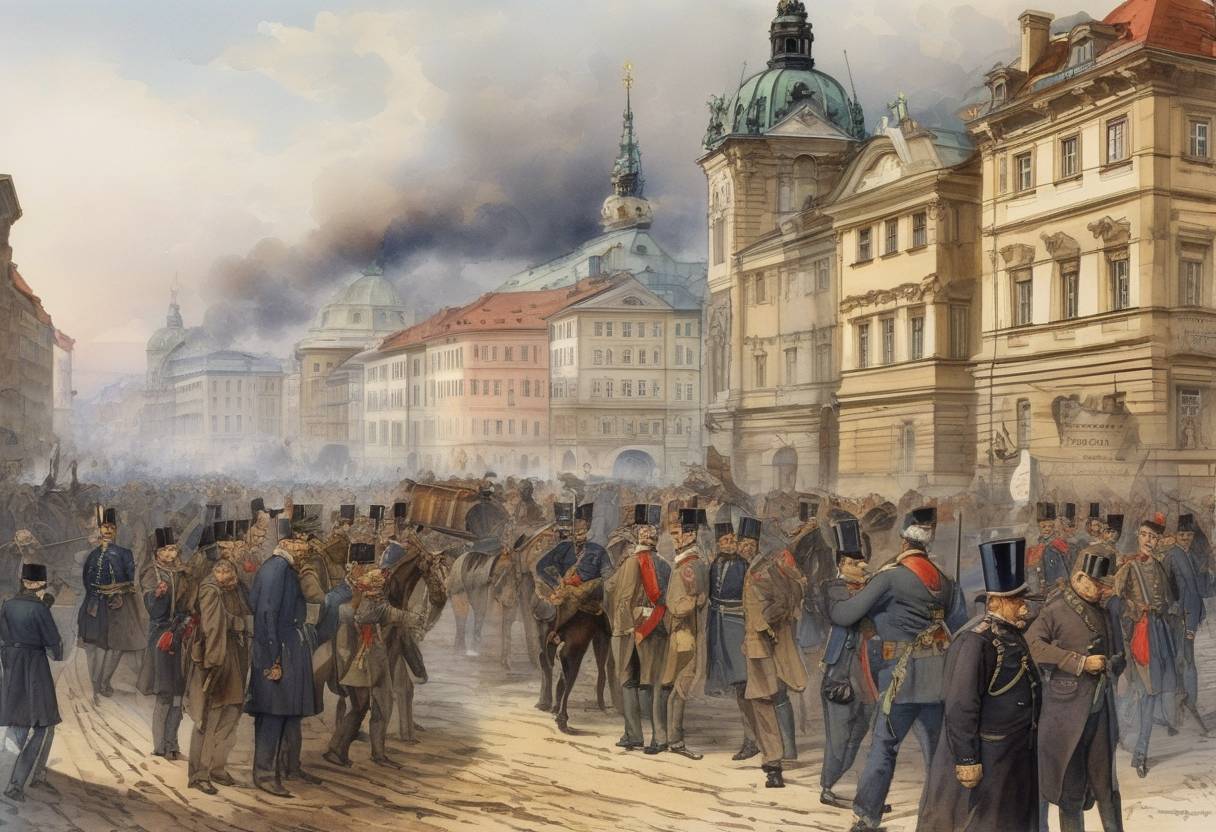
The Austro-Prussian War, also known as the Seven Weeks’ War, concluded with the signing of the Treaty of Prague on August 23, 1866. This treaty marked a significant turning point in the history of Central Europe, particularly in the context of German unification and the balance of power within the region.
The Austro-Prussian War was primarily a conflict between the Austrian Empire and the Kingdom of Prussia, with both powers vying for dominance over the German states. The war was part of a broader struggle for influence within the German Confederation, a loose association of 39 German states established after the Congress of Vienna in 1815.
Prussia, under the leadership of Otto von Bismarck, sought to unify the German states under its control, excluding Austria. Tensions escalated over the administration of the duchies of Schleswig and Holstein, leading to the outbreak of war in June 1866.
Battle of Königgrätz (Sadowa): The decisive battle of the war occurred on July 3, 1866, at Königgrätz (now Hradec Králové in the Czech Republic). The Prussian army, utilizing superior tactics and technology, notably the breech-loading needle gun, defeated the Austrian forces decisively.
Prussian Strategy: Bismarck’s diplomatic acumen ensured that Prussia fought the war without significant interference from other major European powers, allowing it to focus on defeating Austria.
Austrian Defeat: Following the defeat at Königgrätz, Austria was forced to seek peace, leading to negotiations that culminated in the Treaty of Prague.
Signed on August 23, 1866, the Treaty of Prague had several important provisions:
Dissolution of the German Confederation: The treaty formally dissolved the German Confederation, effectively ending Austria’s influence over the German states.
Exclusion of Austria from German Affairs: Austria agreed to withdraw from German affairs, paving the way for Prussian leadership in the unification of Germany.
Territorial Adjustments: Austria ceded the duchies of Schleswig and Holstein to Prussia. Additionally, the Kingdom of Hanover, the Electorate of Hesse, the Duchy of Nassau, and the Free City of Frankfurt were annexed by Prussia.
Leniency Towards Austria: Bismarck opted for a lenient peace, avoiding harsh penalties on Austria to maintain a future ally against France.
The Treaty of Prague had profound implications for the future of Germany and Europe:
North German Confederation: Following the treaty, Prussia established the North German Confederation, a significant step towards the eventual unification of Germany under Prussian leadership.
Shift in Power: The exclusion of Austria from German affairs marked a shift in the balance of power, with Prussia emerging as the dominant German state.
Prelude to German Unification: The treaty set the stage for the unification of Germany, which would be realized in 1871 with the proclamation of the German Empire.
Bismarck’s Diplomacy: The successful outcome of the war and the treaty highlighted Bismarck’s diplomatic and strategic prowess, solidifying his role as a key architect of German unification.
In conclusion, the Treaty of Prague was a pivotal moment in 19th-century European history, reshaping the political landscape of Germany and setting the course for future developments in the region.
Source: en.wikipedia.org