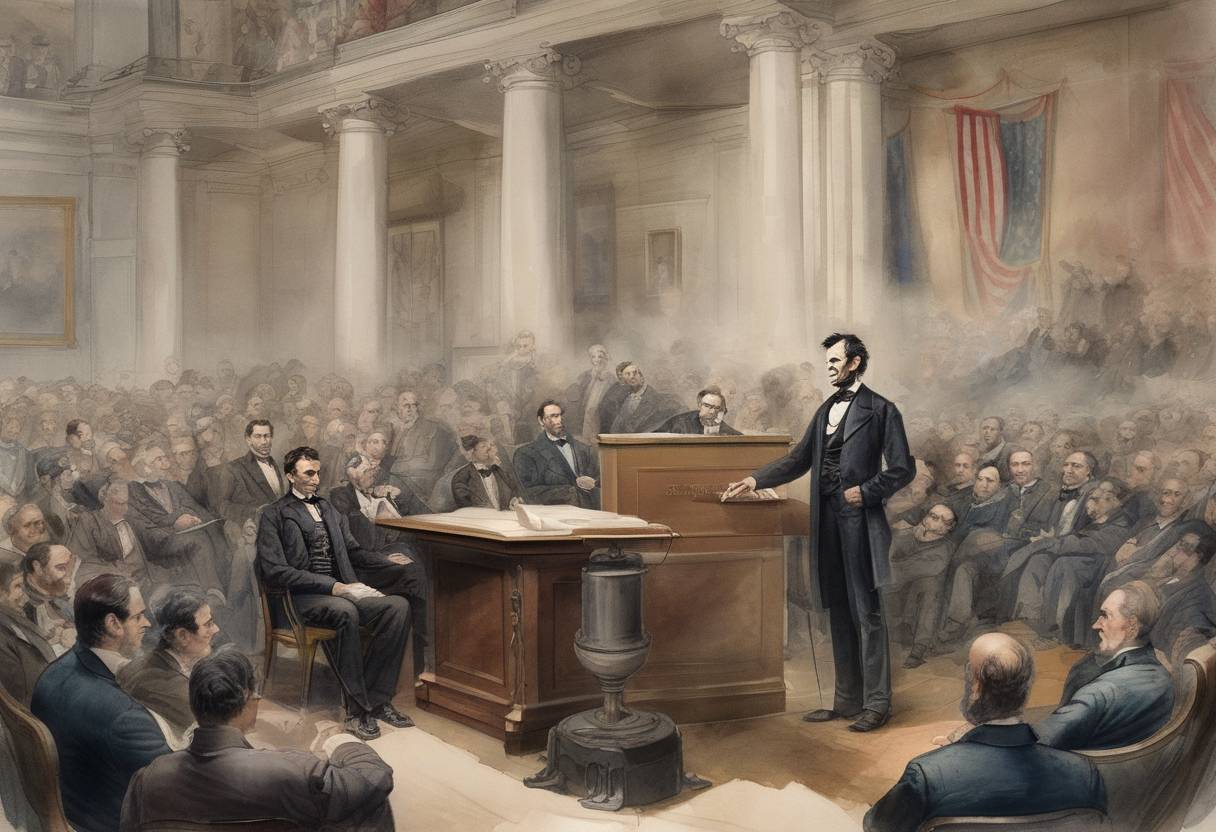
Abraham Lincoln’s Cooper Union Address - February 27, 1860
On February 27, 1860, Abraham Lincoln delivered a pivotal speech at Cooper Union in New York City, which played a significant role in elevating his national profile and securing the Republican nomination for President later that year.
Context
By 1860, the United States was deeply divided over the issue of slavery. The Republican Party, founded in the 1850s, opposed the expansion of slavery into the territories. Lincoln, a relatively unknown figure outside Illinois, had gained some attention for his debates with Stephen A. Douglas during the 1858 Illinois Senate race, though he lost that election. The Cooper Union speech was an opportunity for Lincoln to present himself as a leader on the national stage.
The Speech
Lincoln’s address at Cooper Union was meticulously researched and crafted. The speech was divided into three main parts:
Historical Argument: Lincoln argued that the Founding Fathers had intended for the federal government to regulate slavery in the territories. He meticulously cited historical records and votes by the framers of the Constitution to support his claim that they had opposed the expansion of slavery.
Moral and Political Stance: Lincoln addressed the moral dimensions of slavery, asserting that it was a moral, social, and political wrong. He emphasized the Republican Party’s stance against the spread of slavery, aligning it with the principles of the nation’s founders.
Appeal to Moderates: Lincoln concluded by appealing to the moderate Northerners, urging them to stand firm against the demands of the Southern states. He famously stated, “Let us have faith that right makes might, and in that faith, let us, to the end, dare to do our duty as we understand it.”
Impact
The Cooper Union speech was a resounding success. It was well-received by the audience and widely covered in the press, significantly raising Lincoln’s profile. The speech showcased his eloquence, logical reasoning, and moderate stance, which appealed to a broad spectrum of the Republican Party.
Lincoln’s performance at Cooper Union, combined with his growing reputation as a skilled orator and debater, helped him secure the Republican nomination for President at the party’s convention in May 1860. His election later that year set the stage for the American Civil War, as Southern states began to secede following his victory.
Broader Historical Significance
The Cooper Union address is often credited with transforming Lincoln from a regional politician into a national figure. It demonstrated his ability to articulate the Republican position on slavery in a way that was both principled and politically astute. The speech remains a significant moment in American history, illustrating the power of rhetoric and reasoned argument in shaping political outcomes.