Alexander Litvinenko's Death: A Major International Incident
2006 · London, United Kingdom
Former Russian spy Alexander Litvinenko dies in London after being poisoned with polonium-210, leading to a major international investigation.
June 8, 1968
James Earl Ray, the assassin of Martin Luther King Jr., is arrested at London Heathrow Airport.
London, United Kingdom | Scotland Yard
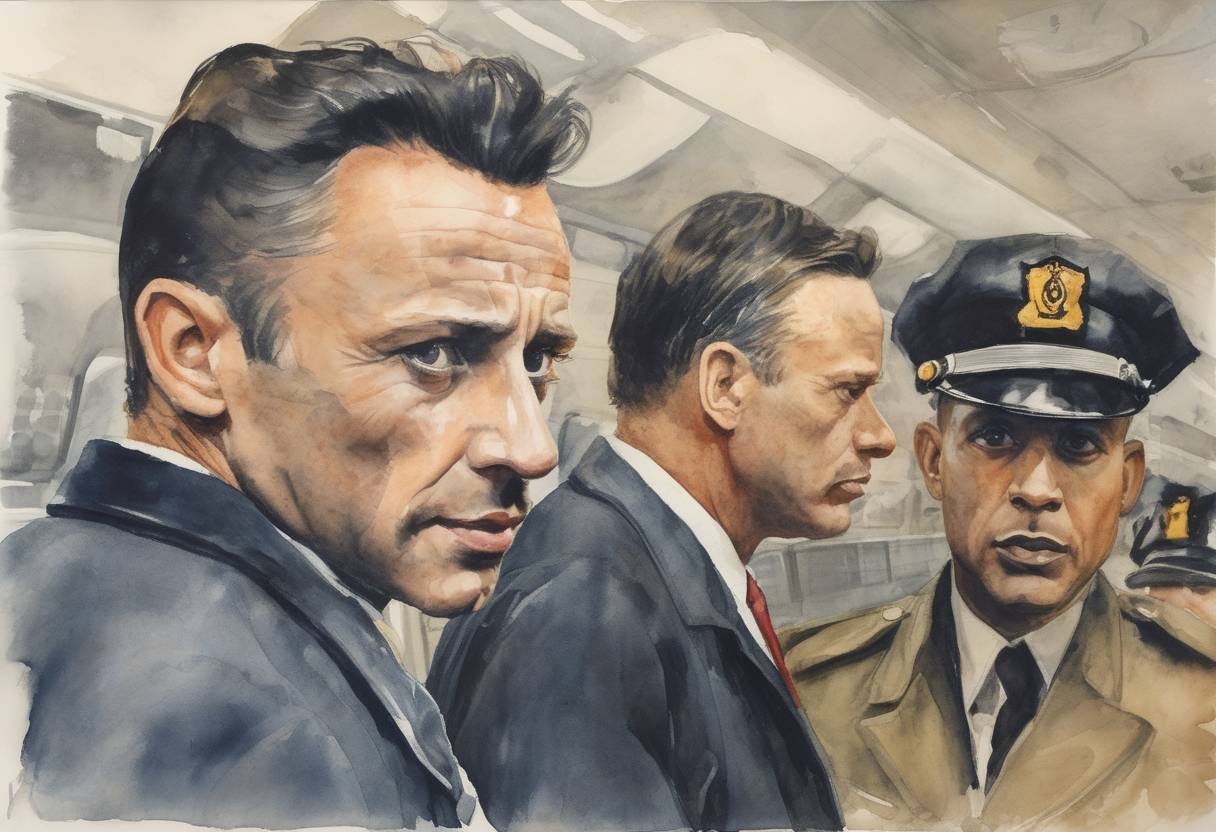
On June 8, 1968, James Earl Ray, the man who assassinated civil rights leader Dr. Martin Luther King Jr., was apprehended at London Heathrow Airport. This arrest marked a significant moment in the aftermath of one of the most tragic events in American history.
Dr. Martin Luther King Jr., a prominent leader in the American civil rights movement, was assassinated on April 4, 1968, in Memphis, Tennessee. His death sent shockwaves across the United States and the world, leading to widespread mourning and unrest. The assassination occurred at the Lorraine Motel, where King was staying while supporting a sanitation workers’ strike.
James Earl Ray, a career criminal, was quickly identified as the prime suspect in the assassination. Following the shooting, Ray fled the scene, leading to a massive manhunt by the FBI and other law enforcement agencies.
Ray managed to evade capture for over two months, traveling across the United States and eventually making his way to Canada. From there, he obtained a false Canadian passport under the alias “Ramon George Sneyd” and traveled to the United Kingdom.
On June 8, 1968, Ray was arrested at Heathrow Airport in London while attempting to board a flight to Brussels, Belgium. His capture was facilitated by a tip-off to the authorities, who had been on high alert for any suspicious individuals matching Ray’s description.
Following his arrest, Ray was extradited to the United States, where he faced charges for the assassination of Dr. King. In March 1969, Ray pleaded guilty to the murder, avoiding a jury trial, and was sentenced to 99 years in prison. Despite his guilty plea, Ray later recanted his confession and claimed he was part of a larger conspiracy, though these claims were never substantiated.
Ray’s arrest and subsequent conviction provided a measure of closure to the investigation into Dr. King’s assassination. However, the event left a lasting impact on the civil rights movement and American society, highlighting the deep-seated racial tensions and the ongoing struggle for equality.
The assassination of Dr. Martin Luther King Jr. and the arrest of James Earl Ray underscored the volatile social and political climate of the 1960s in the United States. King’s death was a pivotal moment in the civil rights movement, galvanizing activists and leading to significant legislative changes, including the Fair Housing Act of 1968.
Ray’s arrest and conviction also raised questions about the effectiveness of law enforcement and the justice system in dealing with racially motivated crimes. The events surrounding King’s assassination continue to be a subject of study and reflection, serving as a reminder of the ongoing fight for civil rights and justice.
Source: en.wikipedia.org