USS Triton's Submerged Circumnavigation: May 10, 1960
1960 · New London, United States
The nuclear submarine USS Triton completes the first submerged circumnavigation of the globe.
August 3, 1958
The nuclear-powered submarine USS Nautilus completed the first undersea voyage to the geographic North Pole, marking a significant achievement in naval exploration and Cold War military capabilities.
North Pole, International Waters | United States Navy
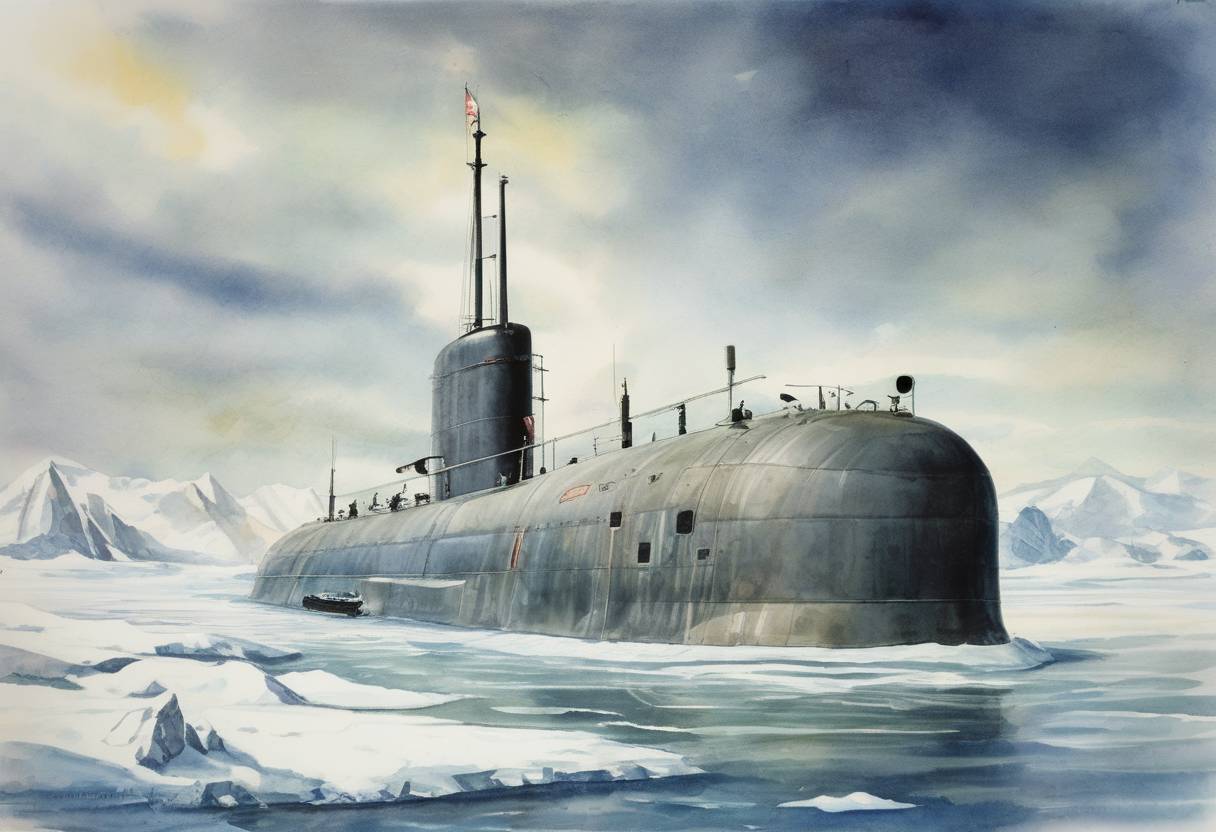
On August 3, 1958, the USS Nautilus (SSN-571), the world’s first operational nuclear-powered submarine, achieved a historic milestone by completing the first undersea voyage to the geographic North Pole. This remarkable feat marked a significant achievement in naval exploration and demonstrated the advanced capabilities of nuclear propulsion during the Cold War era.
The USS Nautilus was launched on January 21, 1954, and commissioned into the United States Navy on September 30, 1954. As the first submarine to be powered by a nuclear reactor, it represented a revolutionary advancement in naval engineering, allowing for unprecedented underwater endurance and speed.
The journey to the North Pole was part of a secret mission known as “Operation Sunshine.” The mission aimed to showcase the strategic advantages of nuclear-powered submarines, particularly their ability to operate under the Arctic ice cap, a region previously inaccessible to conventional submarines.
The successful completion of the voyage had several significant implications:
The USS Nautilus’s journey to the North Pole was a landmark event in naval history, showcasing the transformative impact of nuclear technology on military capabilities and exploration. It remains a testament to human ingenuity and the spirit of exploration during a pivotal period in the 20th century.
Source: en.wikipedia.org