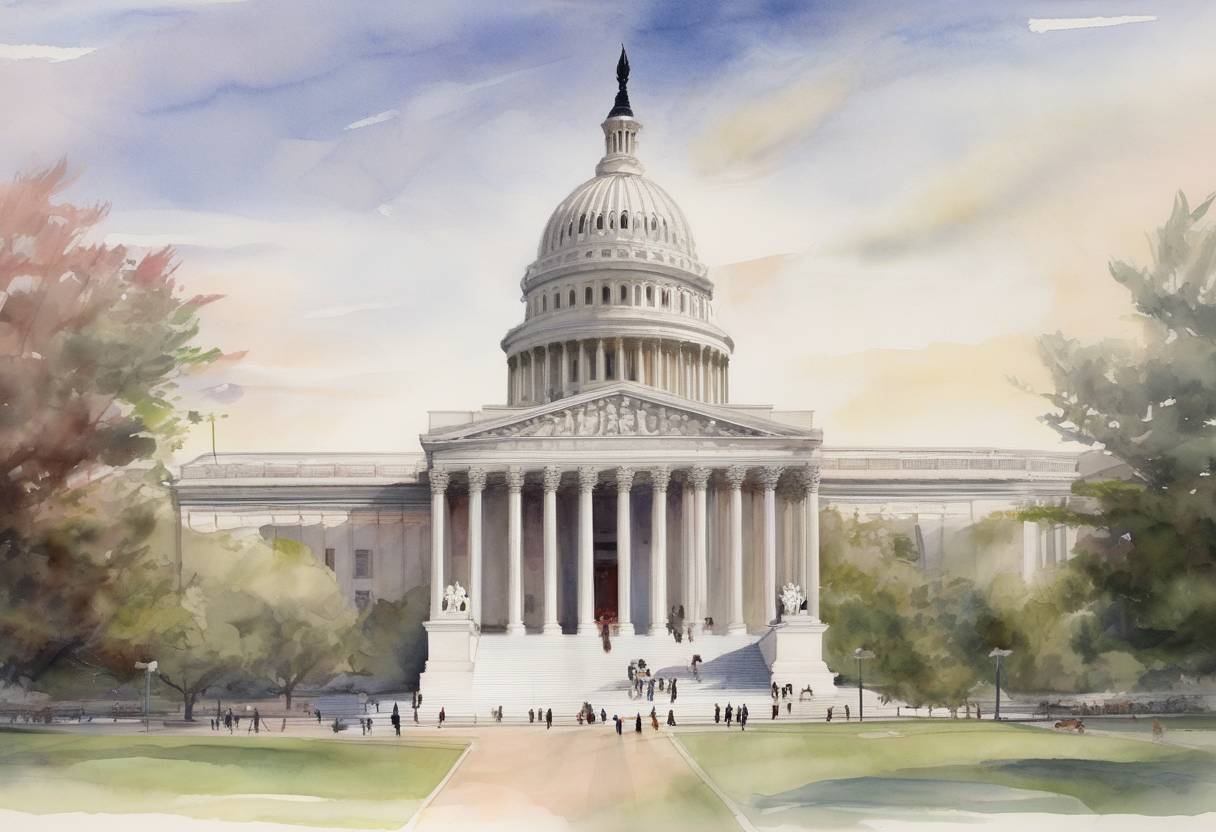
The Supreme Court Upholds the Solomon Amendment: April 17, 2006
On April 17, 2006, the United States Supreme Court delivered a unanimous decision upholding the Solomon Amendment, a federal law that permits the government to withhold funding from universities that prohibit military recruiters from accessing their campuses. This decision was a significant moment in the intersection of military policy, academic freedom, and federal funding.
Background
The Solomon Amendment, named after Representative Gerald B. H. Solomon, was enacted in 1994. It was designed to ensure that military recruiters had the same access to college campuses as other employers, particularly in response to some universities’ policies that restricted military recruitment due to the military’s “Don’t Ask, Don’t Tell” policy, which was seen as discriminatory against LGBTQ+ individuals.
The Case: Rumsfeld v. Forum for Academic and Institutional Rights, Inc.
The case, Rumsfeld v. Forum for Academic and Institutional Rights, Inc. (FAIR), arose when a coalition of law schools and professors challenged the Solomon Amendment. They argued that it infringed upon their First Amendment rights by compelling them to support military recruitment on campus, which they opposed due to the military’s stance on LGBTQ+ service members.
Supreme Court Decision
The Supreme Court, in an 8-0 decision (Justice Alito did not participate), ruled in favor of the government. Chief Justice John Roberts wrote the opinion, stating that the Solomon Amendment regulated conduct, not speech, and therefore did not violate the First Amendment. The Court reasoned that the law did not force universities to endorse the military’s message but merely required them to provide equal access to military recruiters.
Significance and Aftermath
The decision reinforced the federal government’s ability to condition funding on compliance with specific policies, highlighting the balance between federal interests and institutional autonomy. It also underscored the limitations of First Amendment claims in the context of government funding and regulatory conditions.
The ruling had a lasting impact on how universities navigated their policies regarding military recruitment and federal funding. It also contributed to ongoing debates about academic freedom and the role of military policies in educational environments.
Overall, the Supreme Court’s decision in this case affirmed the government’s authority to link federal funding to compliance with federal policies, a principle that continues to influence the relationship between higher education institutions and the federal government.