Qantas Airbus A380 Emergency Landing - November 4, 2010
2010 · Singapore, Singapore
A Qantas Airbus A380 made an emergency landing in Singapore after an engine failure, marking the first major incident for the A380 model.
October 25, 2007
The Airbus A380, the world's largest passenger airliner, made its first commercial flight from Singapore to Sydney.
Singapore, Singapore | Singapore Airlines
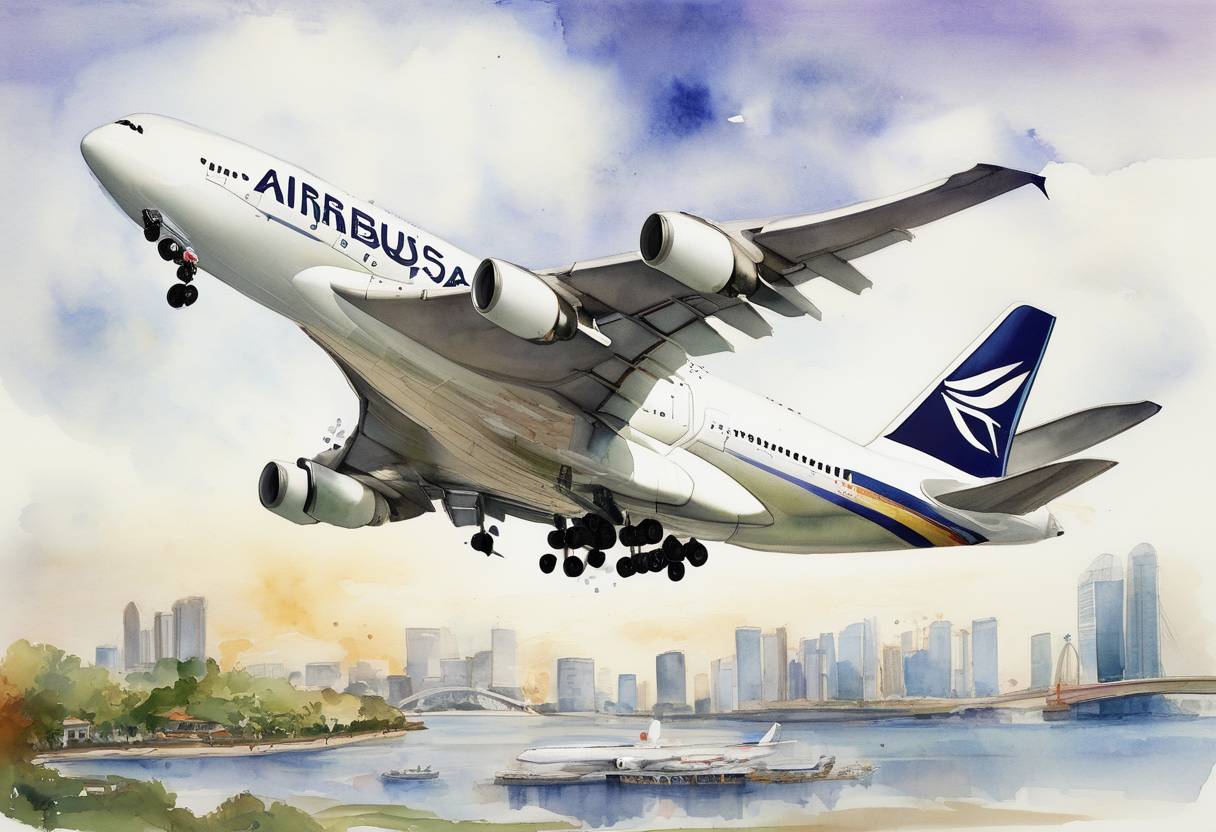
On October 25, 2007, the Airbus A380, the world’s largest passenger airliner, embarked on its inaugural commercial flight from Singapore to Sydney. This event marked a significant milestone in aviation history, showcasing advancements in aircraft engineering and design.
The Airbus A380 was developed by Airbus, a European aerospace corporation, to address the growing demand for air travel and the need for larger aircraft to accommodate more passengers. The A380 project was launched in December 2000, with the goal of creating a superjumbo jet capable of carrying more passengers than any other commercial airliner.
The first commercial flight of the A380 was operated by Singapore Airlines, one of the launch customers for the aircraft. The flight, designated SQ380, departed from Singapore Changi Airport and landed at Sydney Kingsford Smith Airport.
The successful commercial debut of the Airbus A380 represented a leap forward in aviation technology and passenger experience. It demonstrated Airbus’s capability to produce a large, efficient, and comfortable aircraft, challenging its main competitor, Boeing, in the long-haul market.
The first commercial flight of the Airbus A380 on October 25, 2007, was a landmark event in the history of aviation. It underscored the industry’s commitment to innovation and set new standards for passenger travel, influencing the design and operation of future aircraft.
Source: www.airbus.com