1679 · , United States
French explorer René-Robert Cavelier, Sieur de La Salle reached the mouth of the Mississippi River, claiming the surrounding territory for France.
December 4, 1674
Father Jacques Marquette founds a mission on the shores of Lake Michigan, which later becomes the city of Chicago.
Chicago, United States | Jesuits
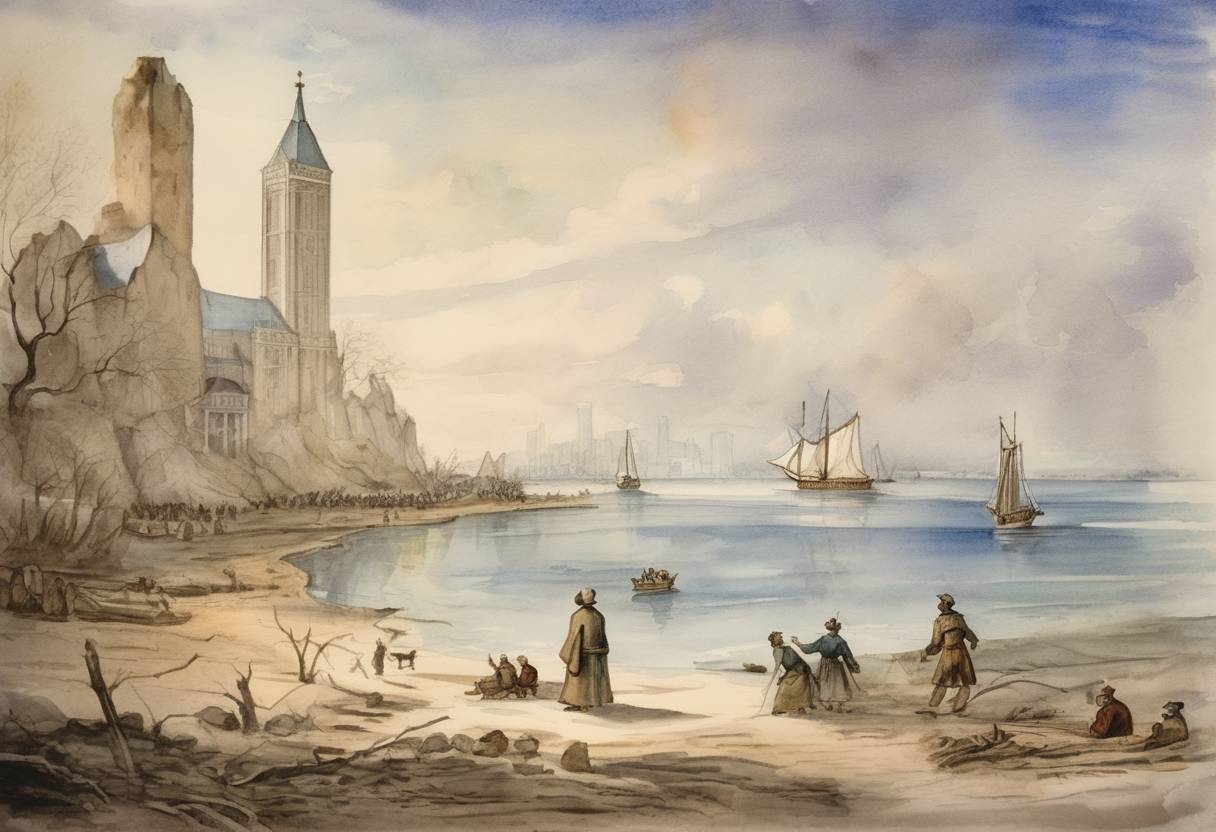
On December 4, 1674, Father Jacques Marquette, a French Jesuit missionary, established a mission on the shores of Lake Michigan. This event is a significant milestone in the history of what would eventually become the city of Chicago.
Father Jacques Marquette was born in Laon, France, in 1637. He joined the Society of Jesus at the age of 17 and was later sent to New France (now Canada) as a missionary. Marquette was known for his linguistic skills, particularly in learning and translating Native American languages, which greatly aided his missionary work.
In 1673, Marquette, along with Louis Jolliet, embarked on an expedition to explore the Mississippi River. This journey was crucial in mapping the region and establishing French presence in the interior of North America.
After his exploration of the Mississippi, Marquette returned to the Great Lakes region. On December 4, 1674, he founded a mission at a site near the mouth of the Chicago River, on the southwestern shore of Lake Michigan. This location was strategically significant due to its proximity to important Native American trade routes and its potential as a portage between the Great Lakes and the Mississippi River system.
Marquette’s mission aimed to evangelize the local Native American tribes, including the Illinois and Miami peoples. The mission served as a religious and cultural exchange point, fostering relationships between the French settlers and the indigenous populations.
Foundation of Chicago: Although Marquette’s mission was short-lived due to his declining health and eventual death in 1675, it laid the groundwork for future settlement in the area. The site of the mission is often considered the birthplace of Chicago.
French Influence: The establishment of the mission marked the beginning of French influence in the region, which would continue until the area came under British control following the French and Indian War in 1763.
Cultural Interactions: Marquette’s efforts exemplify the early interactions between European settlers and Native American tribes, highlighting both the cooperative and complex nature of these relationships.
Father Jacques Marquette passed away on May 18, 1675, during his return journey to the mission. Despite his early death, his contributions to the exploration and mapping of North America and his role in establishing early European settlements in the Midwest are well-remembered.
The mission site eventually evolved into a trading post and later a settlement, growing into the bustling metropolis of Chicago, one of the largest cities in the United States today.
In summary, the founding of the mission by Father Jacques Marquette on December 4, 1674, represents a pivotal moment in the early history of Chicago, marking the beginning of European settlement and influence in the region.
Source: en.wikipedia.org