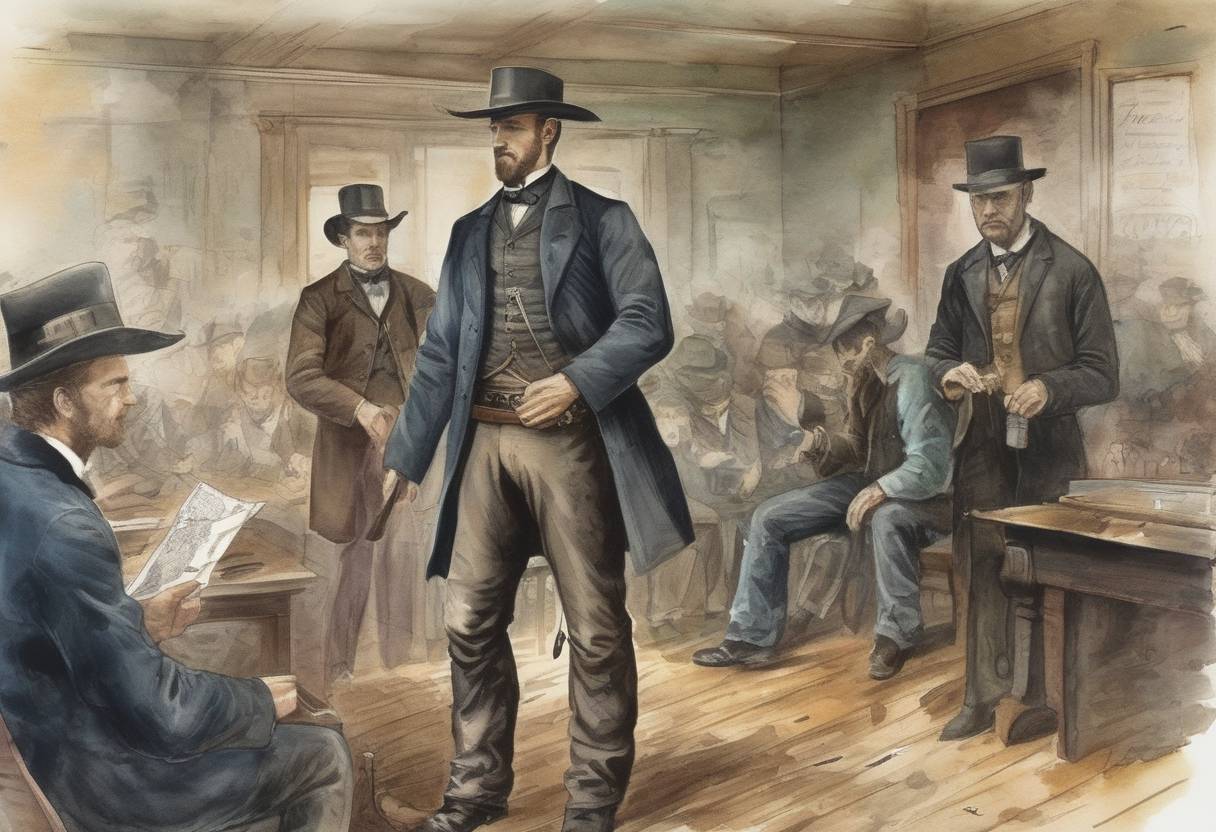
Jesse James’ First Confirmed Bank Robbery: Gallatin, Missouri, December 7, 1869
On December 7, 1869, the infamous American outlaw Jesse James committed his first confirmed bank robbery in Gallatin, Missouri. This event marked the beginning of a notorious criminal career that would capture the American imagination and contribute to the mythos of the Wild West.
Context and Background
Jesse James, born on September 5, 1847, in Clay County, Missouri, was a Confederate guerrilla during the American Civil War. Alongside his brother Frank James, Jesse was part of the pro-Confederate bushwhacker group led by William Quantrill and “Bloody Bill” Anderson. The violence and chaos of the Civil War deeply influenced Jesse’s later life, shaping his transition into a life of crime.
After the war, the James brothers, along with other former Confederate guerrillas, turned to banditry. The post-war Reconstruction era was marked by economic hardship and political tension, particularly in Missouri, which had been a border state with divided loyalties. This environment provided fertile ground for outlaws like Jesse James to operate.
The Gallatin Bank Robbery
The robbery took place at the Daviess County Savings Association in Gallatin, Missouri. Jesse James and his accomplice, believed to be his brother Frank, entered the bank under the guise of conducting business. Once inside, Jesse shot and killed the bank’s cashier, Captain John Sheets, mistakenly believing him to be Samuel P. Cox, a former Union militia officer whom Jesse blamed for the death of “Bloody Bill” Anderson during the war.
The robbery was poorly executed, with the outlaws managing to escape with only a small amount of money. However, the murder of Sheets and the daring nature of the crime quickly drew public attention and law enforcement scrutiny.
Aftermath and Historical Significance
The Gallatin robbery was significant for several reasons:
Publicity and Infamy: The robbery and murder thrust Jesse James into the national spotlight, beginning his transformation into a legendary figure. Newspapers sensationalized the event, contributing to his notoriety.
Law Enforcement Response: The crime prompted a more organized law enforcement effort to capture the James brothers, although they would evade capture for many years.
Mythologizing the Outlaw: Jesse James became a symbol of rebellion against perceived injustices of the Reconstruction era, particularly among those sympathetic to the Confederate cause. His exploits were romanticized in dime novels and folklore, cementing his place in American cultural history.
Continued Criminal Activity: The Gallatin robbery was just the beginning of a series of bank and train robberies attributed to the James-Younger Gang, which included other notable outlaws like Cole Younger.
Jesse James continued his criminal activities until his assassination by Robert Ford, a member of his own gang, on April 3, 1882. His life and crimes remain a subject of fascination, reflecting the complexities of post-Civil War America and the enduring allure of the outlaw archetype.