Florence Expels the Medici Family and Restores a Republican Government - May 16, 1527
1527 · Florence, Italy
Florence expels the Medici family and restores a republican government.
April 26, 1478
The Pazzi Conspiracy: An attempt to assassinate Lorenzo de' Medici and his brother Giuliano during Easter mass in Florence, resulting in Giuliano's death.
Florence, Italy | Pazzi family
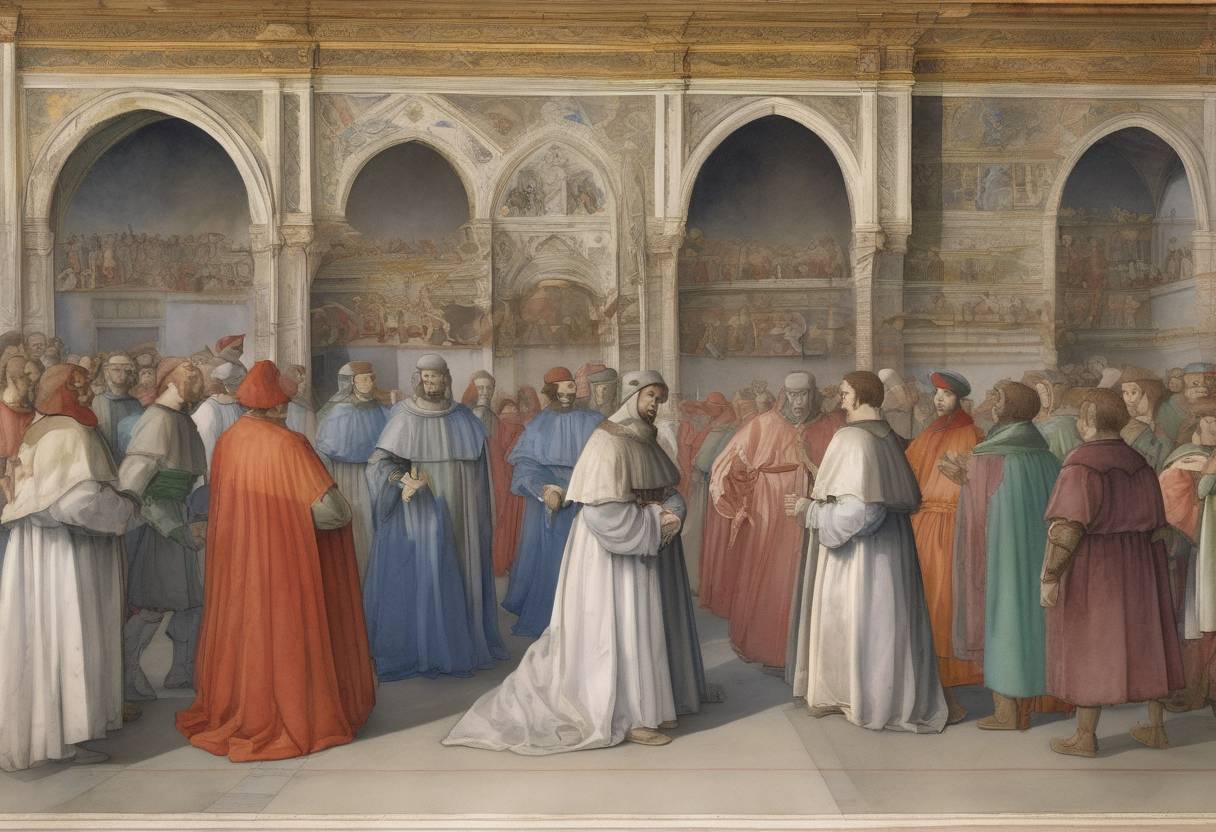
The Pazzi Conspiracy was a significant event in the history of Florence, Italy, marked by an audacious attempt to overthrow the powerful Medici family. The conspiracy culminated on April 26, 1478, during Easter mass at the Florence Cathedral, also known as the Duomo.
The Medici family, led by Lorenzo de’ Medici, known as “Lorenzo the Magnificent,” wielded considerable influence in Florence through their banking empire and political alliances. Their dominance, however, bred resentment among rival families and political factions. The Pazzi family, another prominent Florentine banking dynasty, harbored ambitions to supplant the Medici’s power.
The conspiracy was orchestrated with the backing of several influential figures, including Francesco de’ Pazzi, a member of the Pazzi family, and Girolamo Riario, a nephew of Pope Sixtus IV. The Pope himself, although not directly involved in the assassination plot, had vested interests in diminishing Medici influence, as they opposed his territorial ambitions in central Italy.
On April 26, 1478, during the high-profile Easter mass at the Duomo, the conspirators launched their attack. The plan was to assassinate both Lorenzo and his brother Giuliano de’ Medici simultaneously, thereby destabilizing the Medici hold on Florence.
The immediate aftermath of the conspiracy was chaotic. The Florentine populace, largely loyal to the Medici, quickly rallied against the conspirators. Many of those involved in the plot were captured and executed in the days following the attack. Francesco de’ Pazzi was hanged from the windows of the Palazzo della Signoria, and other conspirators met similar fates.
Lorenzo de’ Medici emerged from the crisis with his power consolidated. He used the failed conspiracy to strengthen his position in Florence and across Italy. The Medici’s influence grew, and Lorenzo became a key figure in the Italian Renaissance, known for his patronage of the arts and culture.
The Pazzi Conspiracy had lasting implications for Florence and the broader Italian political landscape:
In summary, the Pazzi Conspiracy was a pivotal moment in Florentine history, highlighting the Medici’s resilience and the intricate web of political intrigue that defined Renaissance Italy.
Source: en.wikipedia.org