1922 · Shantou, China
A typhoon hit Shantou, China, killing more than 50,000 people, one of the deadliest natural disasters in the region's history.
September 18, 1906
A typhoon with tsunami kills an estimated 10,000 people in Hong Kong.
Hong Kong, China | Hong Kong Observatory
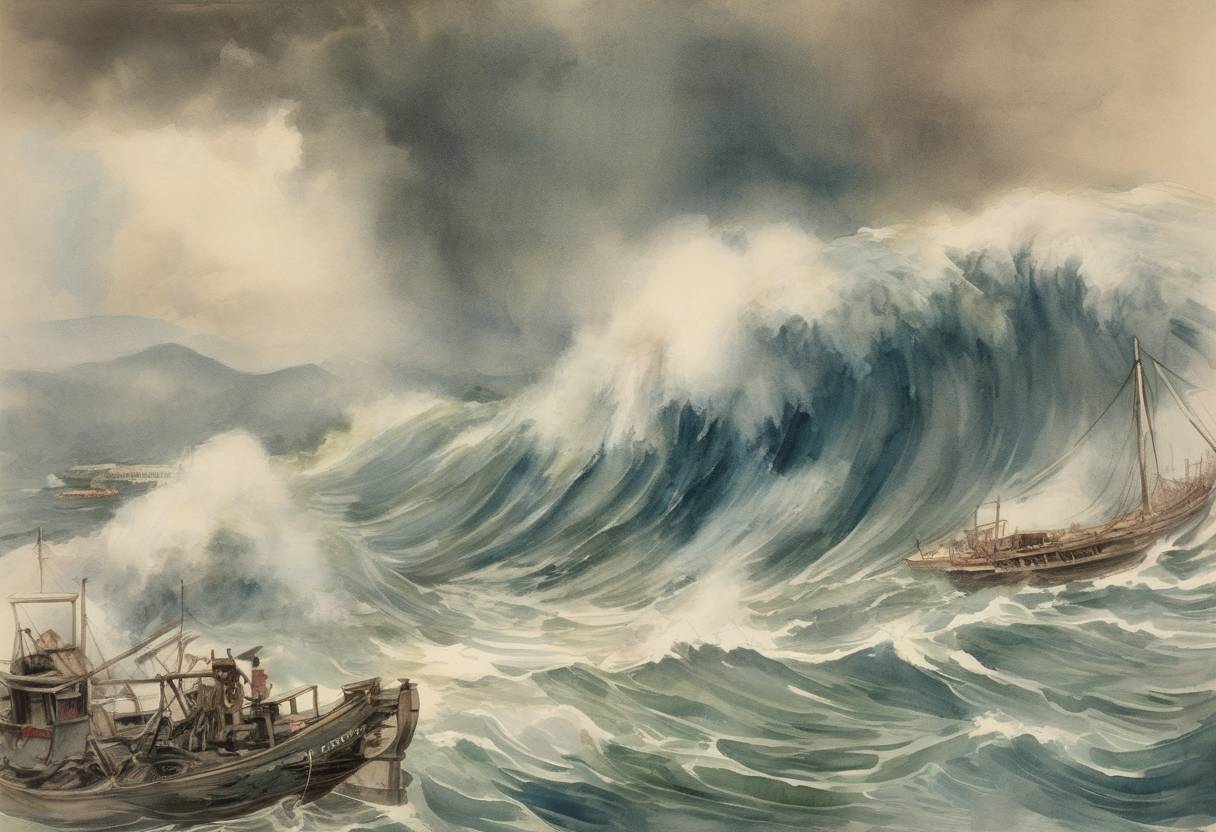
On September 18, 1906, a devastating typhoon struck Hong Kong, accompanied by a tsunami, resulting in the tragic loss of an estimated 10,000 lives. This catastrophic event stands as one of the deadliest natural disasters in the region’s history.
Hong Kong, located on the southern coast of China, is prone to typhoons due to its geographical position in the South China Sea. In the early 20th century, meteorological science was not as advanced as it is today, and early warning systems were rudimentary, leaving populations vulnerable to sudden weather changes.
The typhoon that hit on September 18, 1906, was particularly severe. It brought with it intense winds and heavy rains, which caused widespread destruction across the region. The storm surge generated by the typhoon led to a tsunami that compounded the disaster, inundating coastal areas and causing significant loss of life and property.
In the wake of the disaster, efforts were made to improve the resilience of Hong Kong to such natural calamities. This included the development of better infrastructure, improved building codes, and the establishment of more effective early warning systems.
The 1906 typhoon and tsunami highlighted the vulnerability of coastal cities to natural disasters and underscored the need for advancements in meteorological science and disaster preparedness. It served as a catalyst for change in how such events were managed in the region, influencing future policies and safety measures.
This tragic event remains a poignant reminder of the power of nature and the importance of preparedness in mitigating the impacts of natural disasters.
Source: en.wikipedia.org