The Opening of the Golden Gate Bridge to Pedestrian Traffic
1937 · San Francisco, United States
The Golden Gate Bridge in San Francisco, California, is opened to pedestrian traffic.
November 12, 1936
The San Francisco–Oakland Bay Bridge opened to traffic, connecting San Francisco and Oakland across San Francisco Bay.
San Francisco, United States
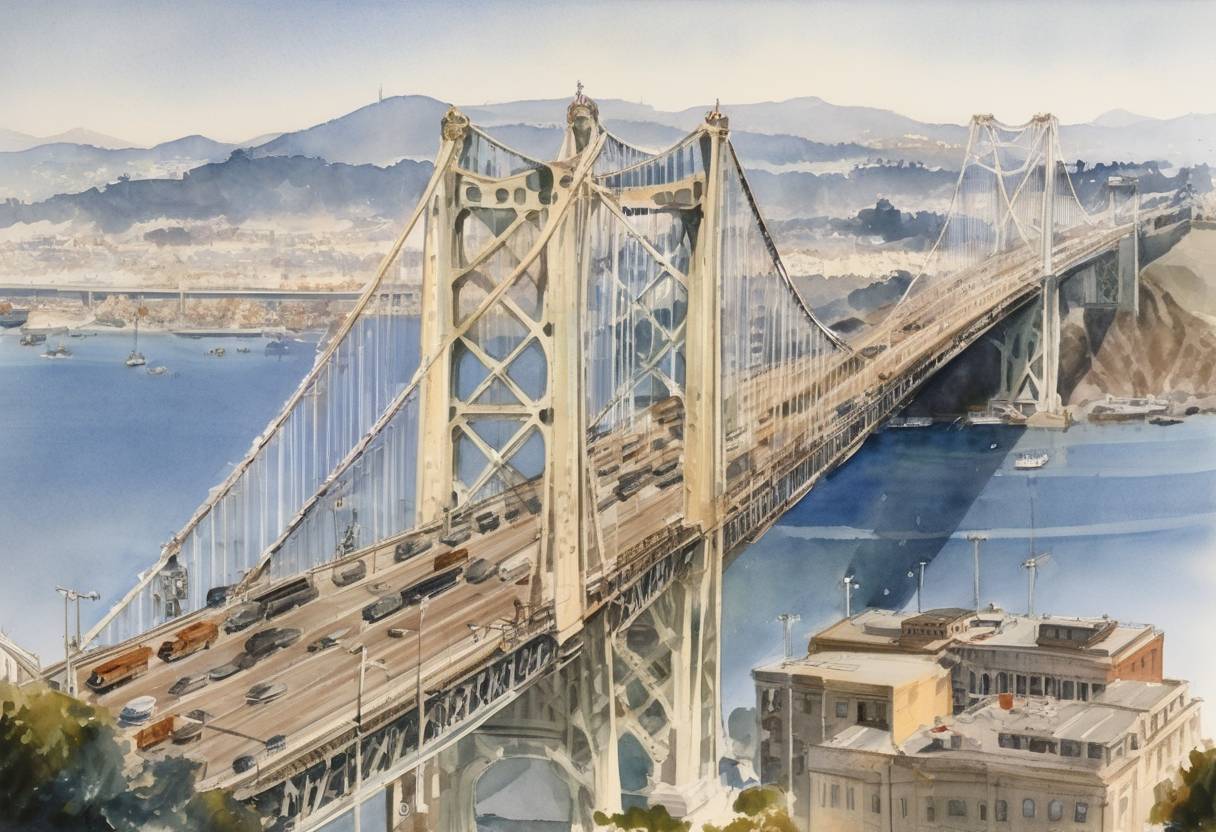
On November 12, 1936, the San Francisco–Oakland Bay Bridge, commonly known as the Bay Bridge, officially opened to traffic, marking a significant milestone in American engineering and infrastructure development. This monumental event connected San Francisco and Oakland across the San Francisco Bay, providing a vital link for transportation and commerce in the region.
The idea of a bridge spanning the San Francisco Bay had been considered since the early 20th century, driven by the need to improve connectivity between the rapidly growing cities of San Francisco and Oakland. The project gained momentum during the Great Depression, as it promised to create jobs and stimulate economic growth.
Construction of the Bay Bridge began in 1933, under the supervision of Chief Engineer Charles H. Purcell. The project was a massive undertaking, involving the construction of two major spans: the western span connecting San Francisco to Yerba Buena Island and the eastern span connecting the island to Oakland. The bridge’s total length is approximately 8.4 miles, making it one of the longest bridges in the world at the time.
The Bay Bridge was an engineering marvel of its time, featuring several innovative design elements:
Double-Deck Design: The bridge was designed with two decks, with the upper deck initially carrying automobiles and the lower deck accommodating trucks and trains. This design maximized the bridge’s capacity and utility.
Suspension and Cantilever Spans: The western span is a suspension bridge, while the eastern span was originally a cantilever bridge. This combination of designs was necessary to address the varying geographical and engineering challenges posed by the bay.
Yerba Buena Tunnel: The bridge includes a tunnel through Yerba Buena Island, which was the largest diameter bore tunnel in the world at the time of its construction.
The Bay Bridge opened to great fanfare on November 12, 1936, with a ceremony attended by thousands of spectators. The opening was celebrated with a parade and a cavalcade of vehicles crossing the bridge for the first time. President Franklin D. Roosevelt, who had supported the project as part of his New Deal initiatives, pressed a telegraph key from Washington, D.C., to signal the official opening.
The bridge significantly reduced travel time between San Francisco and Oakland, fostering economic growth and regional development. It became an essential component of the Bay Area’s transportation network and played a crucial role in the area’s expansion during the mid-20th century.
Over the years, the Bay Bridge has undergone numerous upgrades and retrofits to improve its safety and capacity, particularly in response to seismic concerns following the 1989 Loma Prieta earthquake. The eastern span was completely replaced with a new, seismically resilient structure, which opened in 2013.
Today, the Bay Bridge remains a vital transportation artery, carrying hundreds of thousands of vehicles daily. It stands as a testament to the ingenuity and determination of the engineers and workers who built it and continues to be a symbol of the San Francisco Bay Area’s interconnectedness and resilience.
The opening of the San Francisco–Oakland Bay Bridge on November 12, 1936, was not just a local event but a significant chapter in the history of American infrastructure, reflecting the nation’s capacity for innovation and progress during challenging times.
Source: en.wikipedia.org